What is tandoori? More than a dish — it’s a 5,000-year clay-oven tradition with its own health profile, cultural history and signature techniques. For anyone who wants to understand the craft, not just the recipes.


What is tandoori, really? It’s four related but distinct things — a style of cooking, a 5,000-year cultural tradition, a specific health profile, and a set of signature dishes most readers already recognise. Each piece under this category sits inside one of those four themes, so you can pick the group that matches what brought you here today rather than reading everything in order.
The health benefits of tandoori cuisine, the nutrition profile of tandoor cooking at home, and the question most readers arrive asking — is tandoori chicken healthy, and what makes it so.
The long history of the tandoor oven, the origin of grilling skewers, the cultural significance of tandoori clay ovens, and the role of tandoori feasts in festival and family tradition.
The art of tandoori cooking in a clay oven, the art of marination that gives tandoori food its flavour, mastering tandoori cooking at home, and old cooking techniques on modern-day tandoors.
Why food cooked in a tandoor tastes specifically different, why naan is cooked in a tandoor rather than a conventional oven, and the broader mouthwatering cuisines a tandoor can produce.
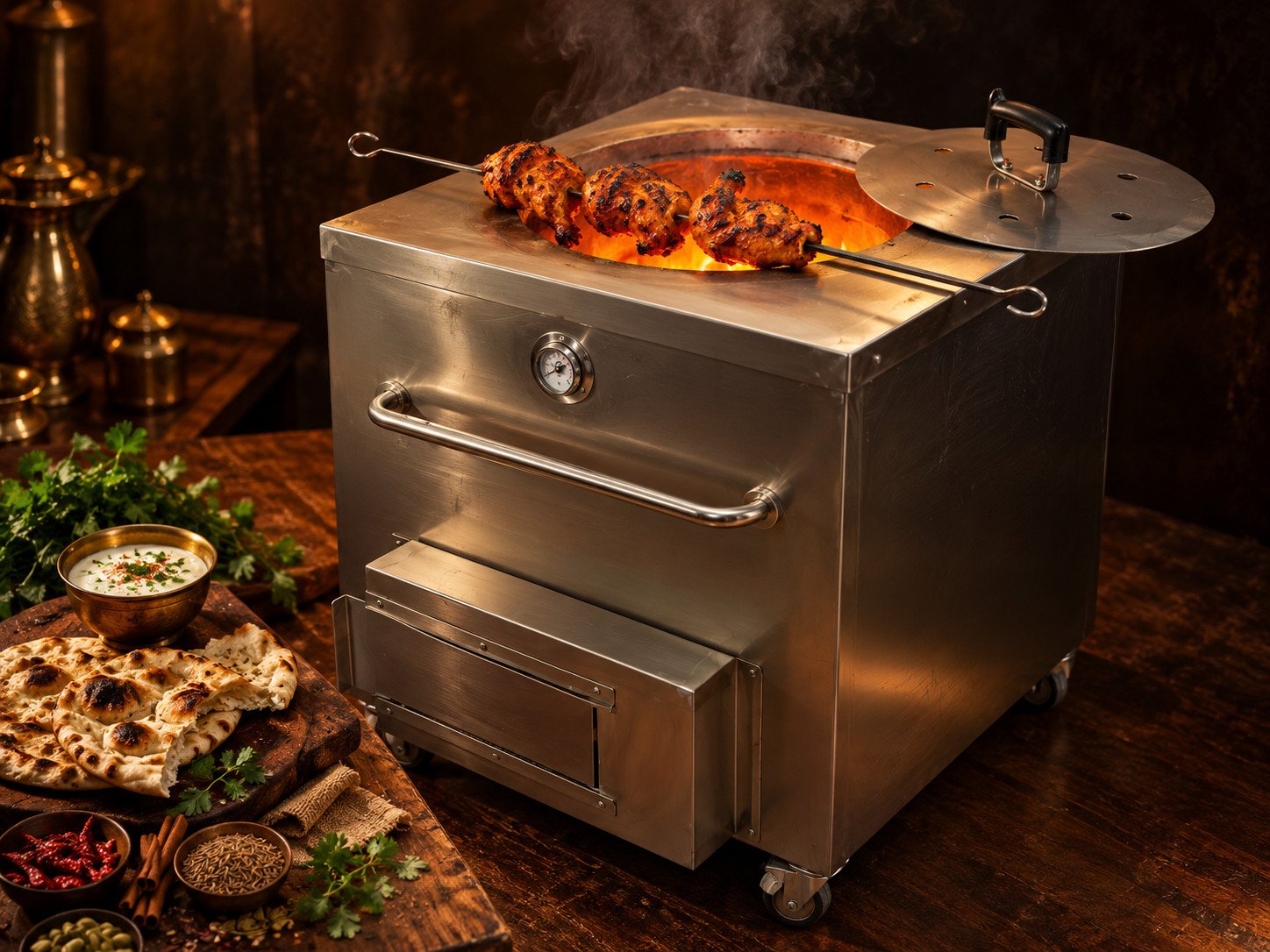
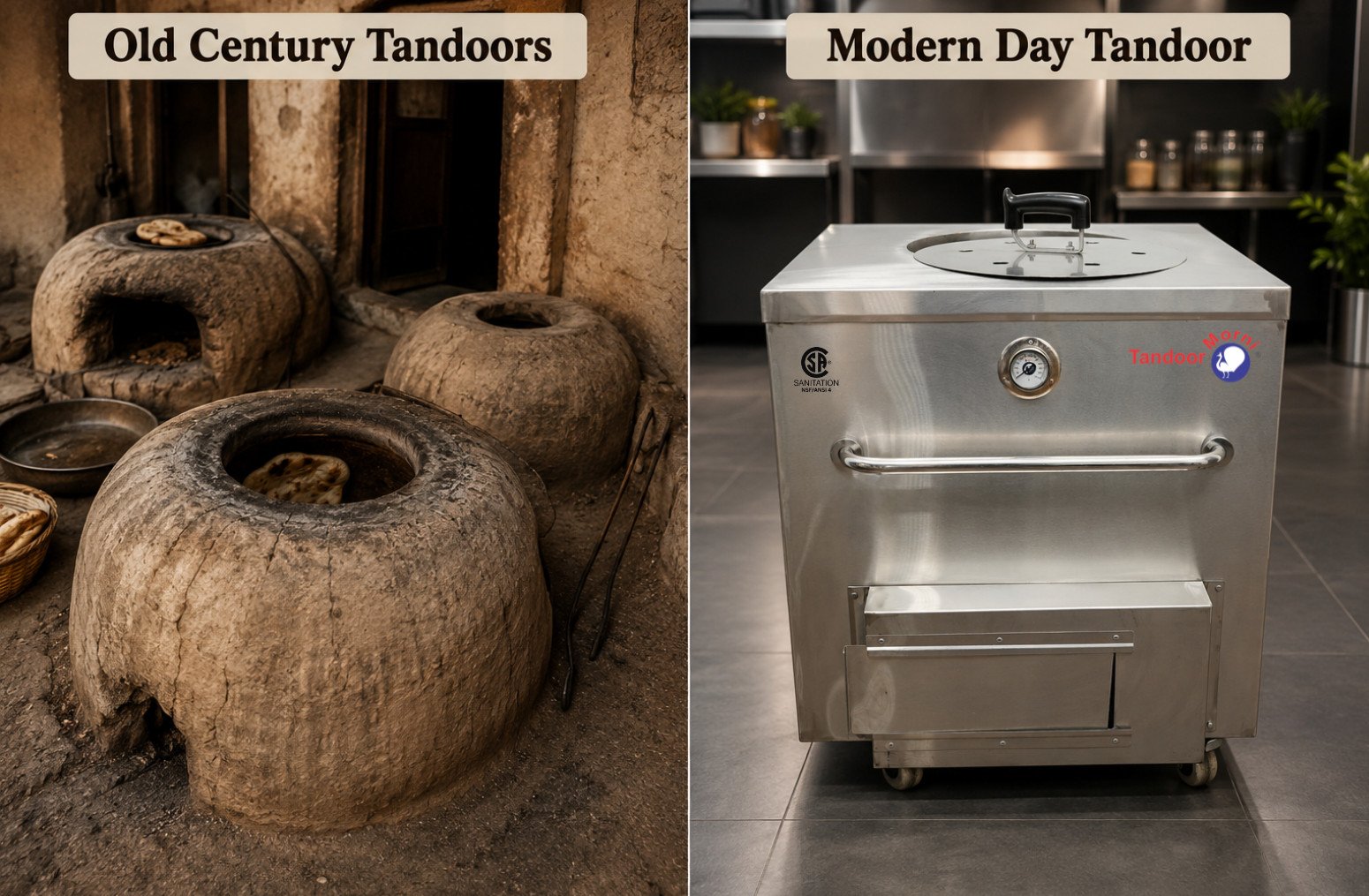
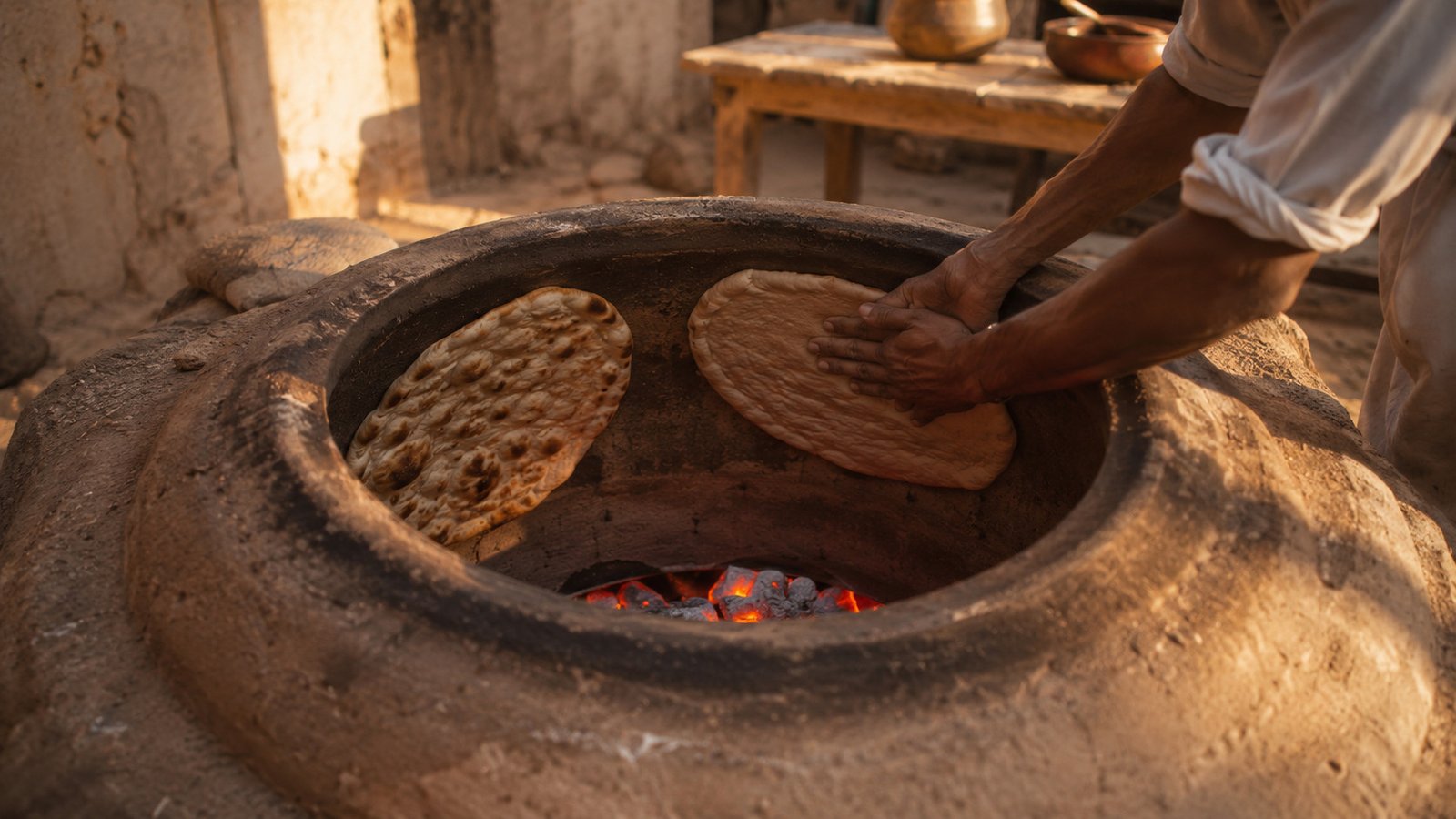
Few cooking tools in daily use today are as old as the tandoor. Archaeological finds in the Indus Valley trace its ancestors back thousands of years, and the design has barely changed because the physics didn't need to.
Clay oven ancestors appear in archaeological sites across what is now Pakistan and northwestern India — the structural blueprint of the modern tandoor.
Clay-oven cooking spreads across Central Asia, the Middle East and the Caucasus, with regional variations in shape, fuel and the dishes cooked inside.
The tandoor becomes a centrepiece of royal and community kitchens across the subcontinent — many classic tandoori recipes crystallise in this period.
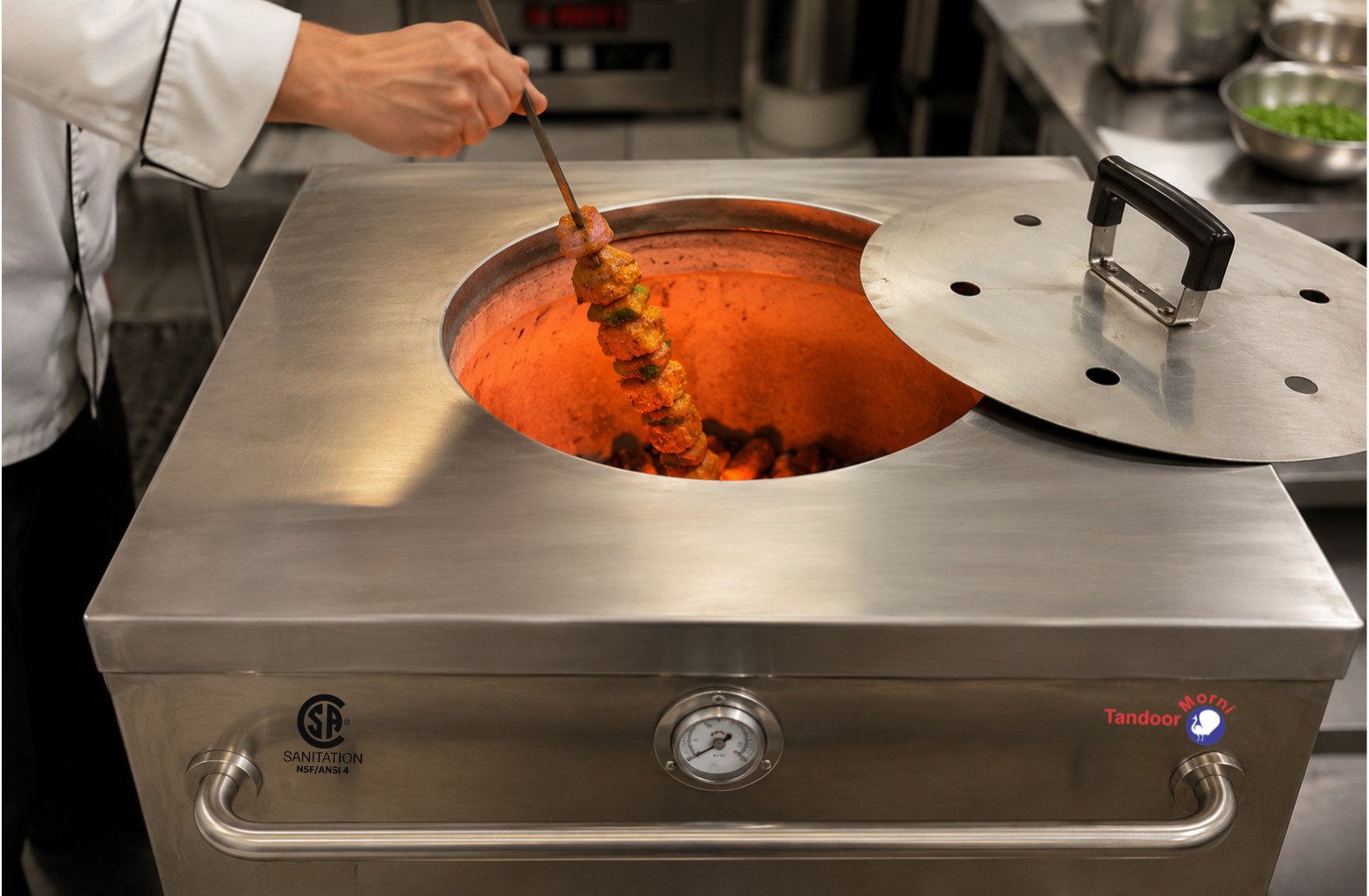
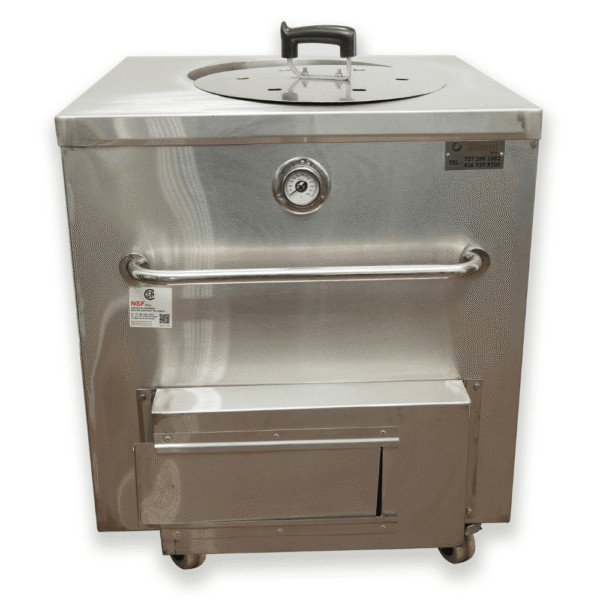
Partition-era migration carries tandoori cooking into restaurants worldwide. Modern stainless and certified gas models adapt the design for commercial compliance without changing the clay interior.
The health benefits of tandoori cuisine aren't marketing — they trace to measurable things about how the food is actually cooked. Four of them matter most.
Chamber walls at 480°C+ render fat quickly, so less of it stays in the finished dish. Standard oven roasting works at roughly a third of that heat.
Tandoori chicken finishes in 10 to 15 minutes rather than 40. Less time at heat means better nutrient retention and lower acrylamide formation.
Traditional tandoori marinades use yogurt as the base rather than oil. The result: tender protein with a fraction of the added fat of oil-roasted alternatives.
Turmeric, ginger, cumin, garam masala — the standard marinade spices carry their own documented anti-inflammatory and digestive profiles.
Cross-reference specific values against the USDA FoodData Central database for any dish you want to track in detail.
Ask ten tandoori chefs what single step matters most, and nine will say marination. Not the oven, not the fuel, not the skewer — the hours the protein spends in a yogurt-and-spice base before it ever meets the heat.
A proper tandoori marinade does three jobs at once. Yogurt's lactic acid gently breaks down the muscle fibres, giving the finished dish its signature tenderness. The spice blend — typically turmeric, Kashmiri chilli, ginger-garlic paste, garam masala, cumin and salt — penetrates the meat during that same window. And the thin coat of yogurt itself keeps the surface from drying out when it hits 500°C clay.
Shortcut the marination and you shortcut everything that follows. There's no technique later in the sequence that can rescue a protein that spent 20 minutes in yogurt instead of 4 hours.
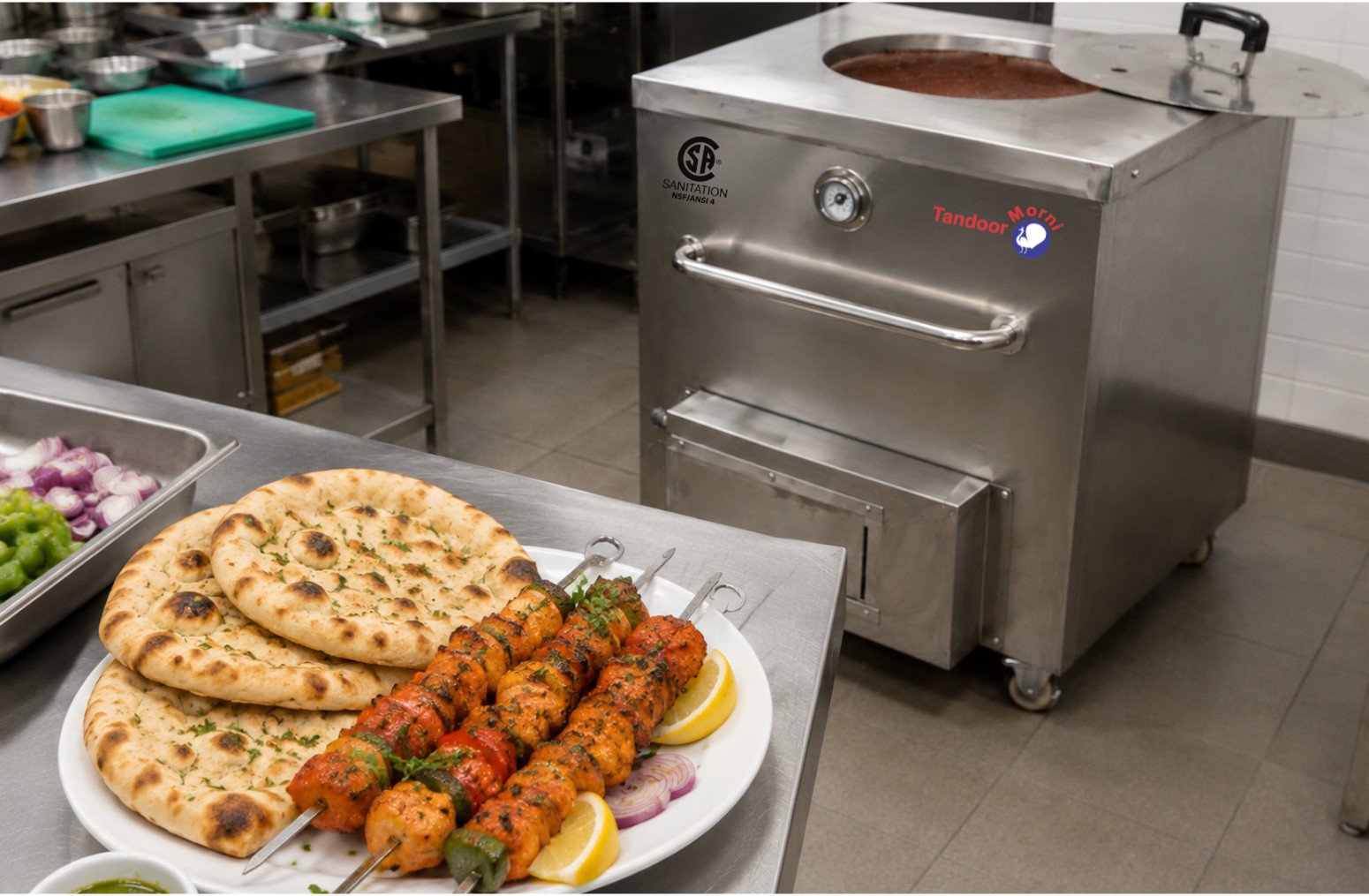
A tandoor can cook a lot of things well, but six dishes are what the equipment was really designed around. Everything else is a bonus.
The tandoor isn't a single Indian invention — variants exist across huge regions, each with their own name, shape, fuel and signature dishes.
The classic Punjabi tandoor. Clay-lined cylindrical body, charcoal or gas fired. Home of tandoori chicken, naan, seekh kebab and the restaurant-era global tandoori boom.
Known as a tanur or tonir. Common across Uzbekistan, Tajikistan and the Caucasus for breads like lavash and non.
Similar clay ovens appear across Iraq, Iran, Armenia and parts of Turkey. The Armenian tonir is especially tied to religious and family tradition.
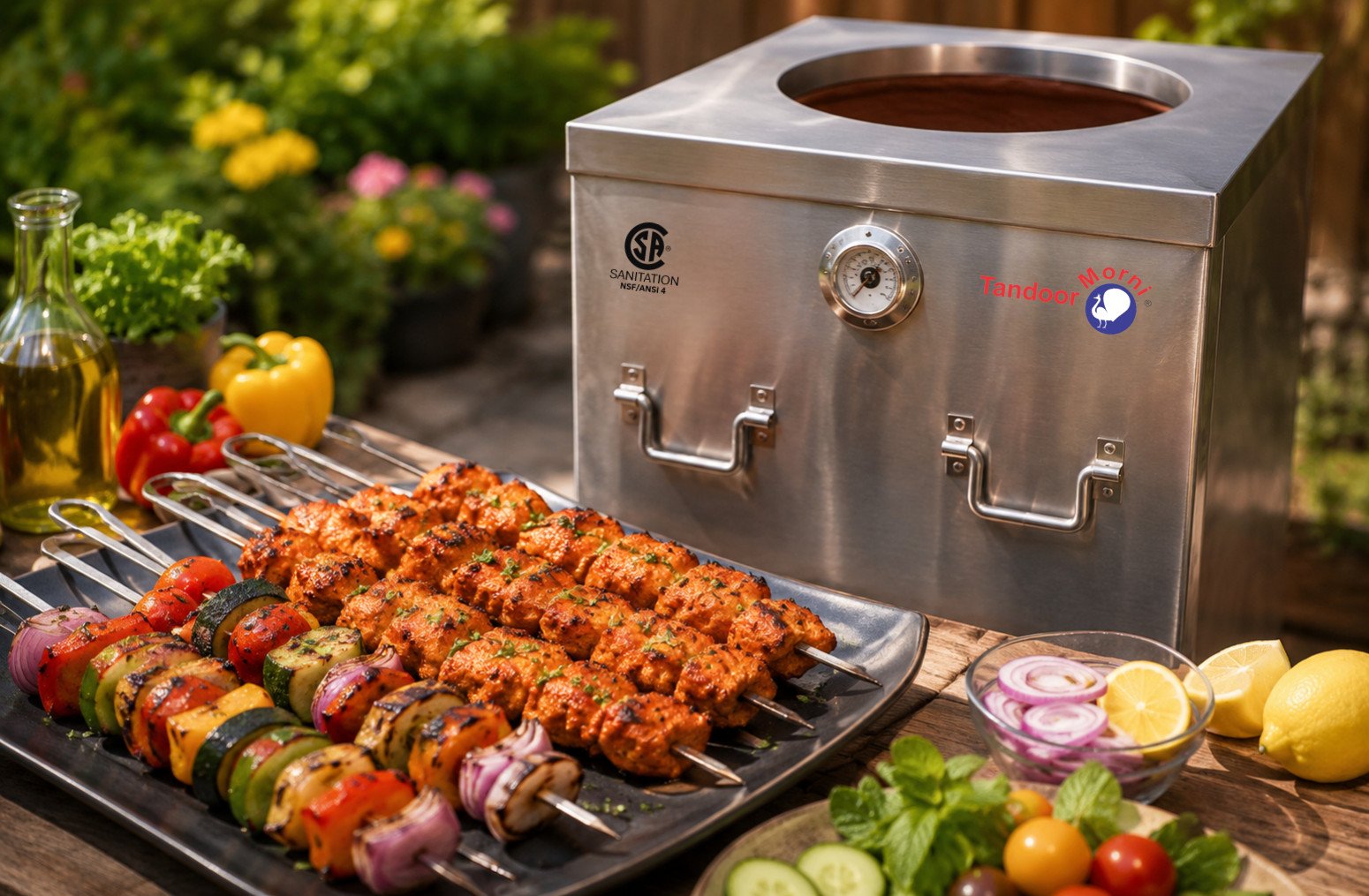
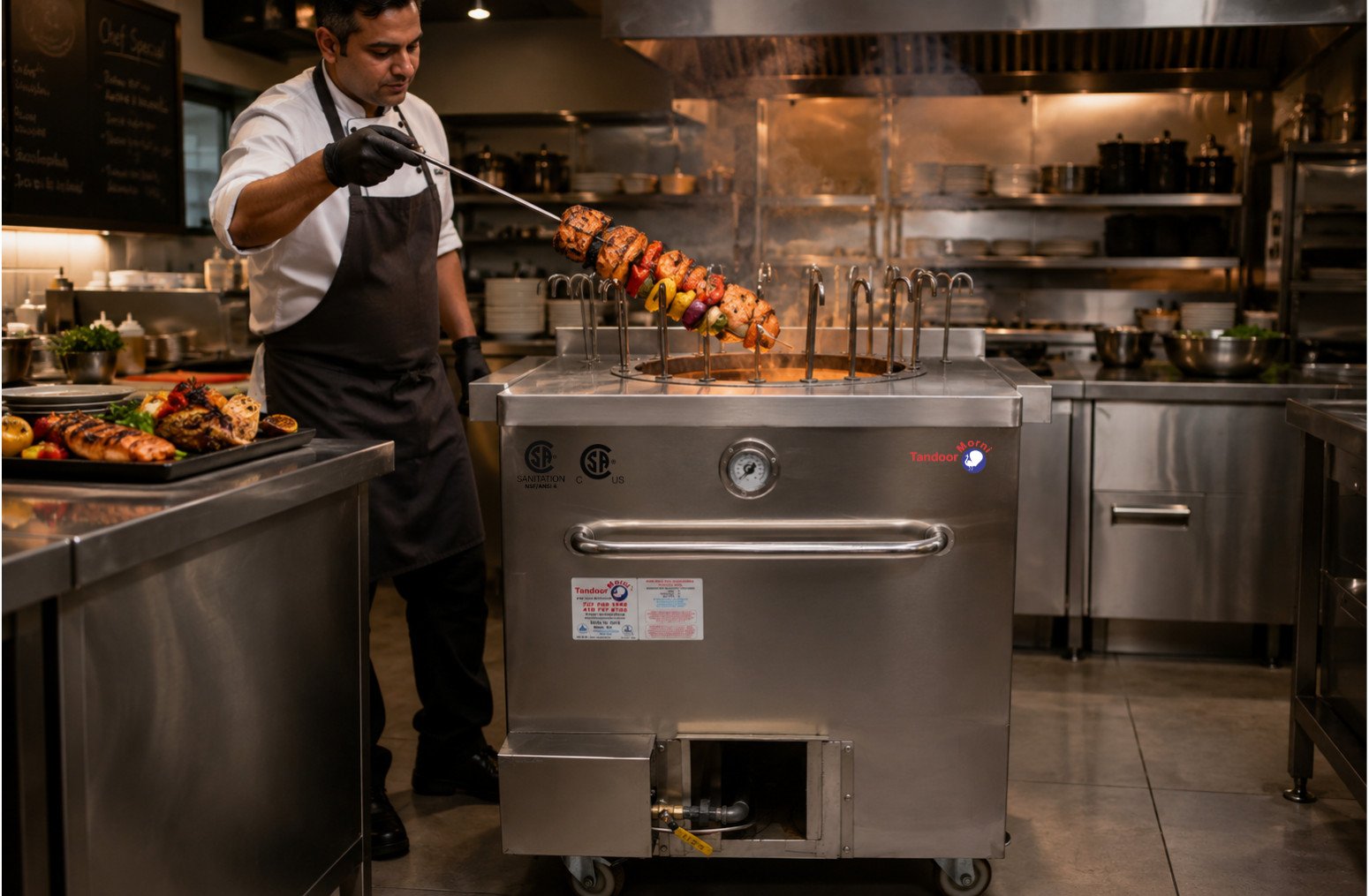
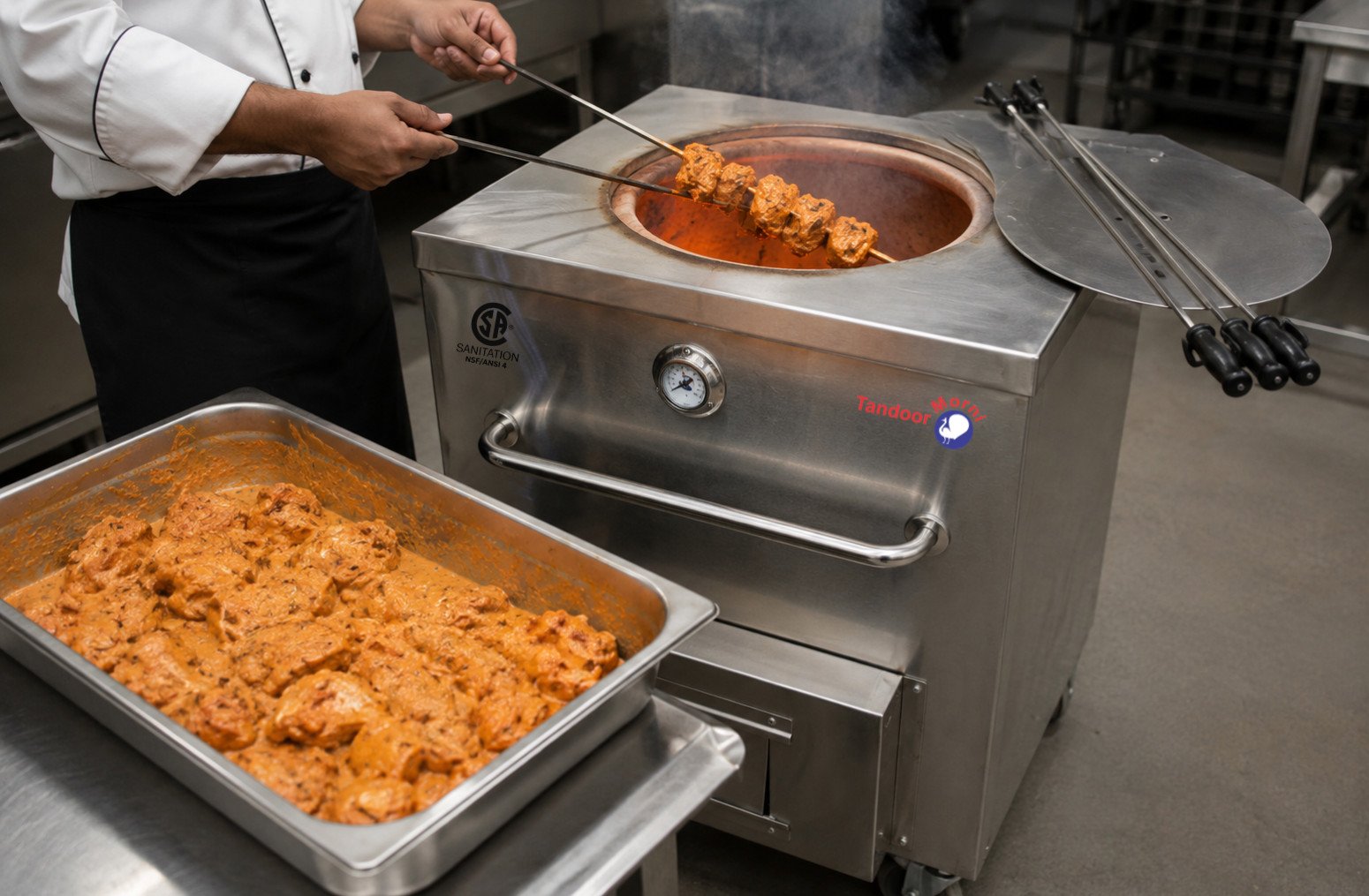
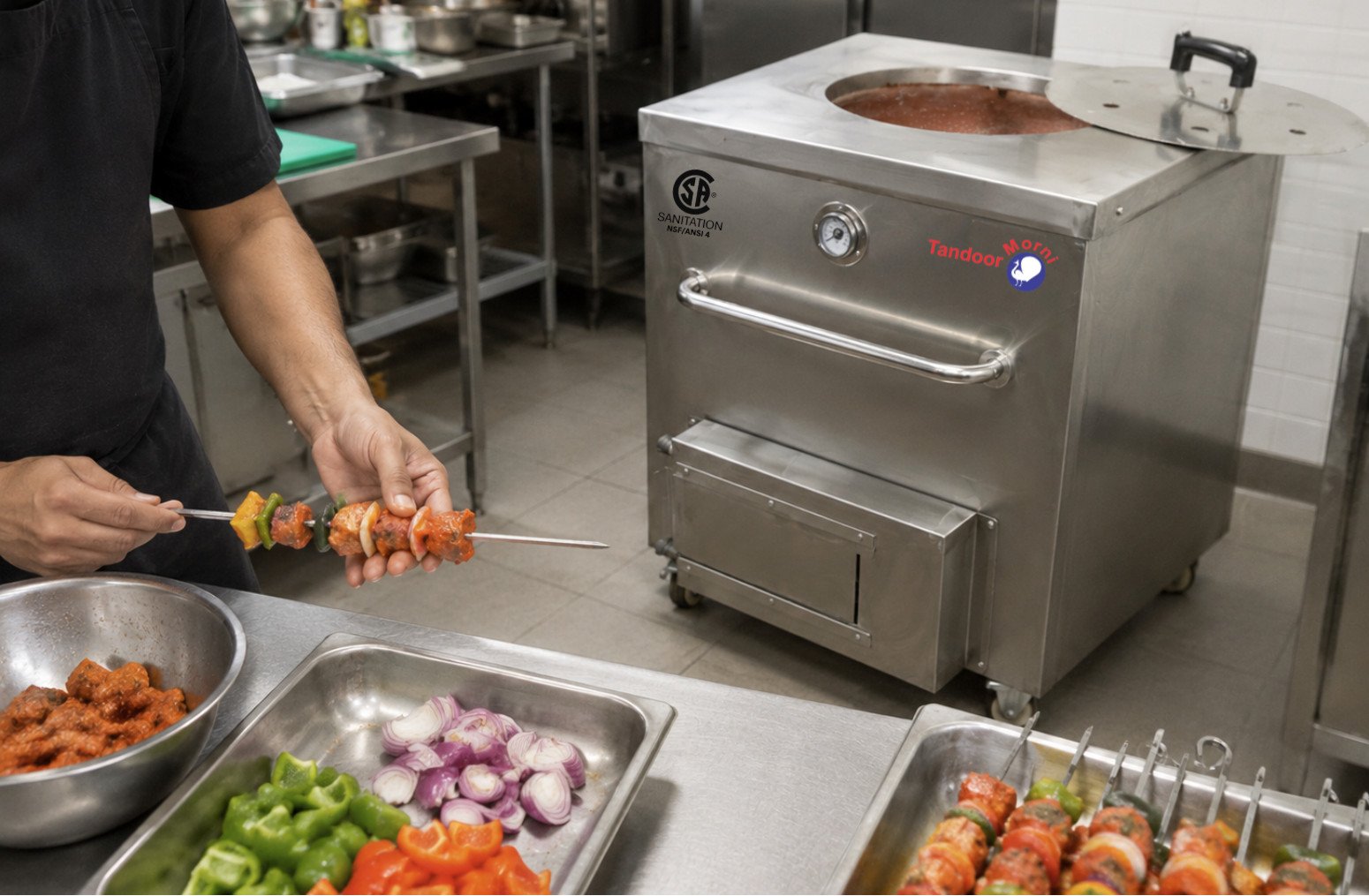
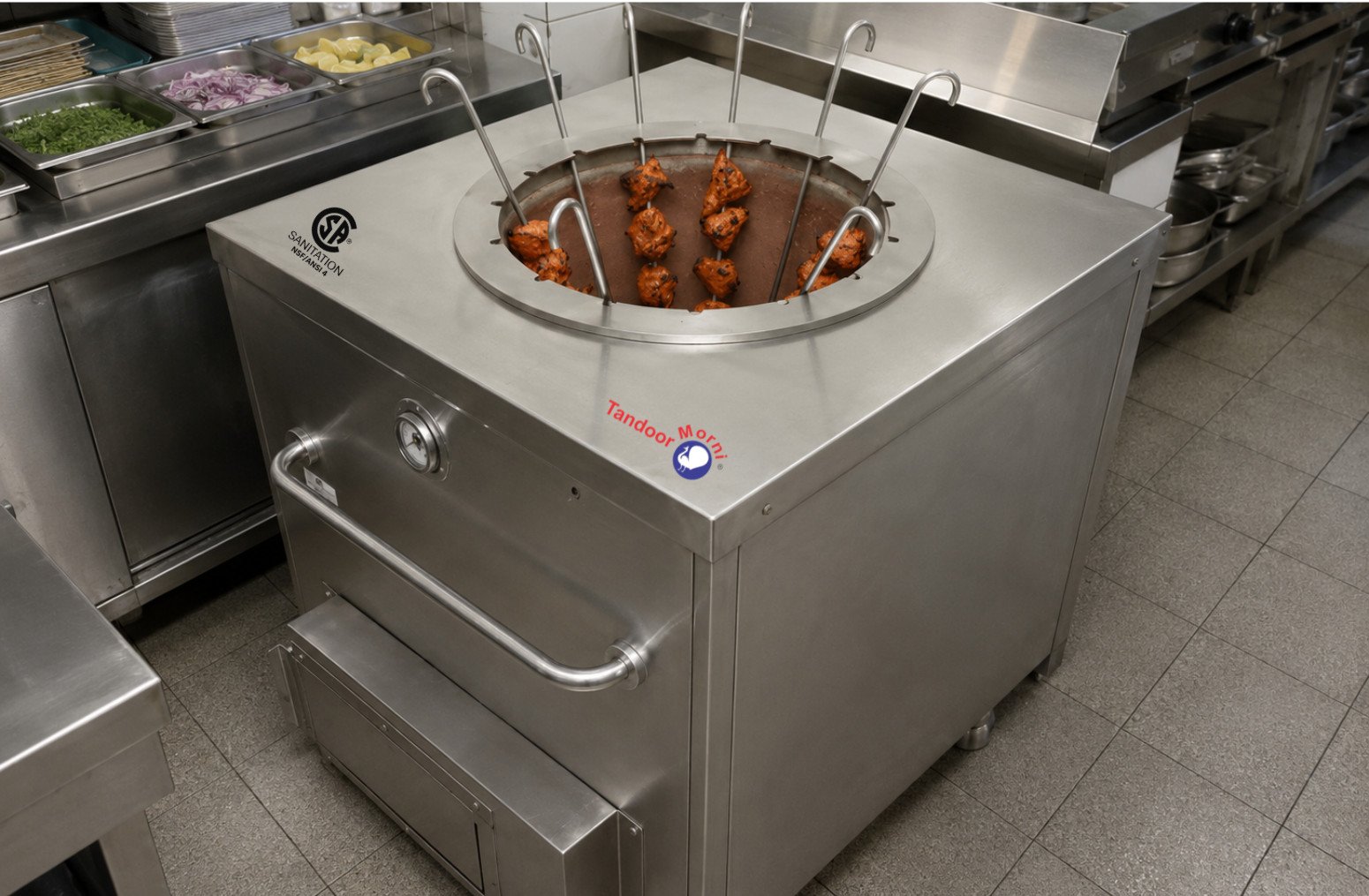
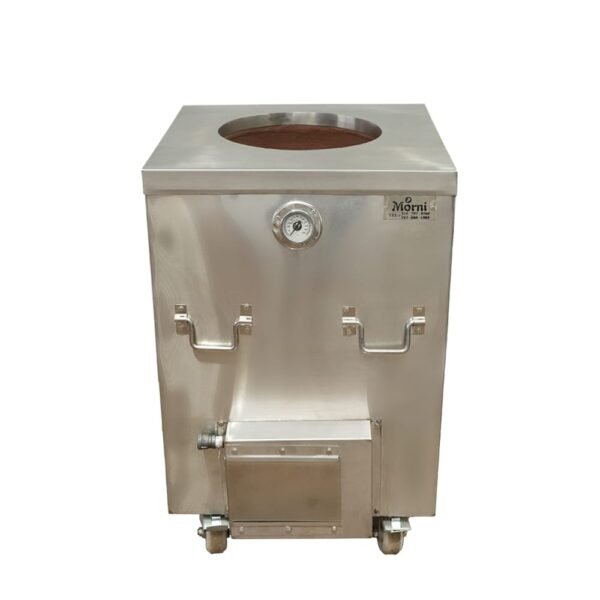
Certified stainless-steel versions now sit in commercial kitchens from New York to Toronto to Singapore, carrying the same clay-oven cooking principle into regulated restaurant service.
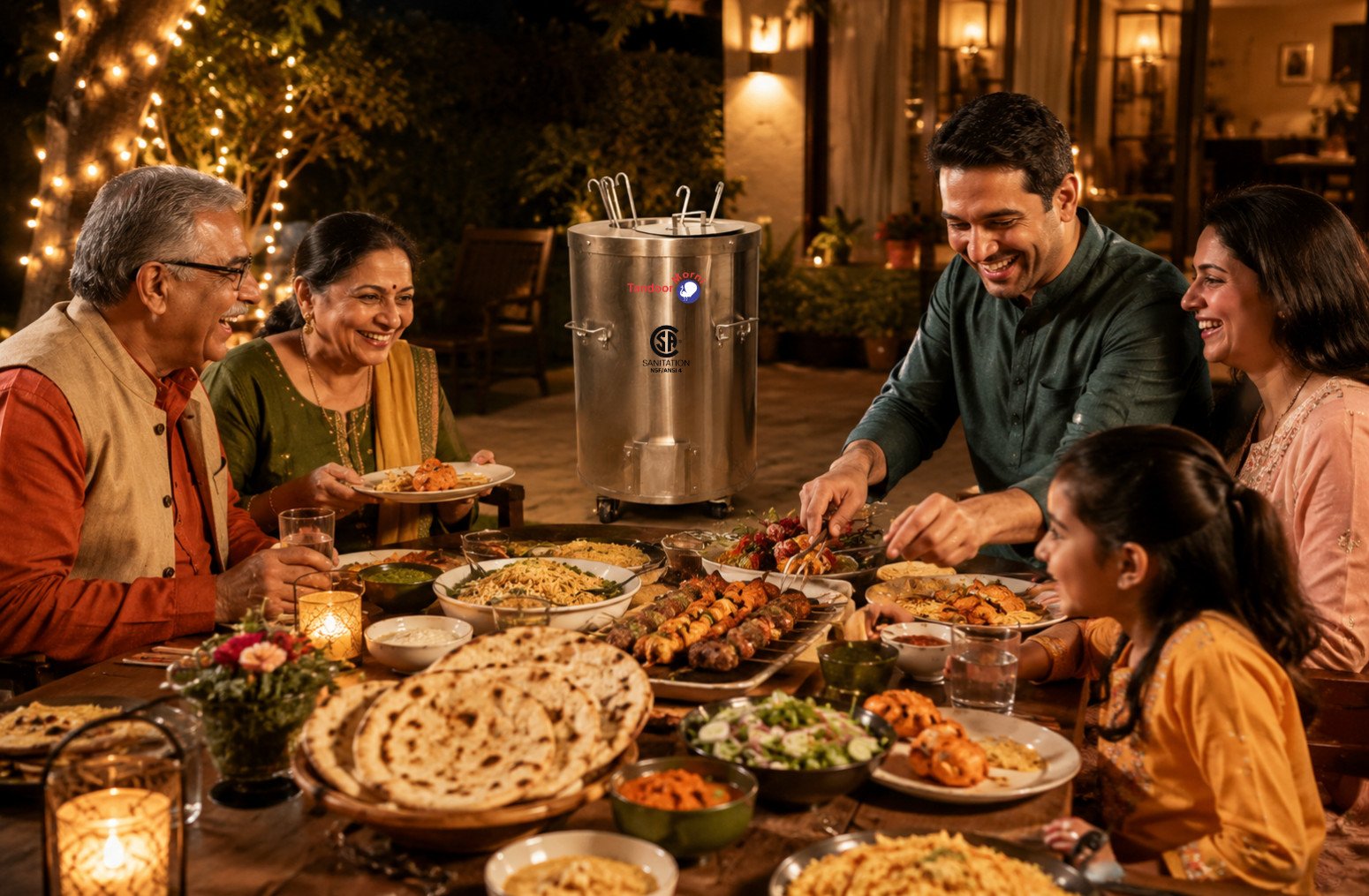
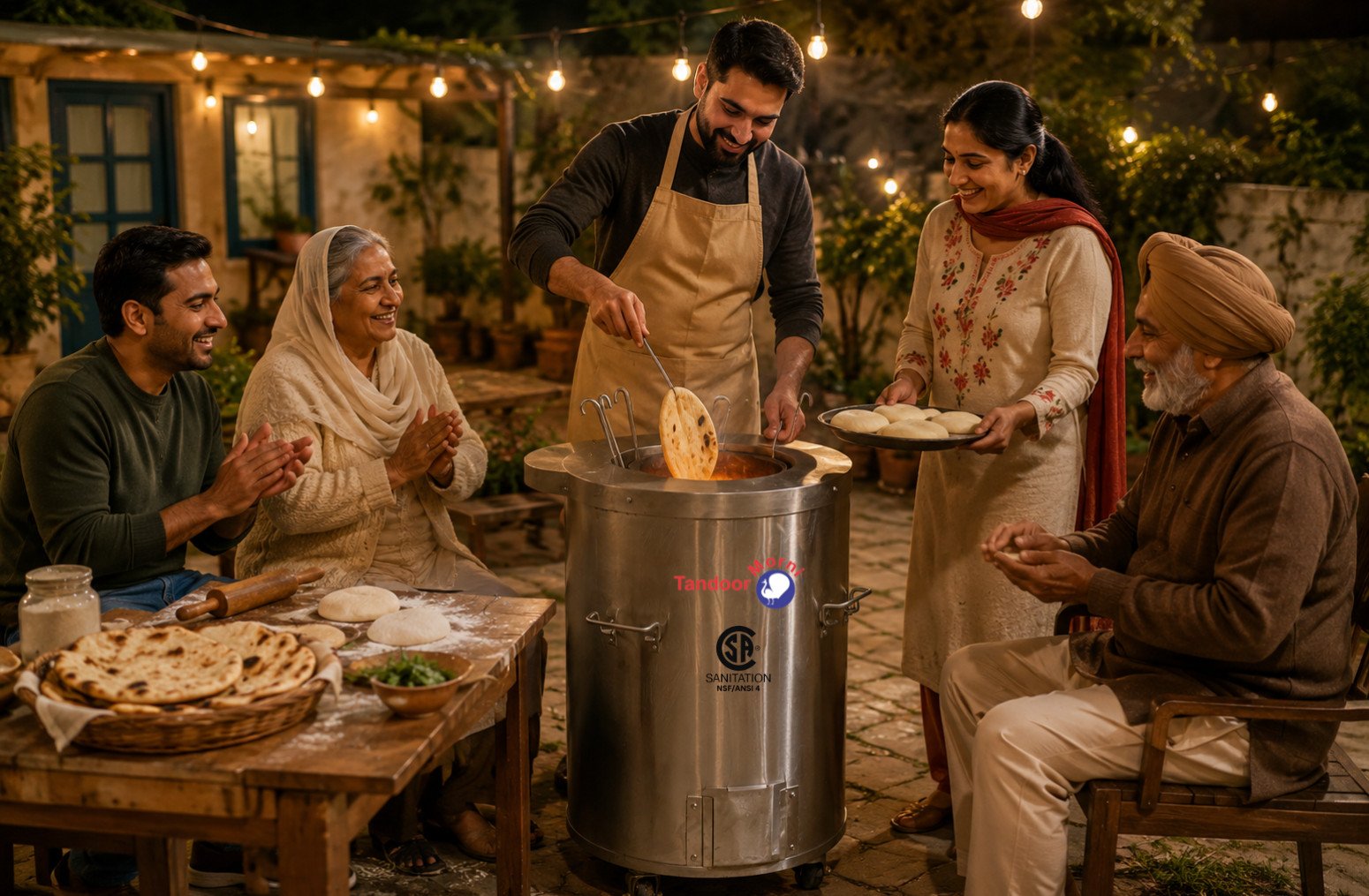
If you've been to a Punjabi wedding, a Diwali gathering, an Eid dinner, a Baisakhi celebration or a village langar, you've probably eaten food that came out of a tandoor. The oven sits at the centre of community meals for a specific reason: it feeds large groups fast, from one piece of equipment, with food that looks and tastes festive without needing elaborate individual plating.
In many households and villages, a shared community tandoor is a social fixture in its own right — neighbours bring their marinated dough or meat to a communal fire rather than running one at home. That tradition hasn't vanished with modern kitchens; in many parts of the subcontinent and across diaspora communities, the shared tandoor is still how big occasions get fed.
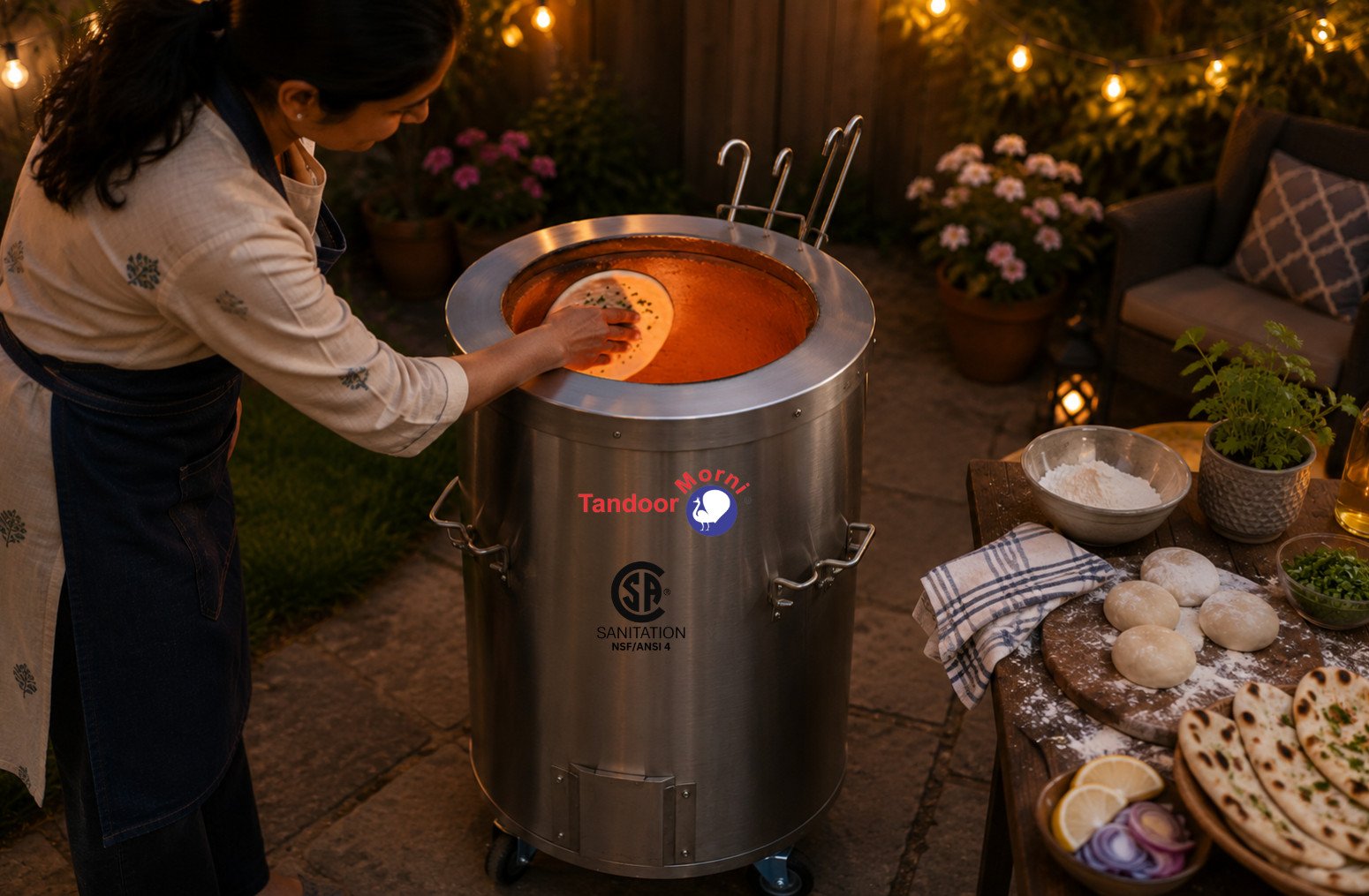
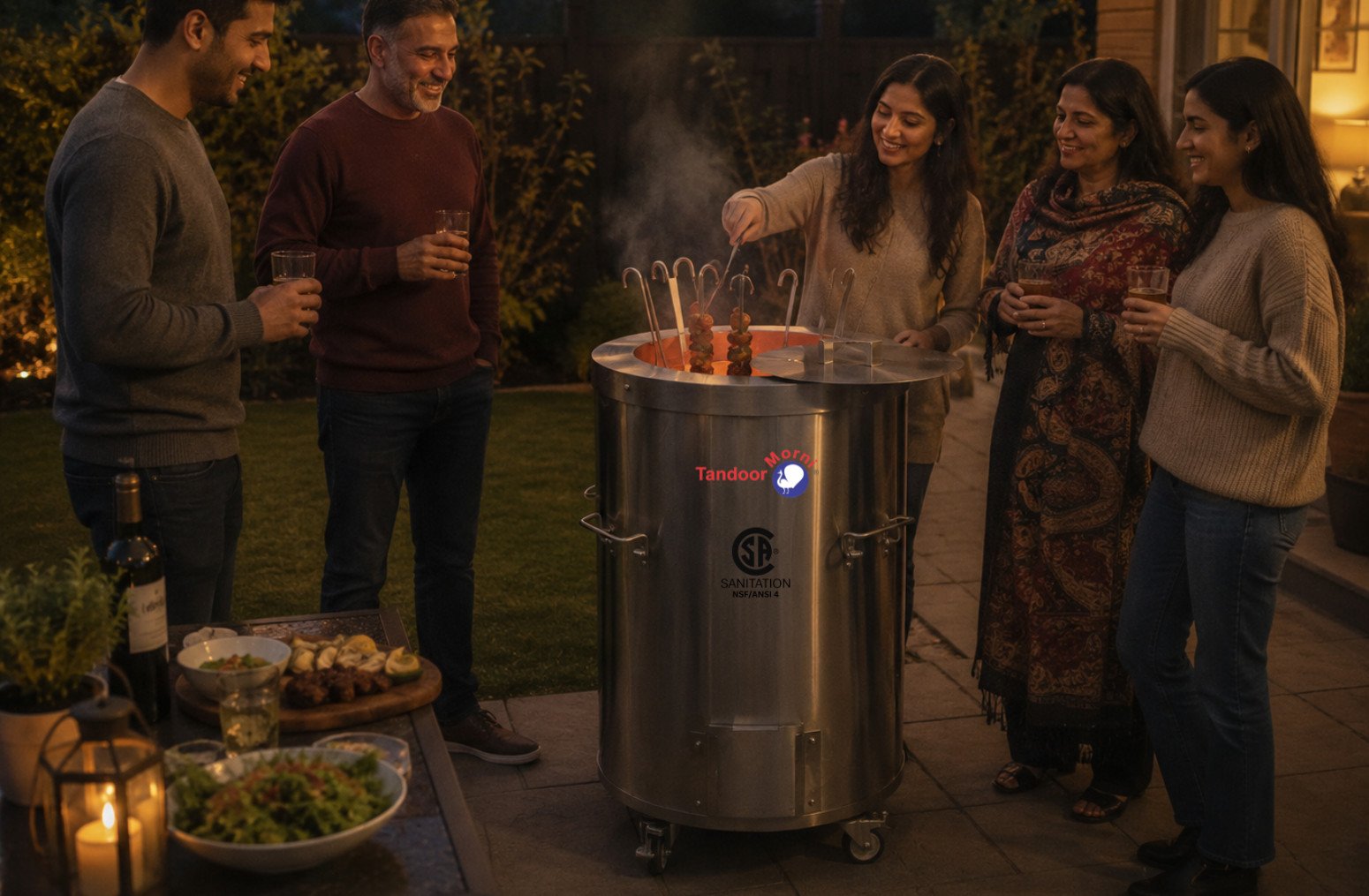
Owning a tandoor at home no longer means building a clay pit in the backyard. Modern residential models bring the same cooking principle into formats that fit a patio, a terrace or a dedicated outdoor kitchen — without compromising on how the food comes out.
Learn how the clay wall actually transfers heat. Understanding why makes every subsequent cooking decision obvious.
Spend the hours in the yogurt, not shortcuts. The marination section above covers the classic formula.
Build to full heat over a proper warm-up, not in one blast. Clay rewards patience and punishes thermal shock.
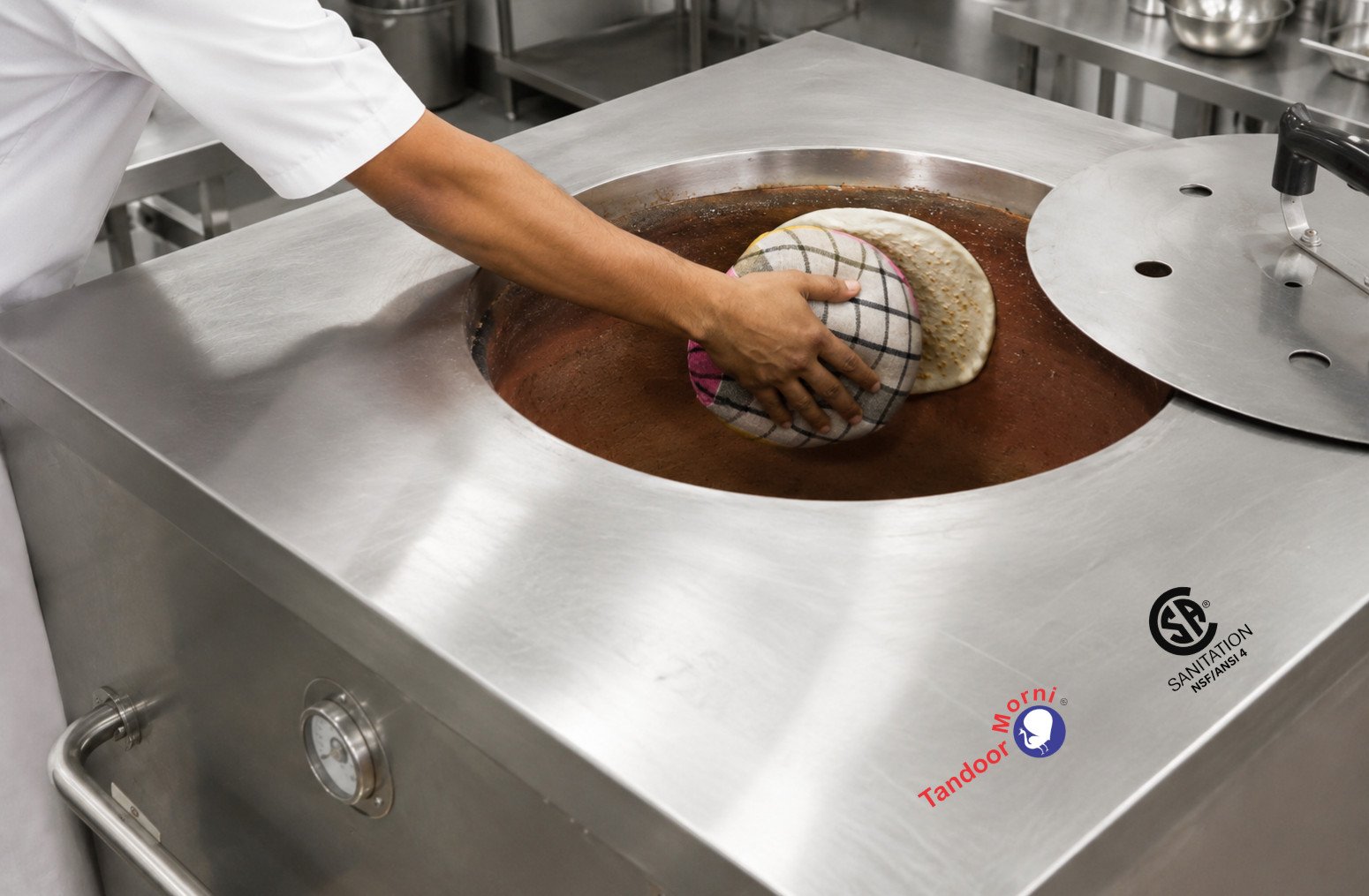
Tandoori chicken is the most forgiving first dish. Naan is harder — it demands muscle memory for the slap-and-peel timing.
Food cooked in a tandoor tastes specifically different from the same dish cooked any other way. Three factors combine to produce the signature profile.
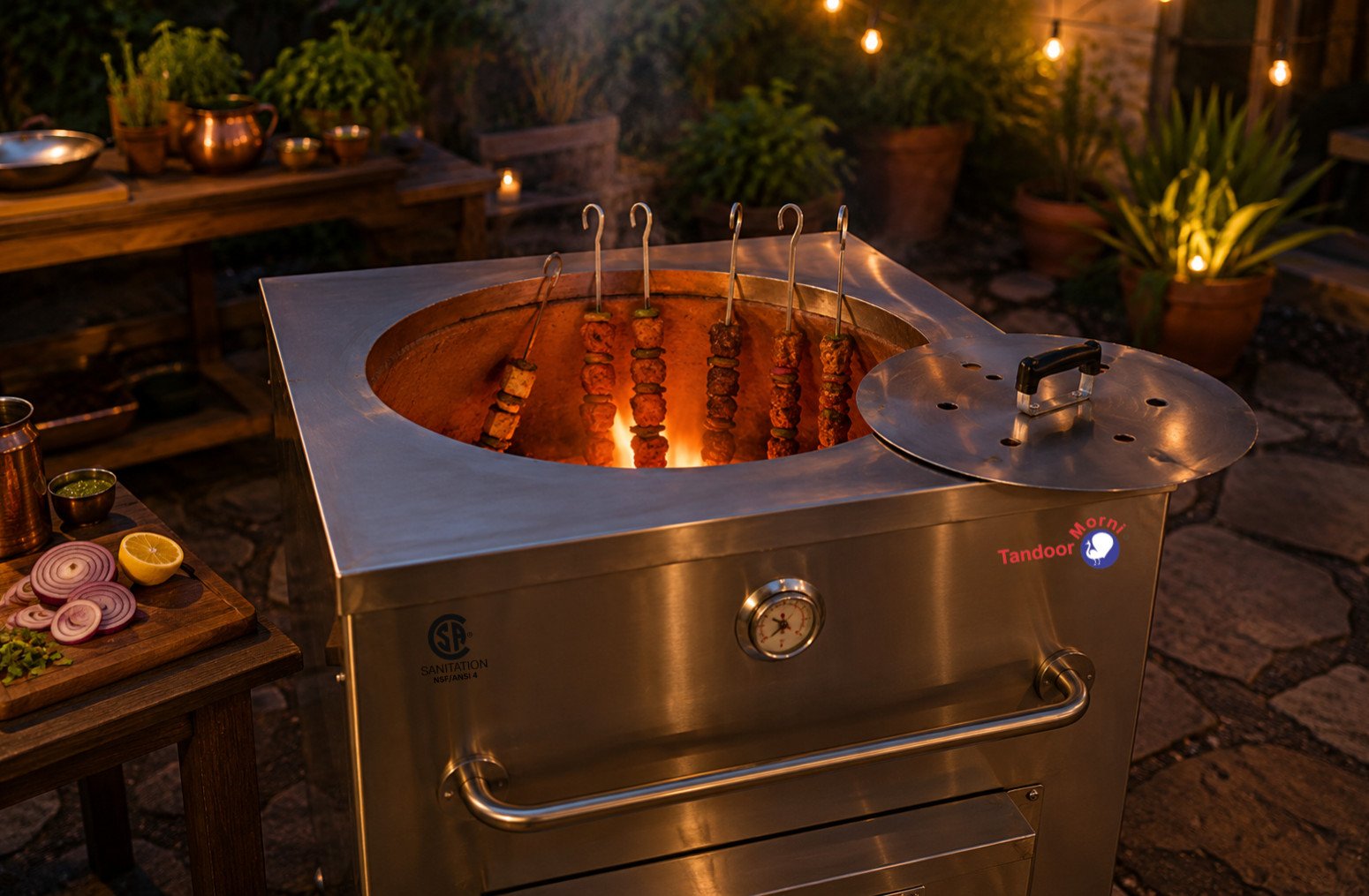
The hot clay wall surrounds the food from all sides at once. Even high-end conventional ovens heat from top and bottom only. The difference shows up as even char without needing to flip or turn.
Marinade drippings hit the hot coals (or hot gas burner surface) and smoke back up over the food in a tight loop. That micro-smoke bath is impossible to recreate in a sealed oven.
Naan actually touches the clay. Tandoori chicken absorbs its scent through radiant air exposure. Neither flavour chemistry happens on a metal grill or in a sealed oven cavity.
Factory-direct tandoor ovens built for every kitchen — from home patios to full commercial service.
Built for restaurant kitchens running service every day.
Shop Commercial
Portable, event-ready ovens for caterers on the move.
Shop Catering
Compact sizing built for backyards and home kitchens.
Shop Home
The signature copper-clad finish, made to order.
Shop Copper
Skewers, hoses, covers, and everything else you need.
Shop AccessoriesThousands of years of tradition are easier to appreciate standing in front of a working clay oven. Visit a Tandoor Morni showroom to see the craft firsthand and talk with a team that knows the culture behind every dish. Showrooms are located in Edison NJ, Houston, Chicago, Tampa, Washington D.C., Manteca CA, Algona WA, Boulder CO, and Mississauga ON. Call ahead to book your visit • Mon to Fri, 10AM to 4PM.
| 01 |
| Edison, New Jersey |
| East Coast USA • Appointment Required |
| Showroom Page Directions |
| 02 |
| Houston, Texas |
| South USA • Appointment Required |
| Showroom Page Directions |
| 03 |
| Chicago, Illinois |
| Midwest USA • Appointment Required |
| Showroom Page Directions |
| 04 |
| Tampa, Florida |
| Southeast USA • Appointment Required |
| Showroom Page Directions |
| 05 |
| Washington, D.C. |
| Mid-Atlantic USA • Appointment Required |
| Showroom Page Directions |
| 06 |
| Manteca, California |
| West Coast USA • Appointment Required |
| Showroom Page Directions |
| 07 |
| Algona, Washington |
| Pacific Northwest USA • Appointment Required |
| Showroom Page Directions |
| 08 |
| Boulder, Colorado |
| Mountain West USA • Appointment Required |
| Showroom Page Directions |
| 09 |
| Mississauga, Ontario |
| Canada Showroom • Appointment Required |
| Showroom Page Directions |