There's nothing like a grand feast to make celebrations special. Food has always been at the heart of every festivity, bringing people together to share traditions, culture, and stories, and few cooking methods bring that energy to a table quite like tandoori feasts for festivals. With dishes like creamy malai boti, smoky chicken tikka, and classic seekh kebabs, tandoori cuisine is about more than getting dinner on the table — it's a celebration of spices, fresh ingredients, and the shared experience of cooking together.
This guide walks through everything you need for celebrating with clay oven food at your next gathering — the history behind the tandoor, a full set of festival tandoori menu ideas, the accessories that make cooking for a crowd manageable, and the practical details, like getting your tandoor oven naan gaddi technique right, that separate a smooth celebration from a stressful one.
Tandoori Feasts for Festivals: The Tradition Behind Every Spread
Tandoori cooking dates back thousands of years to the Indian subcontinent, where archaeological evidence traces tandoor use to the Harappan civilization of the Indus Valley — the same cylindrical clay-oven design still recognizable in tandoor bread-making traditions today, some five thousand years later. This unique clay oven can reach extremely high temperatures, and that intense heat is exactly what gives tandoori food its signature smoky flavor and charred texture. It's a traditional way of cooking that involves roasting marinated meats, vegetables, and bread inside the oven until they achieve that unmistakable smoky finish.
Tandoori cooking spread across India, Pakistan, and the Middle East, becoming a staple of celebratory cooking across generations. Today, with options like Tandoor Morni, that same heritage is accessible across the USA and Canada, letting families bring authentic tandoori feasts for festivals into their own backyard or dining room rather than needing to travel or dine out.
Why Tandoori Feasts for Festivals Beat Any Other Spread
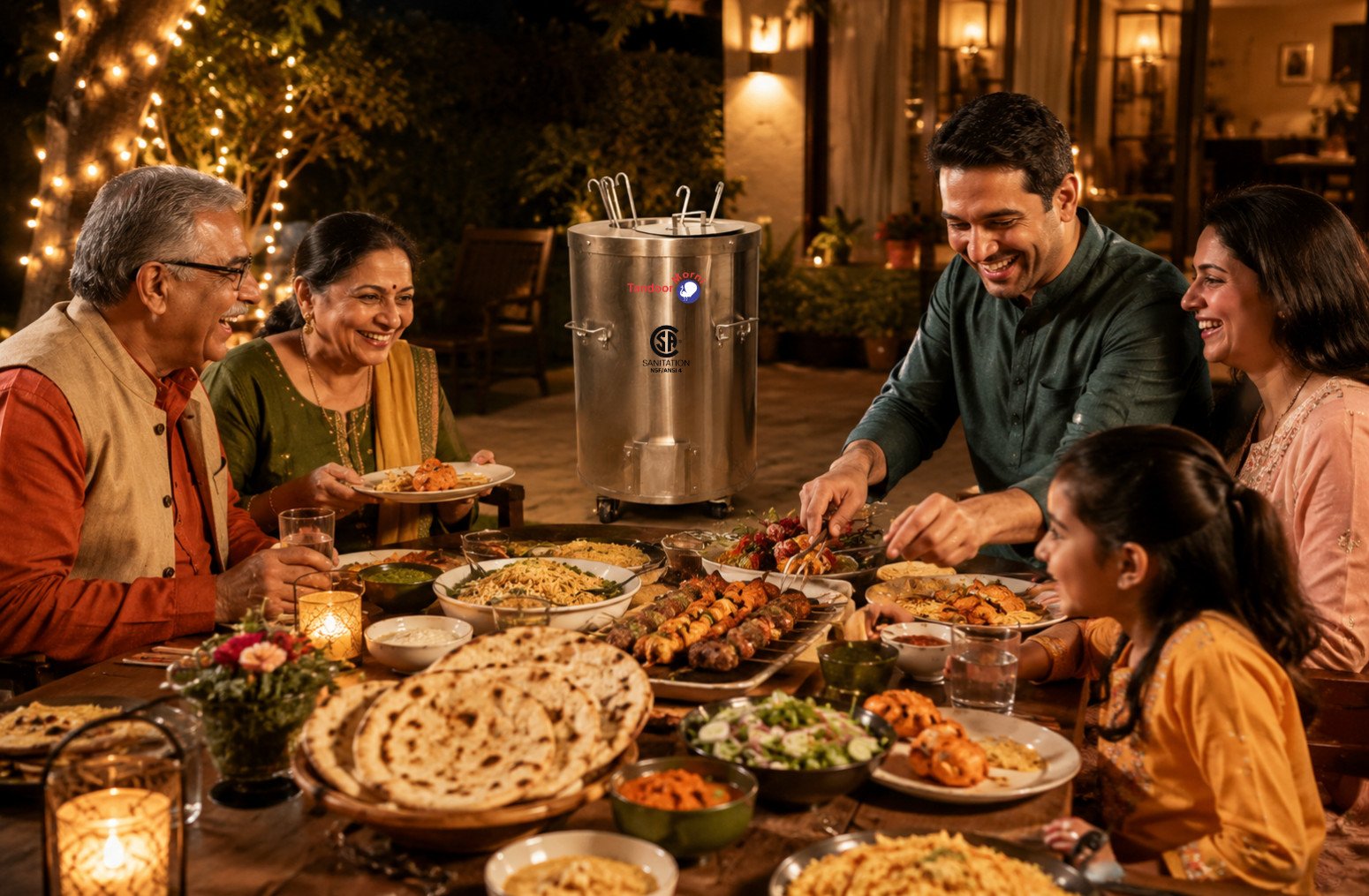
Special occasions deserve something extraordinary, and few things elevate a celebration quite like a tandoori spread. Whether it's Diwali, Thanksgiving, Christmas, Eid, a family reunion, or any other gathering, tandoori feasts for festivals add warmth, flavor, and togetherness that a standard sheet-pan dinner simply can't match. The aroma of sizzling meat, the taste of freshly baked naan, and the smoky char of grilled vegetables turn an ordinary meal into something people remember.
Celebrating with clay oven food is about more than the dishes themselves — it's about bringing people together around the process. The shared experience of marinating ingredients the night before, gathering around the tandoor as skewers go in and out, and passing around fresh naan while it's still warm is part of what makes the whole event feel like a genuine celebration rather than just another dinner.
Festival Tandoori Menu Ideas: 10 Dishes That Always Work
Cooking with a tandoor oven opens up a wide range of dishes for any celebration. Here are ten reliable festival tandoori menu ideas — five vegetarian and five non-vegetarian — that consistently work well for a crowd.
Vegetarian Festival Tandoori Menu Ideas
- Tandoori Paneer Tikka. Paneer cubes marinated in yogurt, lemon juice, ginger-garlic paste, and warm spices, skewered and cooked 10–12 minutes until slightly charred. Serve with mint chutney.
- Tandoori Mushrooms. Button mushrooms marinated 30 minutes, then roasted 8–10 minutes, turning occasionally, and finished with fresh coriander.
- Tandoori Aloo (Potato). Parboiled baby potatoes coated in a yogurt and chickpea flour marinade, roasted 15–20 minutes until golden and crisp.
- Tandoori Cauliflower (Gobi). Cauliflower florets marinated in yogurt, tandoori masala, and lemon juice, skewered and roasted 12–15 minutes.
- Tandoori Bhutta (Corn on the Cob). Corn brushed with butter and chaat masala, roasted 10 minutes with frequent turning, finished with a squeeze of lemon.
For more vegetarian options and full ingredient lists, browse our Vegetarian Recipes collection.
Non-Vegetarian Festival Tandoori Menu Ideas
- Tandoori Chicken Tikka. Boneless chicken marinated at least 2 hours in yogurt, tandoori masala, and lemon juice, roasted 15–20 minutes until charred and cooked through.
- Malai Boti. Boneless chicken marinated 3 hours in a creamy yogurt mixture, giving it a rich, melt-in-your-mouth texture after 12–15 minutes in the tandoor.
- Seekh Kebabs. Minced lamb or beef mixed with onions, green chilies, and spices, shaped around skewers and roasted 10–12 minutes until evenly browned.
- Grilled Fish Masala. White fish fillets marinated in a yogurt and spice mixture for an hour, cooked 7–10 minutes for tender, smoky results.
- Tandoori Lamb Chops. Lamb chops marinated at least 4 hours, roasted 20–25 minutes, turning halfway — the high heat keeps them juicy despite the longer cook time.
Explore more options in our Non-Vegetarian Recipes and Tandoori Appetizer Recipes collections when you're building out a full festival tandoori menu.
Celebrating with Clay Oven Food: Why Tandoori Feasts Are Also Healthier
Cooking with a tandoor oven isn't just about flavor — it's also a genuinely healthier and more authentic style of cooking. A few things make celebrating with clay oven food worth the extra planning.
- Smoky flavor. The clay walls of the tandoor add a distinctive smoky character that's difficult to replicate with any other cooking method.
- Quick cooking. The intense heat cooks food fast while keeping the inside moist, which matters when you're feeding a full table of guests without long waits between courses.
- Healthier cooking. High-heat cooking needs far less oil, and the intense heat locks in juices rather than letting them cook away.
- A traditional experience. Using a tandoor oven connects a modern celebration to a cooking tradition that's thousands of years old — a detail that resonates especially at festivals rooted in cultural heritage.
Tandoor Oven Naan Gaddi: Getting Fresh Naan Right for a Crowd
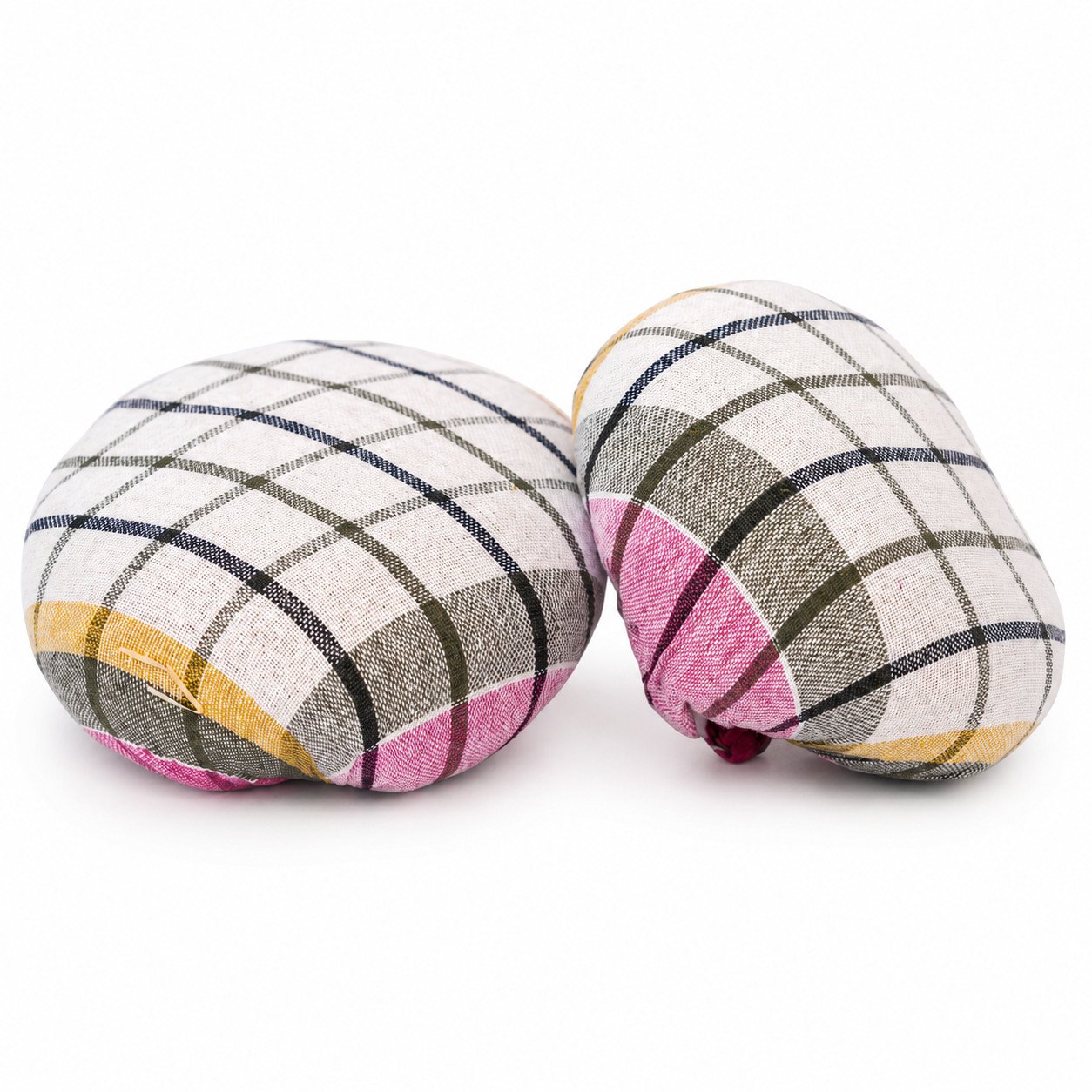
No festival tandoori menu is complete without fresh naan, and getting it right for a full table of guests comes down to one specific tool: the naan gaddi. A tandoor oven naan gaddi is a thick, padded cushion that lets you press rolled dough firmly against the scorching interior wall without putting your hand anywhere near direct heat. Using a bare hand or an improvised tool tends to produce uneven naan and a real burn risk, especially when you're moving quickly to keep pace with a full table of hungry guests.
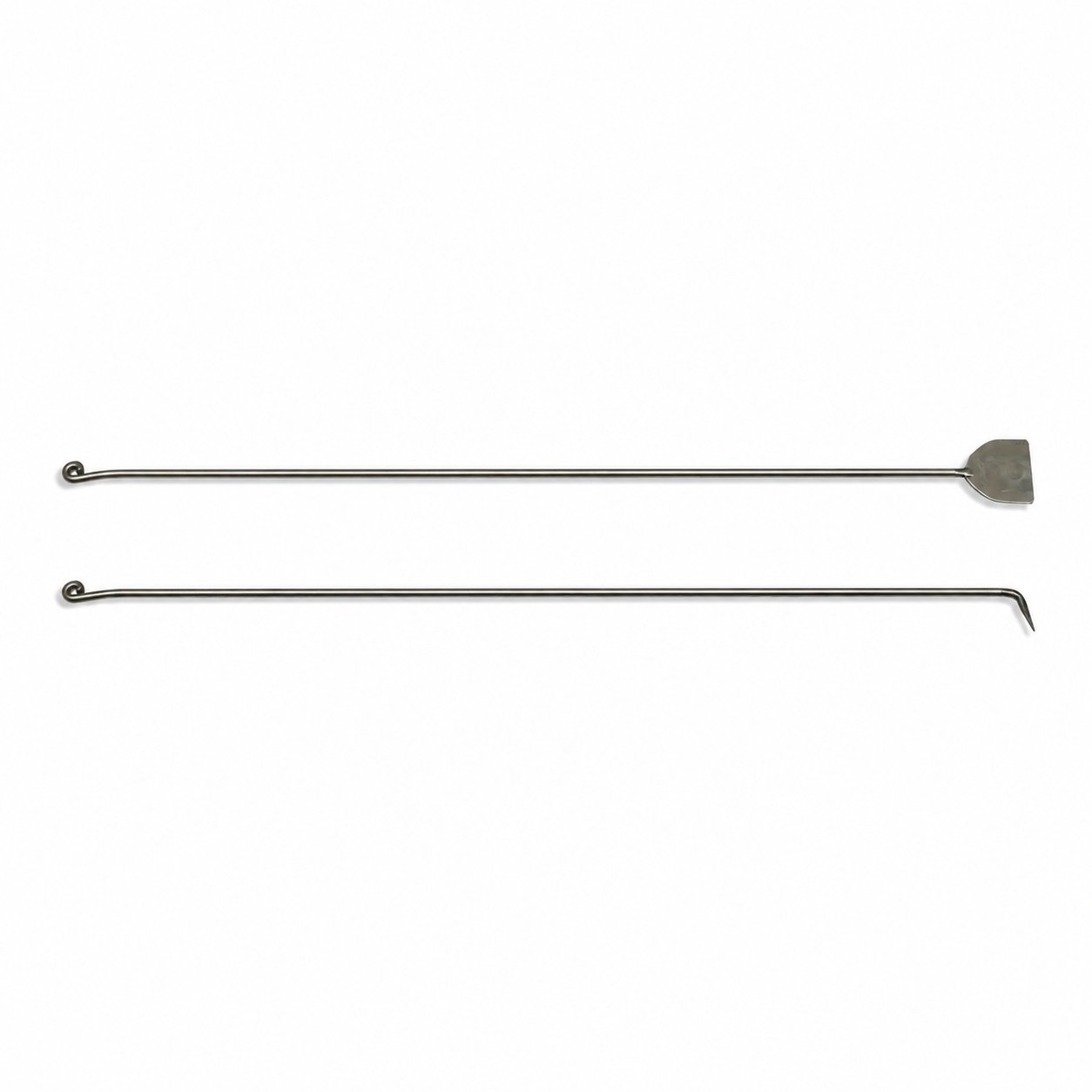
Our Tandoor Oven Naan Gaddi AS09 gives the dough enough even, firm contact with the wall to stick properly and puff up with that classic crisp-outside, soft-inside texture — exactly what a festival spread needs when you're baking naan continuously through a long meal rather than just once or twice. Pair it with the Tandoori Naan Rod Pair AS03 for safely lifting each finished piece off the wall, and naan production stops being the bottleneck in your festival cooking timeline.
How to Use Your Tandoor Oven for the Best Results
A few practical habits make the difference between a smooth festival cooking session and a chaotic one.
- Preheat fully. Make sure your tandoor is completely heated before cooking — this usually takes 45 minutes to an hour depending on fuel type, so start earlier than feels necessary.
- Marinate well ahead of time. For the best flavor, marinate meats and vegetables for at least a few hours, or overnight if your schedule allows — critical for a festival where you're cooking in volume.
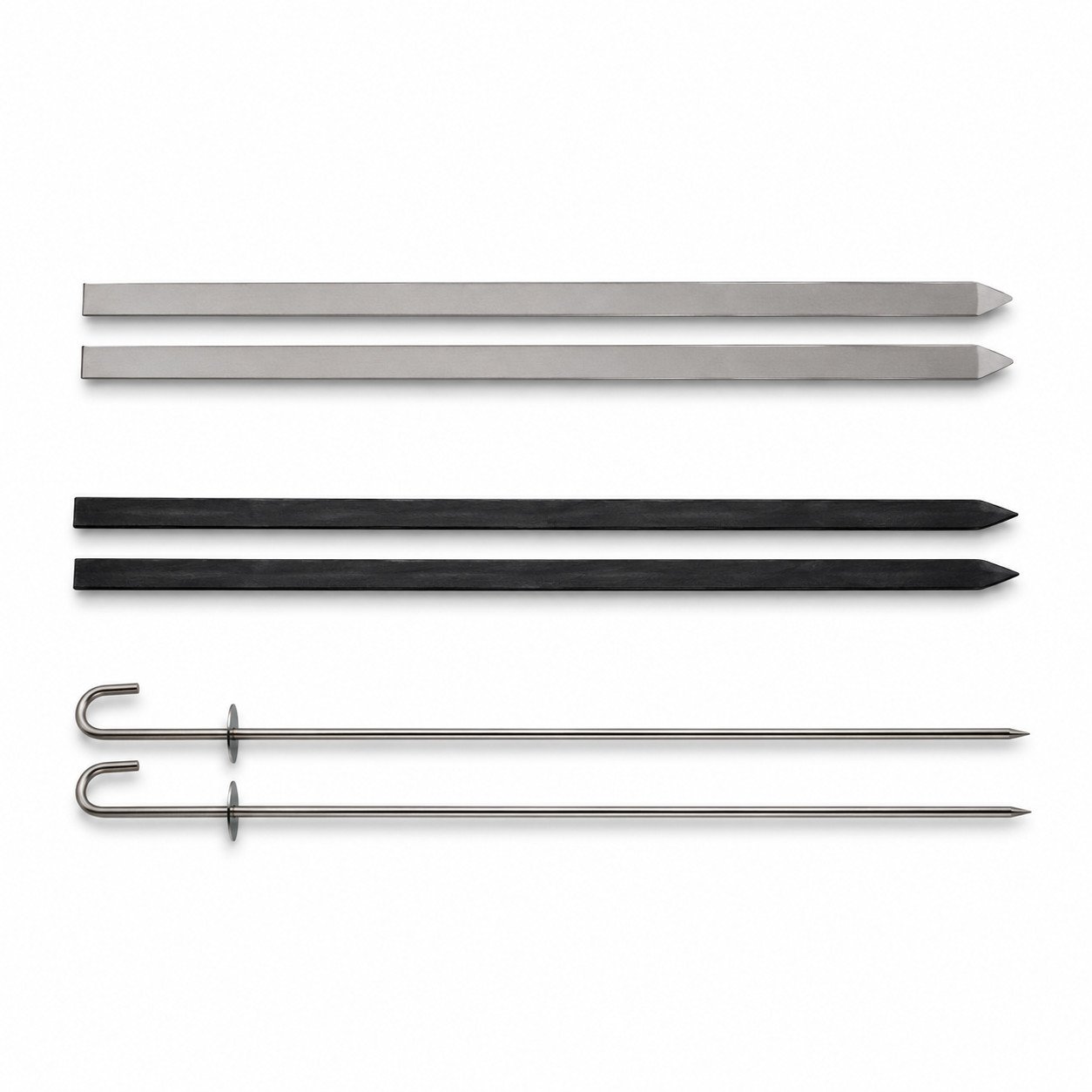
- Use the right skewers. Thicker skewers work best for meats, while thinner ones suit vegetables. Our Tandoor Skewers & Shish Kebab Skewers For Sale AS04 come in multiple thicknesses, which matters when a single festival menu covers everything from paneer to lamb chops.
- Rotate often. Turn skewers occasionally to avoid burning and ensure even cooking across every piece.
- Brush with butter or oil. A light brush while cooking keeps food moist and adds extra richness right before serving.
Choosing the Right Tandoor for Tandoori Feasts for Festivals
The right tandoor for a festival gathering depends heavily on how many guests you're feeding and how long the event runs. For catering-scale celebrations and larger family gatherings, the Round Catering Clay Tandoor Oven CS01 (24x37 inches) gives enough interior room to keep multiple skewers moving through the chamber at once, which matters when guests are arriving in waves rather than all sitting down together.
For a commercial-grade setup — a large joint family celebration, a community event, or anyone hosting festival meals regularly — the Restaurant Tandoor Oven CH02 (32x32x37 inches) offers the kind of continuous-duty capacity that keeps up with steady demand through a multi-hour celebration without falling behind. On the more intimate end, the Wood Fired Tandoor Oven R28 (20x28 inches) suits a smaller backyard gathering perfectly, adding genuine wood-fired smokiness to a family-sized festival spread without the footprint of a commercial unit.
Whichever model fits your celebration — the Round Catering Clay Tandoor Oven CS01, the Restaurant Tandoor Oven CH02, or the Wood Fired Tandoor Oven R28 — the same festival tandoori menu ideas above translate directly, just scaled to however many guests you're actually feeding.
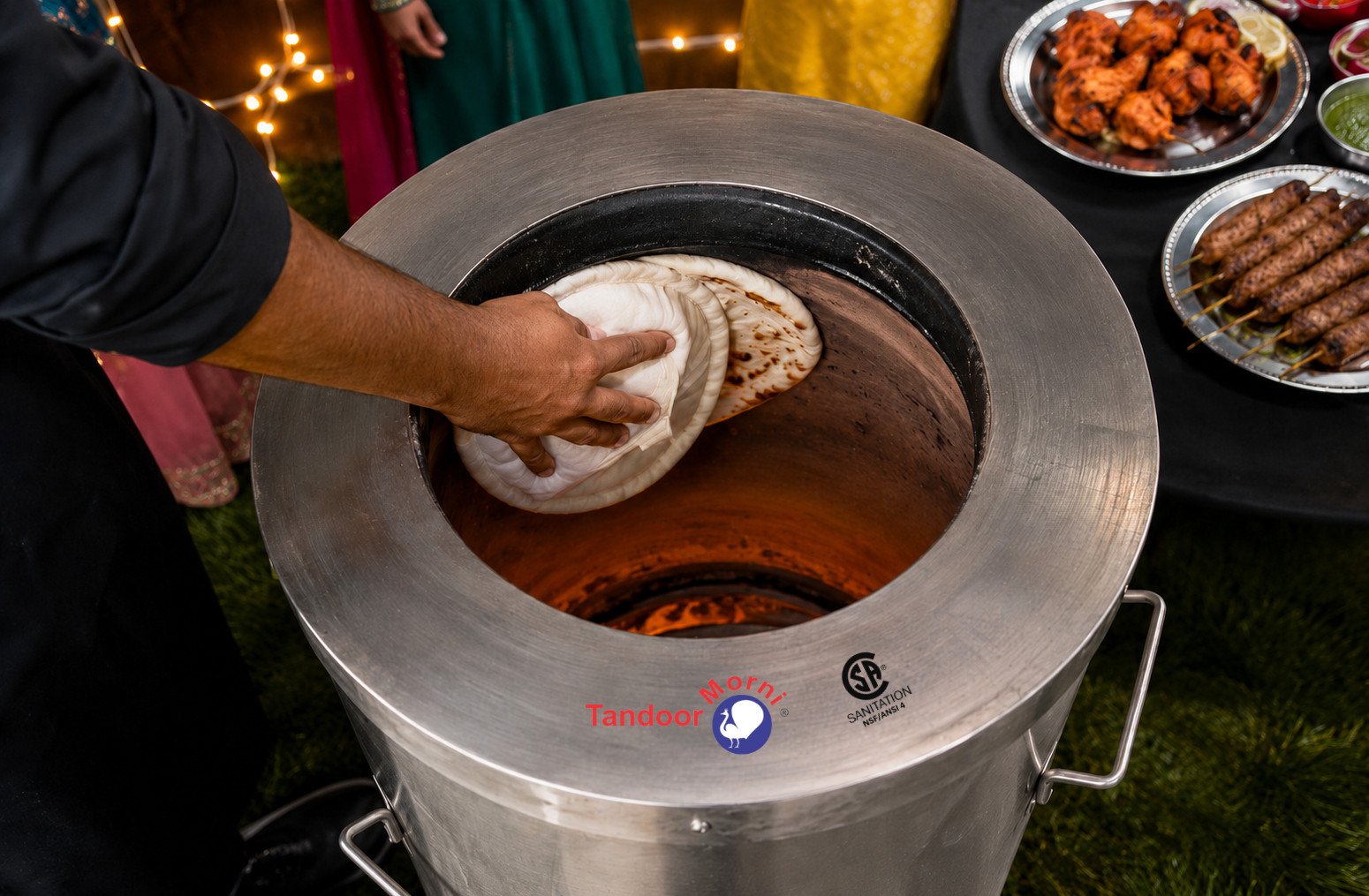
A naan gaddi keeps the dough pressed firmly and safely against the wall — essential when you're baking naan continuously for a full table of guests.
Serving a Crowd Safely: Food Safety for Festival Spreads
Cooking for a festival often means preparing food well ahead of when it's actually served, which makes basic food safety worth planning around rather than an afterthought. The CDC's guidance on serving food safely at large gatherings recommends keeping hot dishes above 140°F and not letting perishable foods sit out longer than two hours — a genuinely useful rule of thumb when tandoori dishes are coming off the fire in batches over the course of a long celebration rather than all at once.
In practice, this means timing your cooking so dishes come off the tandoor closer to when guests are actually ready to eat, rather than staging everything hours in advance. For a festival spread with dishes finishing at different times, keeping the earliest batches warm rather than letting them cool on the counter is worth the extra attention.
Common Mistakes Hosting Tandoori Feasts for Festivals
A handful of avoidable mistakes come up repeatedly when people cook tandoori feasts for festivals at scale for the first time.
- Underestimating marination time. Rushing the marinade for a large batch leaves flavor concentrated on the surface rather than throughout the dish — start the night before whenever possible.
- Not preheating long enough. A tandoor that hasn't fully preheated cooks unevenly, which is especially noticeable when you're running dish after dish through the same chamber for hours.
- Skipping the naan gaddi and improvising instead. A towel or bare hand isn't a substitute — it's both a burn risk and a shortcut that produces inconsistent naan right when guests are watching.
- Cooking everything at once. Staggering dishes so they finish close to serving time keeps food both safer and better-tasting than cooking the entire menu hours ahead.
- Undersizing the tandoor for the guest count. A unit that's too small for the crowd turns cooking into the bottleneck of the whole event — size up rather than hoping a smaller oven keeps pace.
Building a Full Festival Tandoori Menu for a Crowd
Once you've picked individual dishes, the bigger question is how they fit together into a coherent festival tandoori menu rather than a random assortment of skewers. A good rule of thumb is planning around two to three vegetarian options, two to three non-vegetarian options, and fresh naan running continuously throughout — that mix covers most dietary preferences at a mixed gathering without overcomplicating your cooking order.
Sequencing matters more than people expect. Start with dishes that hold up well if they sit for a few minutes, like seekh kebabs or paneer tikka, while the tandoor is still coming up to full temperature. Save quicker-cooking, more delicate items like fish or thin vegetable skewers for once the chamber is running at a fully consistent heat, since those dishes are the least forgiving of an uneven preheat. Naan should be the last thing you're producing continuously, since it's best served hot and doesn't hold up well sitting on a plate the way a kebab does.
Frequently Asked Questions
What makes tandoori feasts for festivals different from a regular tandoori dinner?
How far in advance should I marinate meat for a festival tandoori menu?
What's the best tandoor size for a family festival gathering versus a larger event?
Do I really need a tandoor oven naan gaddi, or can I improvise?
How do I keep tandoori food safe when serving a large festival gathering?
Can I mix vegetarian and non-vegetarian dishes on the same festival tandoori menu?
Final Thoughts on Celebrating with Tandoori Feasts
The beauty of tandoori cooking is not just in the flavors, but in the way it brings people together around the process itself. With a tandoor oven at home, you can recreate that same magic for friends and family, whether it's a major festival, a weekend gathering, or a simple family celebration. Tandoori feasts for festivals are more than a meal — they're a way to honor tradition, enjoy the present, and create the kind of shared memory that a regular dinner rarely produces. Fire up the tandoor, gather your loved ones, and let the smoky, charred flavors do the rest.
Have questions about planning a tandoori feast for your next celebration, or need help picking the right oven size? Call us at +1 (727) 251-6924 or email info@tandoormorni.com, and our team can help. Certified ovens and accessories are also available through flexible financing options.