

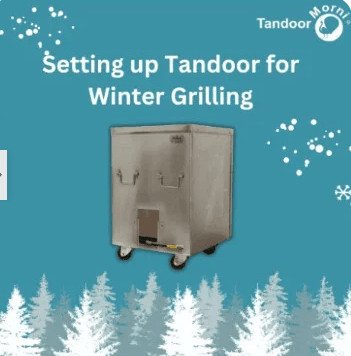
The clay winter tandoor works year-round — including in genuinely cold climates — with some specific adjustments to preheat timing, positioning, and session management. This guide covers everything that changes in cold weather and what to expect from a winter tandoor session compared to the summer baseline most guides assume.
This is particularly relevant for Canada and the northern United States, where Tandoor Morni’s customer base includes many owners who want to use their ovens through genuinely cold winters. The guidance here is based on real-world cold-weather operation of our clay tandoors.
Extended Preheat in Cold Weather
The standard summer preheat for a Tandoor Morni oven runs 20 to 30 minutes to reach full cooking temperature. In cold weather, expect this to extend considerably: at 5 degrees Celsius, add 10 to 15 minutes. At or below freezing, add 15 to 25 minutes. In severe cold below -10 degrees Celsius, a 45 to 50 minute full preheat before cooking begins is realistic. The clay’s thermal mass doesn’t change, but starting from a much colder baseline means more energy is required before the wall reaches baking temperature.
The practical implication: in winter, start the preheat earlier than you think you need to, and confirm readiness with a laser thermometer rather than elapsed time. A wall that feels hot to a hand held briefly near the opening may still be significantly below naan-baking temperature if the oven started at -5 degrees Celsius.
Avoiding Thermal Shock
Clay under rapid thermal change — specifically, a very cold wall heated too quickly by a high flame — can develop stress cracks as different sections of the clay expand at different rates. This risk is real in genuinely cold temperatures (below -5 degrees Celsius) where the clay starts significantly below ambient outdoor temperature. The remedy is simple: in cold weather, open the burner or ignite the charcoal at a lower setting initially and increase to full heat after 10 minutes, giving the clay time to begin warming gradually before the full thermal load is applied. At ambient temperatures above freezing, the risk is minimal and a normal ignition process is fine.
Wind — The Most Significant Variable
Cold ambient temperature affects preheat time. Wind affects everything. Even a modest 15 to 20 km/h wind strips heat from the tandoor’s exterior faster than the burner can maintain temperature through a cooking session, dropping internal temperature by 50 to 100 degrees Fahrenheit and potentially preventing the oven from reaching or maintaining its cooking target. Always position the tandoor behind a windbreak — a garden wall, fence, corner of a building, or purpose-built temporary shelter — when cooking in windy conditions. An exposed tandoor in winter wind is fighting a battle it often can’t win regardless of burner output.

Session Management in Cold Weather
Winter sessions benefit from a tighter, more efficient structure than summer cooking. The oven cools faster between batches when the ambient temperature is low, so minimise gaps between items rather than pausing at leisure between courses. Have all food prepped and ready to go in before the session starts rather than doing any remaining preparation while the first batch cooks. Use the initial naan test round to confirm the wall is genuinely at temperature before committing protein items. And plan for a shorter session overall — maintaining cooking temperature for an extended 2-hour summer party is straightforwardly harder in 0-degree weather than in 25-degree weather.
What Works Best in Winter Sessions
The same recipes that work in summer work in winter, with no flavour compromise — the clay oven’s character isn’t affected by cold ambient temperatures once it has reached cooking temperature. If anything, the richer, warming spiced dishes of the tandoor repertoire (classic tandoori chicken, lamb seekh kebab, bone-in preparations with 20-minute-plus cook times) suit a cold winter evening’s eating context better than the lighter, fresh salad-based preparations that feel more natural in summer. A winter tandoor session built around heartier main courses — seekh kebab, whole chicken quarters, masala naan — and shorter overall in duration is often more satisfying than trying to replicate a long, varied summer spread in conditions where maintaining temperature across an extended session requires more management effort.
Cover and Storage Between Sessions
Between winter cooking sessions, keep the tandoor covered with a purpose-made lid or a weather-resistant cover to prevent water accumulation inside the clay cylinder. Water inside a tandoor that then freezes overnight can cause stress cracking as it expands — the same thermal shock risk from a different direction. A Tandoor Morni cover fits the oven’s opening directly; an improvised cover that prevents rain and snow from entering the chamber while allowing some air circulation is also sufficient. Do not store the tandoor in a heated indoor space and then move it directly outside to a very cold environment for cooking — the thermal shock of that temperature differential is exactly the risk the gradual preheat procedure is designed to avoid.
Frequently Asked Questions — Winter Tandoor Use
How much longer does a tandoor take to preheat in winter?
10-20 minutes longer than summer’s 20-30 minutes — at or below freezing, plan for 45-50 minutes total. Use a thermometer rather than elapsed time to confirm readiness.
Will cold weather damage a clay tandoor?
Cold itself won’t — but heating a very cold clay wall too rapidly can cause thermal shock cracking. Below -5°C, start on a low flame and increase gradually over the first 10 minutes.
How does wind affect tandoor cooking in winter?
Wind is the most significant variable — it strips heat from the exterior, dropping internal temperature by 50-100°F even at modest wind speeds. Always position behind a windbreak.
Should I use more gas or charcoal in cold weather?
Gas output is largely unaffected by cold, but run the burner slightly higher than usual to compensate for lower heat retention. Charcoal ignition is slower in cold and damp — plan for a longer initial burn.
What should I cook first in a cold-weather tandoor session?
Naan first — the wall-baking test tells you whether the oven has genuinely reached temperature before you commit protein to it. A wall that isn’t ready causes naan to fall rather than stick.
Is it safe to use a tandoor in snow or rain?
Rain entering the hot clay opening can cause thermal shock and steam. Use a covered area or canopy. Snow around the base is less immediately risky — keep the oven base dry and the walls clear.
More Tandoor Guides
Winter Tandoor Use in Canada and the Northern US
Tandoor Morni has sold clay tandoors across Canada and the northern United States for over three decades, and a significant portion of our customers live in climates where winter temperatures routinely drop below -10 degrees Celsius. Winter tandoor use is not an edge case for this customer base — it’s a substantial part of how their ovens get used across the year, and the guidance on this page reflects accumulated real-world experience from owners who have been cooking in Canadian winters since the 1990s.
The short version of that experience: the tandoor works perfectly well in cold weather with the adjustments described above. Owners in Toronto, Calgary, and Montreal who cook through genuine Canadian winters report results that are fully comparable to summer cooking once the extended preheat and wind management habits are established. The challenge is primarily about patience and positioning rather than any fundamental limitation of the clay oven in cold conditions.
Winter Menus Worth Planning
Winter seasonal produce and cold-weather eating preferences align naturally with several of the more substantial tandoori preparations. Bone-in tandoori chicken or lamb, which benefit from the longer 18 to 25 minute cook times, are well suited to a cold evening where a shorter, lighter starter isn’t what guests want. Seekh kebab, warming and protein-rich, is an ideal winter tandoor starter. Masala naan, with its dense stuffed format, suits winter’s comfort food preferences better than the lighter garlic or plain naan varieties that fit summer eating more naturally.
For the vegetarian component of a winter spread, whole roasted tandoori cauliflower wedges and tandoori jackfruit — both substantial, warming preparations — work better on a cold evening than lighter options like corn on the cob, which is frankly better suited to a summer barbecue context regardless of how well the tandoor technically handles it at any temperature.
Insulation Options for Cold-Weather Sessions
Some owners in very cold climates wrap the tandoor’s exterior (not the top opening) with a fire-rated insulating blanket between batches during a session, reducing heat loss through the clay walls and extending the time the oven holds cooking temperature between active burns. This is not standard practice in moderate climates, but in environments where ambient temperature is consistently below -15 degrees Celsius during a cooking session, it can meaningfully reduce the gas or charcoal consumption required to maintain temperature across a multi-batch session. Tandoor Morni can advise on suitable insulating materials on request — not all materials rated for heat resistance are suitable for use around a live flame at tandoor temperatures.
Safety Reminders for Cold-Weather Outdoor Cooking
Cold-weather tandoor use involves the same outdoor gas or charcoal safety principles as any other outdoor cooking, with a few winter-specific additions. Never use the tandoor indoors or in an enclosed space regardless of cold — the tandoor produces combustion gases and requires open-air ventilation. Gloves and long-handled tools are more important in winter when cold makes fine manual control harder and the temptation to reach closer to the heat is greater. Keep the cooking area clear of accumulated snow, which can become a slipping hazard around a hot oven. Check gas connections and hose condition at the start of the season — cold temperatures can affect rubber hose flexibility and joint integrity over time, and a connection check before the first winter session costs minutes but can identify issues before they become problems mid-cook.