The hose connecting your tandoor to its gas supply is small, cheap compared to the oven itself, and easy to overlook — right up until it isn't. Getting an approved gas hose for tandoors matched to your setup isn't a minor detail; it's one of the few components on the whole unit where using the wrong part genuinely creates fire and gas leak risk. Whether you're setting up a single home unit or a full commercial kitchen lineup, the hose has to meet real gas tandoor hose requirements, not just fit the fitting — and the difference between a hose that's technically compatible and one that's actually approved is exactly what this guide walks through.
This guide walks through the approved hose types for gas tandoors, what actually makes a hose certified, how a commercial tandoor gas connector kit differs from a basic residential setup, and the practical safety checklist worth running through before you connect anything to a live gas line.
Why Choosing the Right Gas Hose Matters
A gas tandoor hose is what connects your LPG tank or gas line to the tandoor's burner. Using the wrong hose — one not rated for the pressure, heat exposure, or duty cycle your kitchen actually needs — can lead to gas leaks, fires, or damage to the equipment itself. That's exactly why it matters to use only approved gas hose types that meet the safety standards set by recognized gas regulatory bodies, rather than whatever generic hose happens to fit the connection.
Approved Gas Hose for Tandoors: The Three Main Types
Three hose types are commonly approved for tandoor installations in residential and commercial settings across North America.
1. CSA-Certified Rubber LPG Hoses
These hoses are tested and approved specifically for use with liquefied petroleum gas. A CSA-certified hose for tandoor use is typically built from reinforced rubber designed to handle high-pressure gas flow safely. As long as the hose is kept clear of direct heat, this type works well indoors or in shaded commercial settings.
2. Heat-Resistant Gas Hoses
For industrial tandoor setups, heat-resistant gas hoses built with reinforced synthetic rubber and fabric stitching are the better choice. These hoses are far less likely to crack or melt when positioned near hot tandoor surfaces, since they're specifically engineered to tolerate sustained high-temperature exposure.
3. Stainless Steel Braided Hoses
Stainless steel braided hoses offer the strongest protection against heat, pressure, and general wear. They cost more upfront, but they last significantly longer and are the standard choice in commercial tandoor setups that run for extended periods or need the flexibility to reposition equipment regularly.
Gas Tandoor Hose Requirements: What to Check Before You Buy
Whichever hose type you're considering, a few gas tandoor hose requirements apply universally.
- Look for a recognized approval mark. A hose should carry a visible certification mark, not just a manufacturer's claim of safety on the packaging.
- Get the length right. Too long and the hose can tangle or kink; too short and it puts stress on the fittings at both ends.
- Keep it clear of direct heat. Route the hose away from open flame or any surface of the tandoor that gets hot enough to affect the material.
- Secure both ends properly. Use the correct clamps to hold the hose firmly to both the cylinder or gas line and the tandoor connection.
- Inspect regularly. Check for cracks, stiffening, or any sign of a leak on a consistent schedule, not just at installation.
- Replace on schedule. Most manufacturers recommend replacing a gas hose every two years, or sooner if inspection reveals wear.
Certified Hose for Tandoor: Why Certification Actually Matters
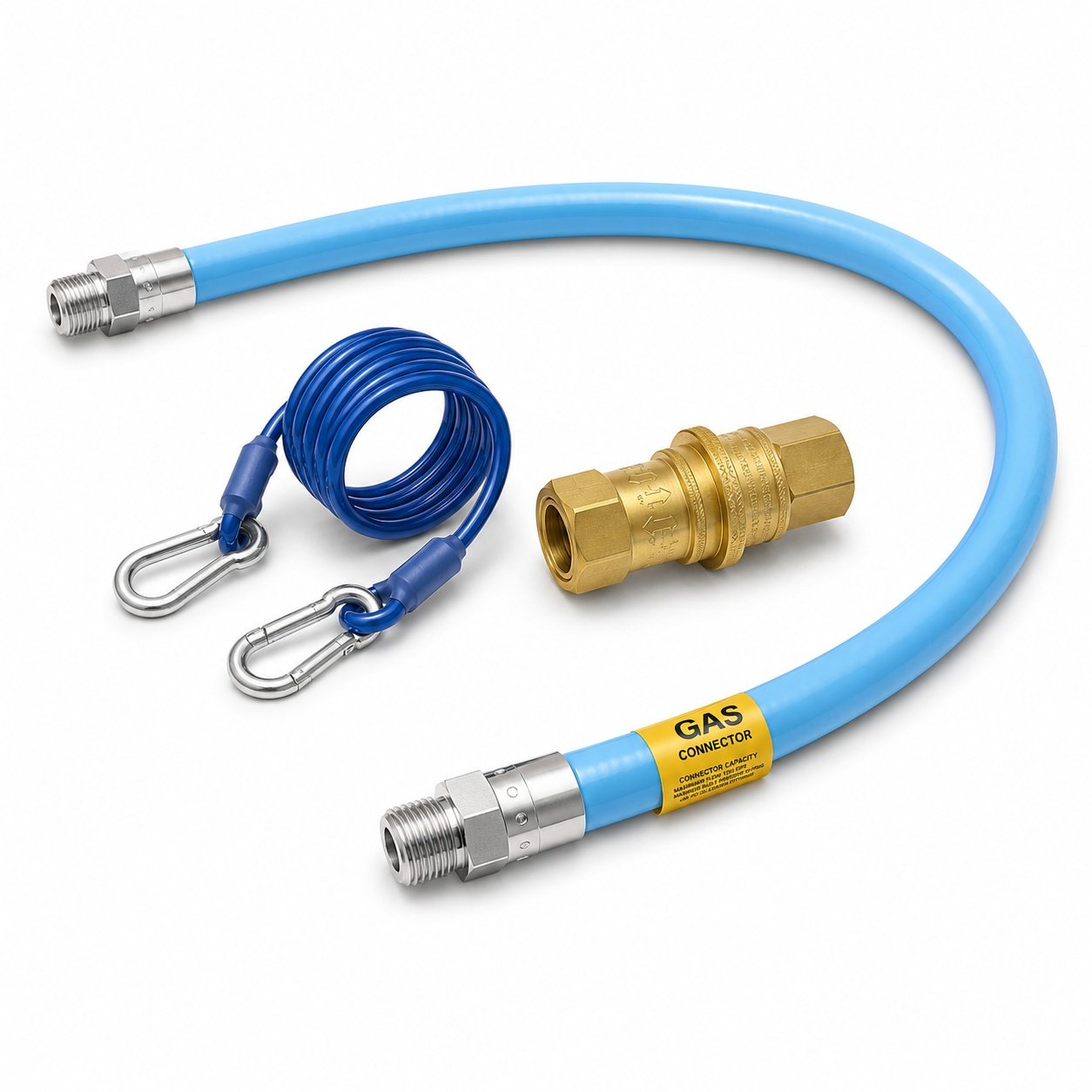
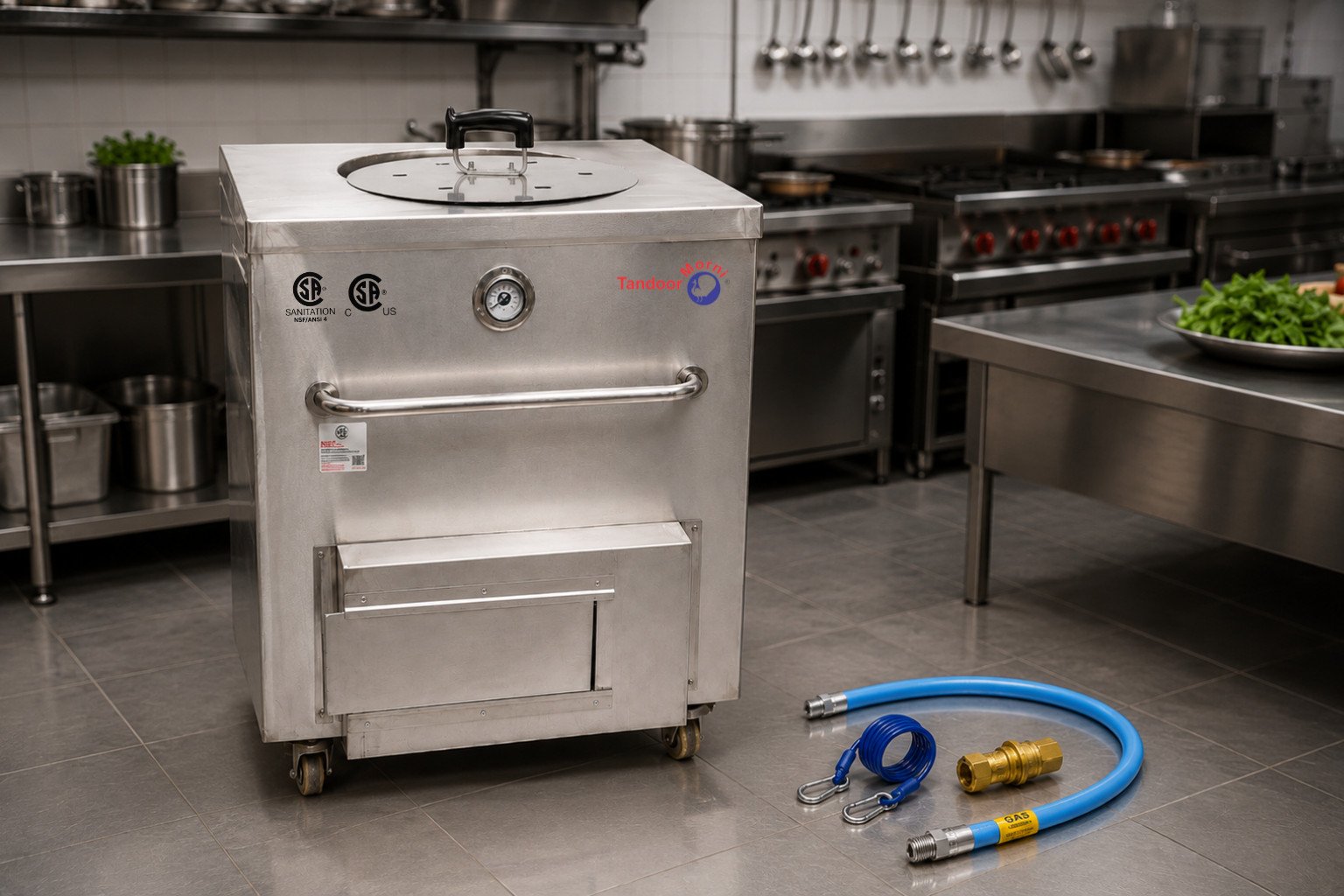
A certified hose for tandoor use has been independently tested against real safety standards rather than simply described as safe by the seller. Look specifically for hoses certified to CSA or NSF equivalent standards, since these organizations test for exactly the failure modes that matter — pressure tolerance, heat resistance, and connection integrity under repeated use. Our Tandoor Oven Flexible Gas Hose & Commercial Gas Connector Kit AS01 is built to this standard, so you're not stuck trying to independently verify a generic hardware-store hose is actually rated for tandoor use.
Commercial Tandoor Gas Connector Kit: What's Actually Included
A commercial tandoor gas connector kit typically bundles more than just the hose itself — proper clamps, connection fittings sized for both the gas supply and the tandoor valve, and often a quick-disconnect fitting that makes repositioning a portable or mobile unit far easier than wrestling with threaded fittings every time. Buying a complete kit rather than sourcing a hose and fittings separately reduces the chance of mismatched components, which is itself a common source of leaks at the connection points rather than the hose material.
Hose Length and Placement Considerations
Getting hose length right is more of a balancing act than it first appears. A hose that's too short forces the tandoor into a fixed position and puts constant tension on both end fittings, which accelerates wear at exactly the point most likely to develop a leak. A hose that's too long is prone to kinking, tangling underfoot, or being routed too close to a heat source simply because there's excess length that has to go somewhere. Measure the actual working distance between your gas source and the tandoor's connection point before ordering, and add only the minimal slack needed for the unit to be repositioned slightly without strain.
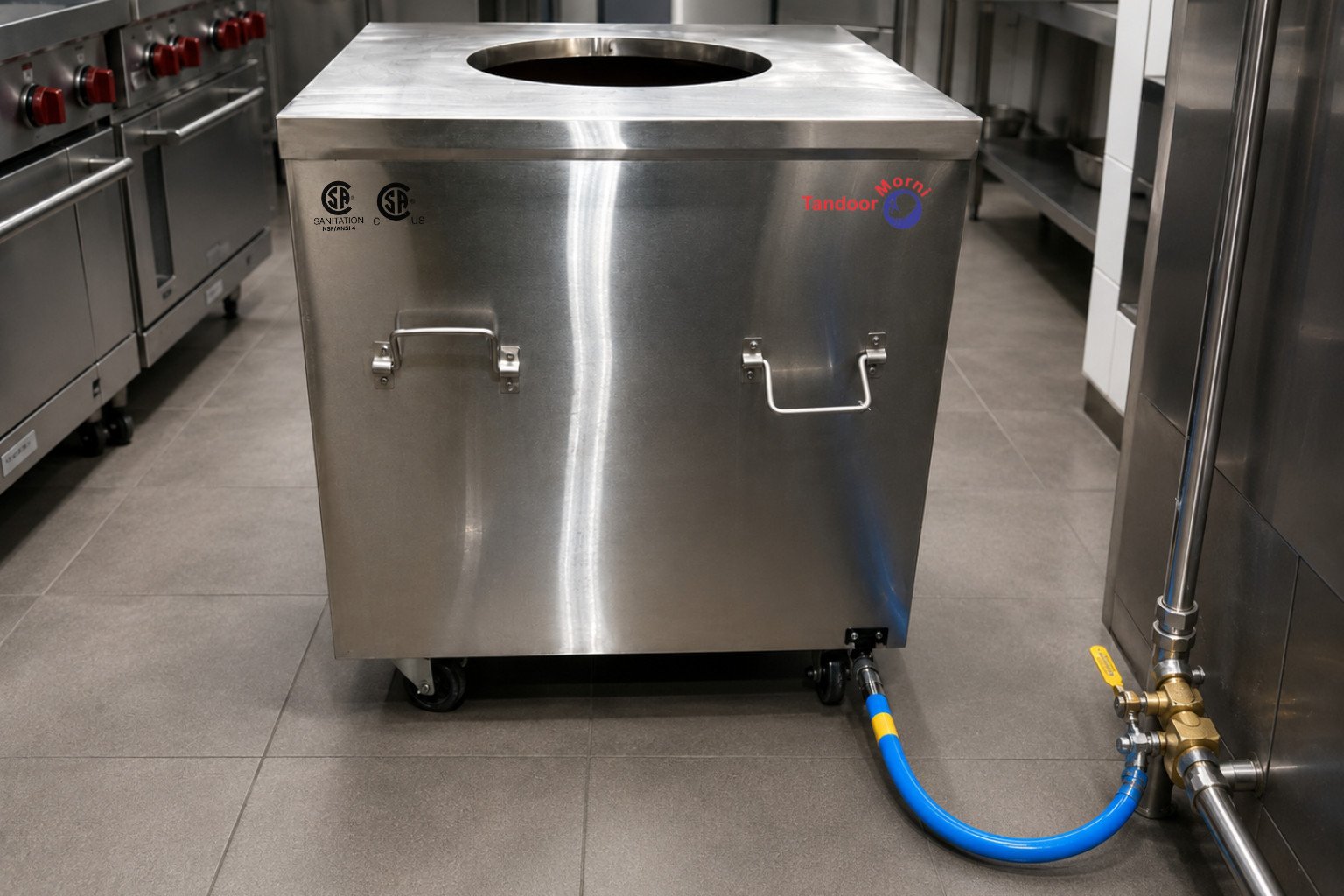
Both ends of the hose need a properly secured clamp — the connection points, not just the hose itself, are where most leaks actually start.
How Hose Needs Differ by Oven Model
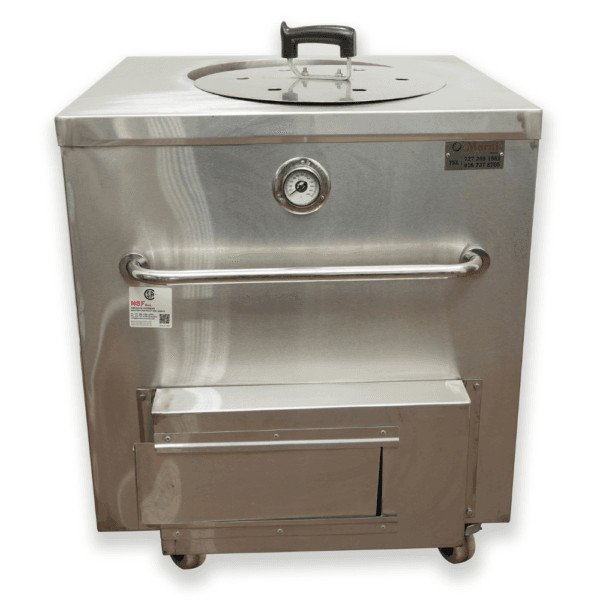
Hose selection isn't entirely one-size-fits-all — chamber size, fuel type, and typical usage pattern all shift what matters most. The Natural Gas Tandoor Oven CH04 (34x34x37 inches) connects to a fixed natural gas line rather than a portable LPG tank, which means hose length and routing tend to be determined once at installation rather than adjusted regularly — worth getting exactly right the first time. For kitchens that need documented compliance alongside safe operation, the CSA ETL NSF Tandoor Oven T04 (34x34x37 inches) pairs certified oven construction with the same expectation that every connected component, hose included, carries equivalent certification.
In a high-volume commercial setting, the Restaurant Tandoor Oven CH02 (32x32x37 inches) puts a hose through far more heat cycles per week than a lower-volume unit, which makes the stainless steel braided option worth the extra upfront cost given how much faster a standard rubber hose wears under that kind of repeated use. Whichever model you're running — the Natural Gas Tandoor Oven CH04, the CSA ETL NSF Tandoor Oven T04, or the Restaurant Tandoor Oven CH02 — the underlying gas tandoor hose requirements stay the same. What changes is which hose type actually makes sense given your fuel source and duty cycle.
Common Mistakes When Choosing a Gas Hose
A handful of avoidable mistakes come up repeatedly with hose selection and installation.
- Buying based on fitting size alone. A hose that physically connects isn't necessarily rated for the pressure or heat exposure your tandoor actually produces.
- Skipping the certification check. An uncertified hose might work fine for months before a failure mode shows up that certified testing would have caught in advance.
- Routing the hose too close to heat. Even a heat-resistant hose has limits, and positioning matters as much as material choice.
- Ignoring the two-year replacement guideline. A hose that looks fine on the outside can still be degrading internally from repeated pressure cycling.
- Mixing mismatched fittings. Combining a hose from one source with clamps or connectors from another increases the chance of a poor seal at the connection point.
When to Replace Your Gas Tandoor Hose
Beyond the standard two-year guideline, a few signs mean replacement shouldn't wait. Any visible crack, stiffening, or brittleness in the hose material is a clear signal, as is any bubbling during a routine soap-and-water leak test. A hose that's been kinked sharply, even briefly, can develop internal damage that isn't visible from the outside but still compromises its integrity. When in doubt, the cost of a new Flexible Gas Hose & Connector Kit AS01 is negligible compared to the risk of continuing to run a hose you're not fully confident in.
Installation Best Practices for a New Gas Hose
Getting the hose right at the point of installation prevents most of the problems that show up later. Always run a soap-and-water leak test on every connection immediately after installing a new hose, before the tandoor ever goes into regular use — a hose that seals perfectly on the shelf can still develop a poor connection if a fitting isn't tightened to spec. Route the hose in a straight, unobstructed path wherever possible, avoiding sharp bends that stress the material at a single point rather than distributing flex evenly along its length.
For any indoor gas-fired installation, pair the hose setup with proper ventilation — a certified exhaust hood confirms the airflow an enclosed kitchen space actually needs regardless of how well the hose itself is rated. A gas tandoor hose requirements checklist that stops at the hose alone, without accounting for the room it's installed in, is only doing half the job.
Comparing Hose Types Side by Side
| Hose Type | Best For | Tradeoff |
|---|---|---|
| CSA-Certified Rubber LPG | Indoor or shaded residential and light commercial use | Needs to stay clear of direct heat exposure |
| Heat-Resistant Gas Hose | Industrial setups with more heat exposure near the unit | Costs more than standard rubber options |
| Stainless Steel Braided | High-volume commercial kitchens running daily | Highest upfront cost, longest service life |
Most home cooks running an occasional weekend tandoor session are well served by a certified rubber hose. Restaurants and caterers running the same unit nightly tend to get more value out of the durability a stainless steel braided option provides, even accounting for the higher initial price.
Documentation and Compliance for Commercial Kitchens
For a restaurant or catering business, hose certification isn't just about the physical safety of the equipment — it's also documentation an inspector may ask to see. Keep receipts or product documentation confirming your commercial tandoor gas connector kit carries genuine certification, and note the installation date so you can track when the two-year replacement window actually falls. This is a small amount of recordkeeping that pays off the moment a health or fire inspector asks how you're verifying gas-connected equipment meets code, rather than scrambling to prove it after the fact.
Pairing a certified hose for tandoor use with a documented replacement schedule also makes staff training simpler — new hires can be shown exactly what "approved" looks like on a label, rather than being asked to judge hose safety by feel or appearance alone.
Extra Considerations for Portable and Mobile Setups
Food trucks and catering operations that move a tandoor between locations put a hose through a different kind of stress than a fixed installation — repeated coiling, uncoiling, and transport vibration all add wear beyond what a stationary restaurant unit experiences. A quick-disconnect fitting, included in most commercial tandoor gas connector kits, makes breaking down and reconnecting the gas line meaningfully faster and reduces how often the hose itself gets twisted or strained during setup and teardown. For any mobile operation, it's worth running the full soap-and-water leak test at every new location, not just at the original point of installation, since a connection that traveled well can still loosen slightly during transport.
Frequently Asked Questions
What makes a gas hose "approved" for tandoor use?
How often should I replace my tandoor's gas hose?
Is a stainless steel braided hose worth the extra cost?
What's included in a commercial tandoor gas connector kit?
Can I use a standard hardware-store gas hose on my tandoor?
Does hose choice matter differently for a home tandoor versus a restaurant?
Final Thoughts on Choosing the Right Gas Tandoor Hose
Choosing an approved gas hose for tandoors isn't the most exciting part of setting up a kitchen, but it's one of the few decisions where getting it wrong has genuinely serious consequences. Match the hose type to your fuel source and usage pattern, confirm real certification rather than a vague safety claim, get the length right, inspect it regularly, and replace it on schedule. Get those basics right and the hose becomes one less thing to worry about every time you light the tandoor.
Have questions about which hose fits your setup, or ready to order a certified connector kit? Call us at +1 (727) 251-6924 or email info@tandoormorni.com, and our team can help. Certified ovens and accessories are also available through flexible financing options, and our Operation Manual covers gas connection setup in more detail for CH and CS series ovens.