Tandoor Ovens: Everything You Should Know
If you've ever wondered what is a tandoor oven and why it produces food that tastes so different from anything cooked in a conventional oven or grill, this tandoor oven guide is the place to start. From the char on tandoori chicken to the blistered edges of fresh naan, the tandoor is responsible for some of the most recognizable flavors in South Asian, Middle Eastern, and Central Asian cooking — and understanding how does a tandoor oven work makes it much easier to choose the right one and get consistently great results from it.
This guide covers everything from the basic mechanics and history of the tandoor to the different types available today, what you can cook in one, how to choose between home and commercial models, and the accessories — including a tandoori naan rod pair — that make everyday use easier and safer.
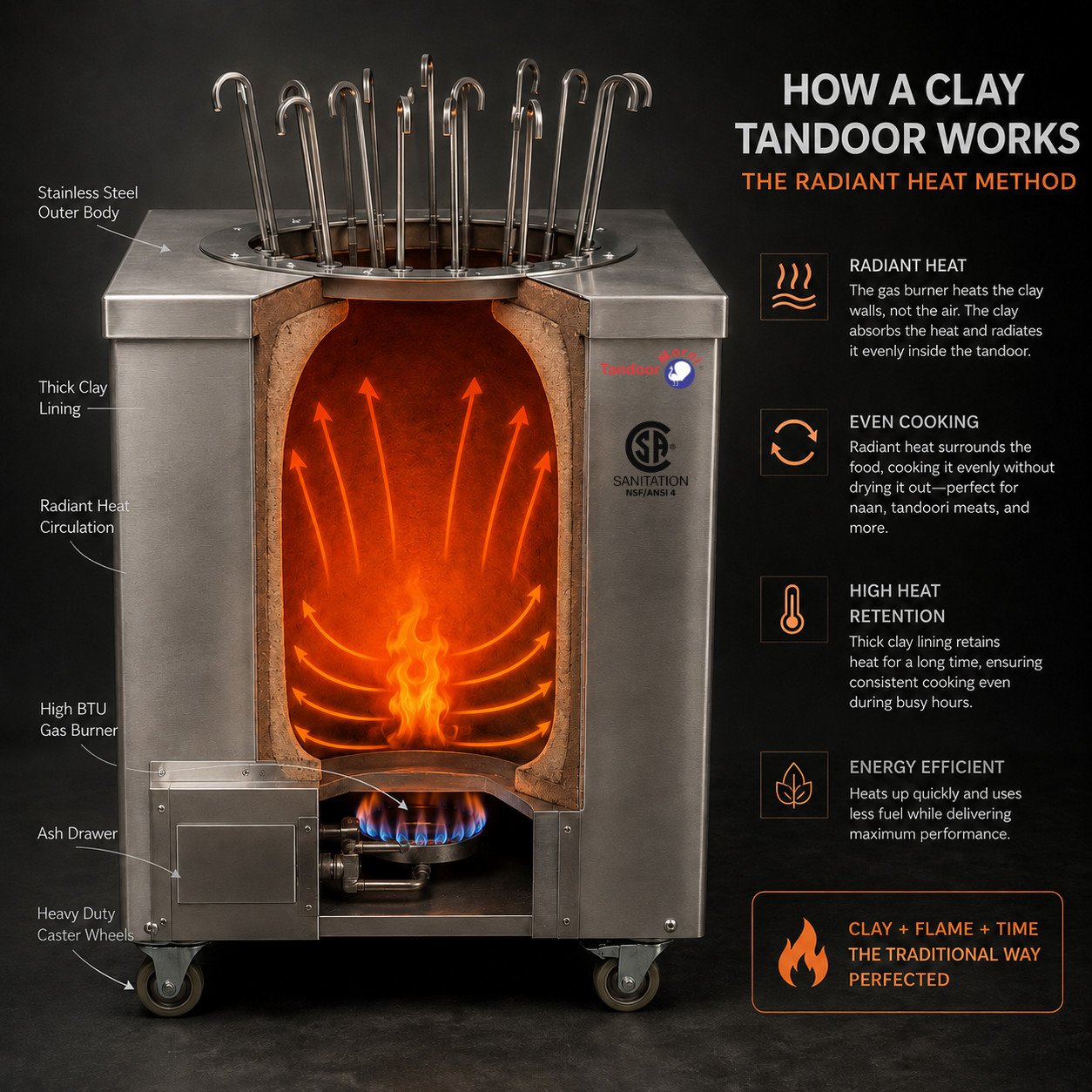
Understanding how a tandoor oven works is the first step to getting the most out of one.
What Is a Tandoor Oven?
A tandoor is a cylindrical clay or clay-lined oven that cooks food using intense radiant heat, typically reaching temperatures between 600 and 900 degrees Fahrenheit. Unlike a conventional oven that surrounds food with hot air, a tandoor's fired clay walls store and radiate heat directly onto whatever is inside — whether that's a naan pressed against the wall or a skewer of marinated chicken suspended in the center of the chamber.
The tandoor has roots stretching back roughly 5,000 years, with its earliest prominent use tied to the Indus Valley and Harappan civilizations. Its design evolved over centuries and spread across the Indian subcontinent before gaining lasting popularity throughout West and Central Asia. Today, a tandoor oven shows up everywhere from village courtyards to Michelin-starred restaurant kitchens, and the fundamental cooking principle hasn't changed even as the materials and fuel sources around it have.
Where the Tandoor Actually Comes From
Traces of tandoor-style cooking also appear in Egyptian and Mesopotamian civilizations, suggesting the core idea — a fired clay chamber delivering intense radiant heat — emerged independently in more than one part of the ancient world rather than spreading from a single origin point. By the 16th and 17th centuries, the Mughals had taken a direct hand in shaping the tandoor's modern form. Jahangir, a Mughal emperor, is credited with commissioning a portable tandoor so his traveling cooks could prepare his meals wherever his court happened to be — an early ancestor of today's portable and catering tandoor models.
The tandoor's history isn't purely ceremonial, either. After the partition of India, families migrating from Western Punjab to the eastern region often carried their tandoors with them, cooking in makeshift, home-built versions known as the "ghar ke tandoor," or household tandoor. That resourceful, adaptive instinct — building or bringing a tandoor wherever it's actually needed — runs through the entire history of the equipment, right up through the portable and home-scale models available today.
How Does a Tandoor Oven Work?
A tandoor's cooking method comes down to three things working together: extreme heat, a fired clay chamber, and two distinct cooking positions inside that chamber.
Radiant Heat Storage
The clay walls absorb heat from the fuel source below and radiate it evenly across the chamber, functioning as a heat reservoir rather than simply surrounding food with hot air the way a conventional oven does.
Wall Cooking
Flatbreads like naan are pressed directly against the hot interior wall, where they puff, blister, and char within about 90 seconds, absorbing stored heat from the clay itself.
Skewer Cooking
Proteins and vegetables are threaded onto skewers and suspended vertically in the center of the chamber, cooking quickly from the direct radiant heat and any smoke generated by dripping juices hitting the fuel source below.
Fast, High-Heat Cooking
The combination of extreme heat and direct contact with the clay or open flame is what produces the tandoor's signature char and smoky flavor in a fraction of the time a conventional oven would take.
The Main Types of Tandoor Ovens
| Clay Tandoors | The most traditional build, made from fired clay throughout. Delivers the most authentic flavor but requires more careful handling and is more prone to cracking under thermal stress over time. |
|---|---|
| Stainless Steel Tandoors | A steel exterior wrapped around a genuine clay-lined interior, combining traditional cooking performance with better durability, easier cleaning, and stronger resistance to cracking. |
| Gas Tandoors | Fueled by propane or natural gas, offering fast, consistent heat-up and precise temperature control — a strong fit for both home cooks and commercial kitchens that value repeatability. |
| Charcoal Tandoors | Fueled by charcoal for the most traditional smoky flavor, especially noticeable in skewered proteins. Requires more hands-on fire management than a gas-fired unit. |
| Electric Tandoors | The simplest option for indoor use, though generally unable to reach quite the same peak temperatures as gas or charcoal models. |
What Can You Cook in a Tandoor Oven?
Part of what makes a tandoor such a valuable piece of equipment is how much range it offers from a single chamber.
Choosing Between a Home and Commercial Tandoor Oven
Not every tandoor oven guide makes this distinction clearly enough: a tandoor built for home use and one built for a commercial kitchen are genuinely different pieces of equipment, even though they share the same core cooking method.
Propane Gas Tandoor Oven A02
Sized at 32x32 inches, the Propane Gas Tandoor Oven A02 is a favorite entry point for home cooks and smaller operations, combining fast heat-up with dependable temperature control and real cooking capacity.
Restaurant Tandoor Oven CH02
Built for daily commercial volume, the Restaurant Tandoor Oven CH02 handles a full dinner service with consistent recovery time between orders, night after night.
Wood Fired Tandoor Oven R28
For home cooks chasing the most traditional smoke flavor, the Wood Fired Tandoor Oven R28 delivers authentic char without the continuous-duty demands of a commercial kitchen.
A commercial unit needs to recover heat quickly between orders, run for hours without a break, and in most jurisdictions carry certification that a home unit was never built to meet. A home tandoor, by contrast, is built for occasional use — a weekend cookout or a family dinner — and doesn't need that same continuous-duty rating. Understanding this distinction before you shop makes the rest of the buying decision far easier.
What to Know Before Your First Tandoor Cook
A brand-new tandoor shouldn't go straight into full use the day it arrives. Curing — a gradual, staged heating process — lets the clay body adjust slowly to high temperatures, reducing the risk of cracking that can happen if a cold oven is pushed straight to full heat. Once cured, preheating fully before the first piece of food goes in is the single most important habit for consistent results, whether you're baking naan or cooking a skewer of chicken.
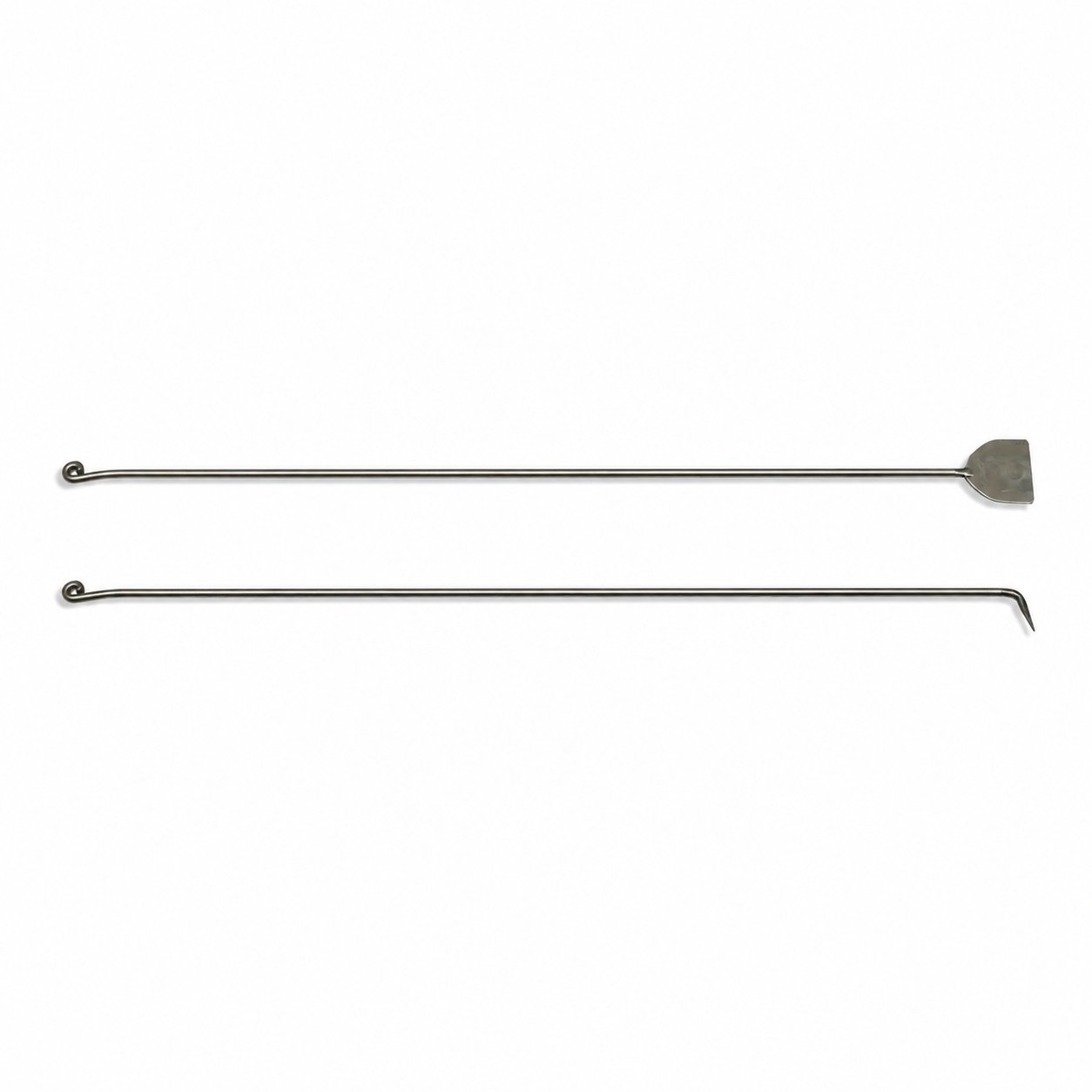
It's also worth having a couple of accessories on hand before that first session. A tandoori naan rod pair is one of the most useful tools you can own for wall-baked bread — the Tandoori Naan Rod Pair AS03 lets you retrieve finished naan cleanly from a wall that regularly exceeds 600 degrees Fahrenheit, without tearing the puffed dough or bringing a hand too close to the heat. It's a small purchase, but it's the tool that makes wall-baking naan practical rather than nerve-wracking for a first-time user.
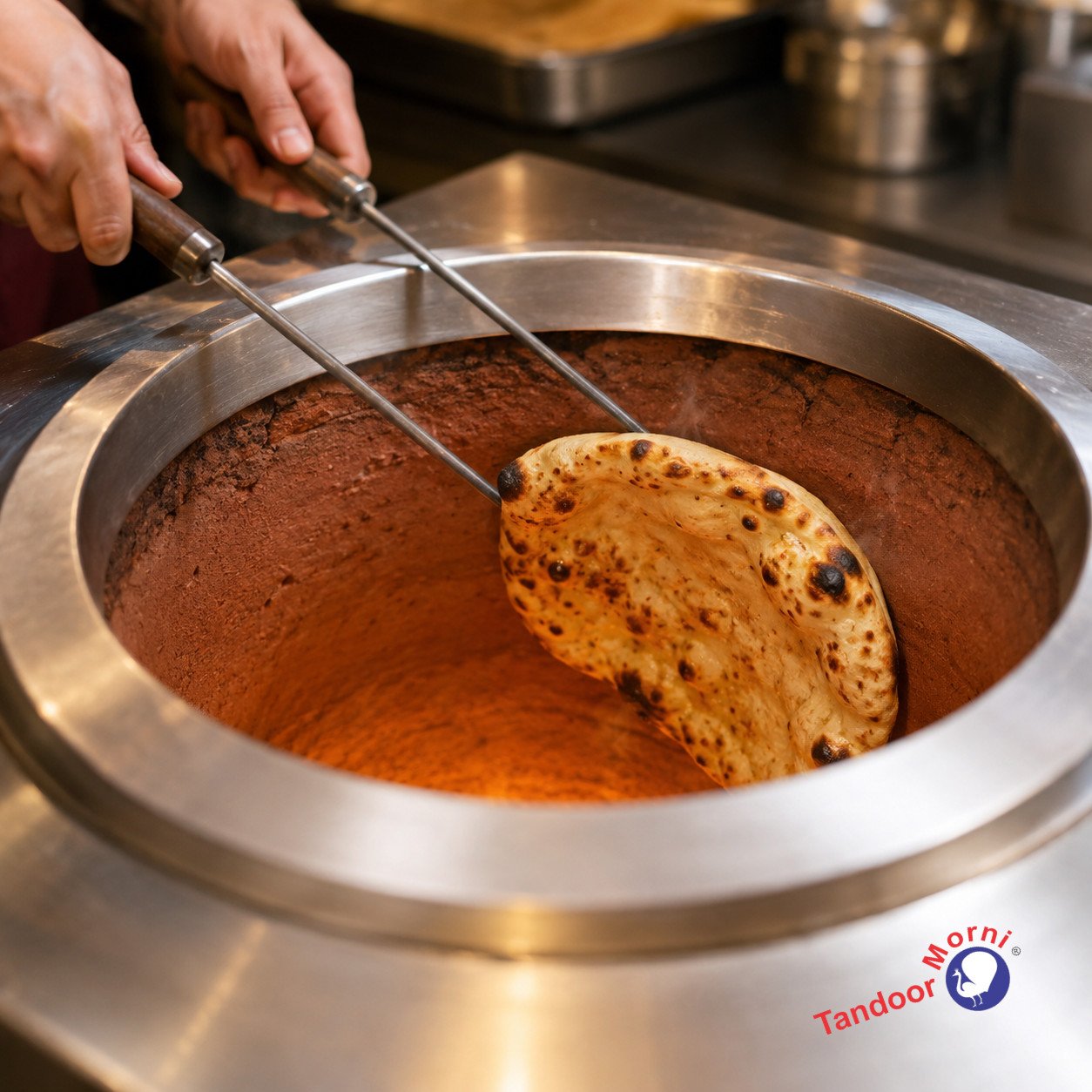
A tandoori naan rod pair makes retrieving fresh naan safer and easier, especially for first-time users.
Tandoor Safety Basics Every Owner Should Know
Keeping a Tandoor Oven Running for Years
A well-maintained tandoor oven, whether it's a home model like the Wood Fired Tandoor Oven R28 or a daily-service unit like the Restaurant Tandoor Oven CH02, can last for years with a fairly simple routine. Clean the chamber after each use to prevent grease and food buildup from affecting flavor and airflow. Inspect gas connections regularly on any propane or natural gas model, and confirm the pilot lights consistently on the first attempt each time you fire it up.
For clay-bodied ovens specifically, keep an eye on the interior lining for hairline cracks, which are a normal part of owning clay cookware that sees regular high-heat use rather than a sign of a defective unit. A basic clay repair kit lets you patch small cracks before they widen, which is far cheaper and faster than a full clay relining down the road. A Propane Gas Tandoor Oven A02 or similar gas-fired model also benefits from periodically checking the burner and thermocouple, since these are the parts most likely to need replacement after heavy use.
Why Certification Matters for a Commercial Tandoor Oven Guide
Certification is one of the most overlooked topics in most general tandoor content, but it matters a great deal for anyone installing a tandoor in a licensed kitchen. CSA certification confirms a unit meets recognized safety standards for gas and electrical components, while NSF certification specifically addresses food-contact surfaces and sanitation standards. Both marks reflect independent testing, not just a seller's own claim of "commercial grade" construction.
Confirm with your local health department exactly which certifications your specific jurisdiction requires before ordering equipment for a commercial kitchen, since requirements can vary by city or county even within the same state.
Tandoor Oven Guide: Frequently Asked Questions
What is a tandoor oven, in simple terms?
How does a tandoor oven work exactly?
What's the difference between a home and commercial tandoor oven?
Do I need a tandoori naan rod pair, or can I use tongs instead?
Is a gas tandoor oven better than a charcoal one?
Does a new tandoor need to be cured before first use?
Does Tandoor Morni offer financing for a new tandoor purchase?
Can a beginner realistically use a tandoor oven at home?
How much does a tandoor oven typically cost?
More From Tandoor Morni
Still learning the basics? Browse related guides and recipes below to keep building your tandoor knowledge.
Bring a Tandoor Oven Into Your Kitchen
Whether you're just starting to explore what is a tandoor oven and how it fits your cooking style, or you're ready to order, the Propane Gas Tandoor Oven A02, Restaurant Tandoor Oven CH02, and Wood Fired Tandoor Oven R28 cover most home and commercial needs, backed by essentials like the Tandoori Naan Rod Pair AS03 to make everyday use easier from day one.
Have questions about which tandoor fits your kitchen? Call us at +1 (727) 251-6924 or email info@tandoormorni.com and our team will help you find the right fit and financing structure.
Shop Essential Tandoor Accessories
Keep these three accessories on hand once your tandoor is set up and cooking regularly.