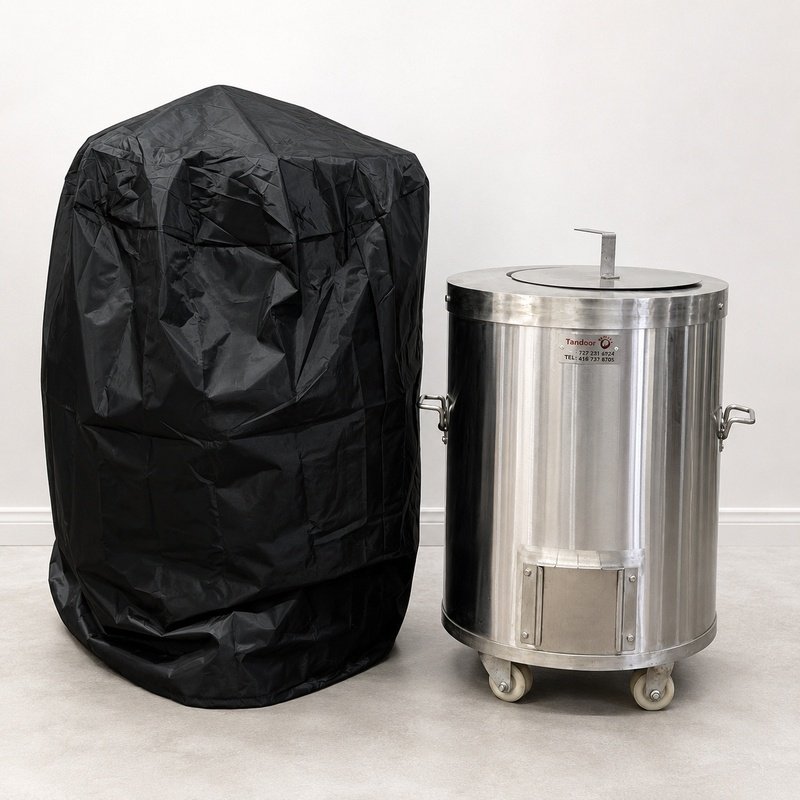
If you love the smoky flavor of tandoori cooking, a tandoor oven is a natural addition to your kitchen or outdoor space — but the square vs round clay tandoor decision trips up more buyers than you'd expect. Both shapes offer real benefits, but they serve slightly different purposes, and choosing the right one comes down to understanding how each style fits your setting, its construction, and how it actually performs.
This tandoor design comparison walks through everything that separates the two: which settings each shape suits best, how insulation and tandoor oven construction differ, how shape affects cooking performance, and the accessories — including a tandoor oven baffle plate — that help either shape perform at its best.
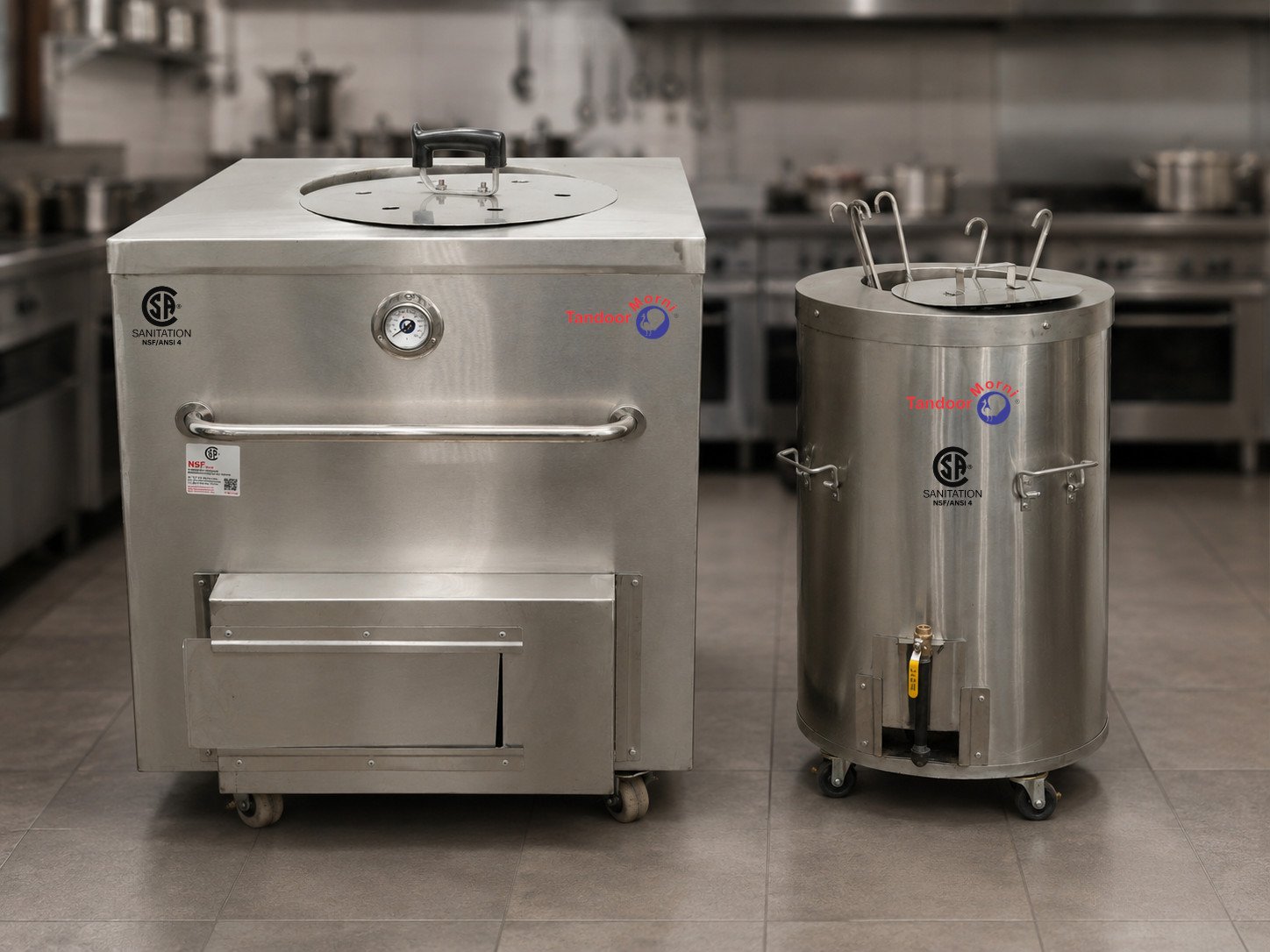
A square tandoor built for restaurant kitchens next to a round tandoor built for portability.
How Does a Tandoor Work, and Why Is It Loved Worldwide?
Before diving into the specifics of square versus round, it's worth understanding why tandoor ovens are popular worldwide in the first place. Indian, Middle Eastern, and Central Asian cuisines have relied on the tandoor, a traditional clay oven, for centuries. How does a tandoor work? A fire or burner at the base heats a clay chamber; the walls store that heat and radiate it back at the food, so bread bakes stuck to the wall and meat cooks on skewers lowered into the center. It reaches very high temperatures, cooking food quickly while sealing in moisture and flavor.
The result is deliciously charred meats, crispy bread, and smoky vegetables — a cooking method that's hard to replicate with any other equipment. Today, tandoors show up in homes, restaurants, and catering operations alike. Among the many types of tandoor, shape is one of the first choices a buyer faces, and the clay chamber inside does the same job in either one.
Square Tandoor: The Preferred Choice for Restaurants
If you've seen a tandoor in action at an Indian restaurant, it was likely square. Square tandoors are popular in restaurant kitchens because they fit well alongside commercial kitchen equipment, which is itself typically square or rectangular. This shape allows easy placement next to other appliances, making it practical for a busy, space-conscious kitchen.
Fits With Commercial Kitchen Equipment
In professional kitchens, most equipment is square or rectangular. A square tandoor, like the Square Catering Charcoal Tandoor CS04, positions easily alongside other appliances, saving space and making the overall layout more efficient.
Extra Storage Space on Top
Square tandoors provide additional flat surface on top for keeping grilling skewers, spices, or other tools within easy reach — genuinely useful in a restaurant kitchen where space is limited.
Dual-Insulated Design
Square tandoors often feature dual-insulated layers that retain heat effectively. This design reduces charcoal or gas consumption and keeps the exterior cooler, which is a real safety benefit in a busy kitchen.
Built for Heavy Use
The sturdy square build makes these ovens more durable under heavy daily use — essential for a restaurant serving tandoori dishes night after night.
Round Tandoor: Perfect for Home Kitchens and Small Gatherings
For home chefs, caterers, or anyone who loves backyard barbecues, a round tandoor is often the better choice. Because of its shape, a round model is sometimes sold as a drum tandoor or a barrel tandoor (you'll also see drum tandoor oven and barrel tandoor oven). These ovens are usually lighter and easier to move, making them a strong fit for outdoor use or small events. If you're looking to bring traditional tandoori cooking into your own home, a round tandoor blends convenience with authenticity.
Lightweight and Portable
The Round Catering Clay Tandoor Oven CS01 is easy to move around a backyard or patio, or transport to a gathering entirely, without the bulk of a fixed square installation.
Popular for Events
That same portability makes round tandoors a favorite for caterers and event planners who need a transportable cooking solution from one booking to the next.
Traditional Appeal
Round tandoors keep the classic clay-oven silhouette that many people associate with authentic tandoori cooking, adding a traditional touch to any occasion.
Sized for Families and Events
Available in a range of sizes, smaller round models suit family meals, while larger ones handle small events without occupying excessive space.
Tandoor Oven Design: Square and Round Features Side by Side
| Insulation Structure | Square tandoors typically use a dual-insulated build with two layers holding heat in and keeping the exterior cooler. Round tandoors are usually single-insulated, making them lighter but slightly less heat-retentive. |
|---|---|
| Interior Barrier | Square models often include a ceramic insulation layer between the clay oven and the steel body, helping the oven heat up quickly and hold a steady temperature with less fuel. |
| Exterior Build | Square tandoors are usually finished in stainless steel for a sleek, durable look. Round tandoors stay closer to the classic clay oven style, with some models offering an optional heavy stainless steel top for extra stability. |
| Skewer Rest Point | On square models, the steel top converges into the mouth of the tandoor, letting skewers rest on steel rather than clay — extending the life of the clay body over years of daily use. |
| Weight and Handling | Round tandoors are lighter and easier to handle thanks to single insulation. Square tandoors trade some portability for the added heat retention of a dual-insulated build. |
| Tandoor Dimensions | Footprint varies by model, so check the exact tandoor dimensions on the product page against your floor plan. A square body uses corner space efficiently; a round body needs clearance all the way around. |
How to Choose the Right Tandoor Design for Your Needs
Choosing between a square and round clay tandoor depends on where you plan to use it, how often you'll cook with it, and your personal preferences.
The Role of Tandoor Shape in Cooking Performance
Shape doesn't just affect where you can use a tandoor — it plays a real role in how it performs. Square tandoors benefit from consistent heat distribution thanks to their dual insulation, making them well suited to cooking a variety of dishes through a long restaurant service. Round tandoors heat up quickly thanks to their single-insulated design, which suits spontaneous home cooking, and their classic clay structure keeps the traditional look and feel.
Regardless of shape, a tandoor oven baffle plate plays an underrated role in performance. A baffle plate helps regulate airflow and redirect heat more evenly across the chamber, reducing hot spots that can otherwise develop closer to the burner or fuel source. Whether you're running a square restaurant unit or a round home model, a properly fitted baffle plate improves consistency from the first order of the night to the last, and it's worth checking whether your model includes one before you assume shape alone will solve an uneven-cooking problem.
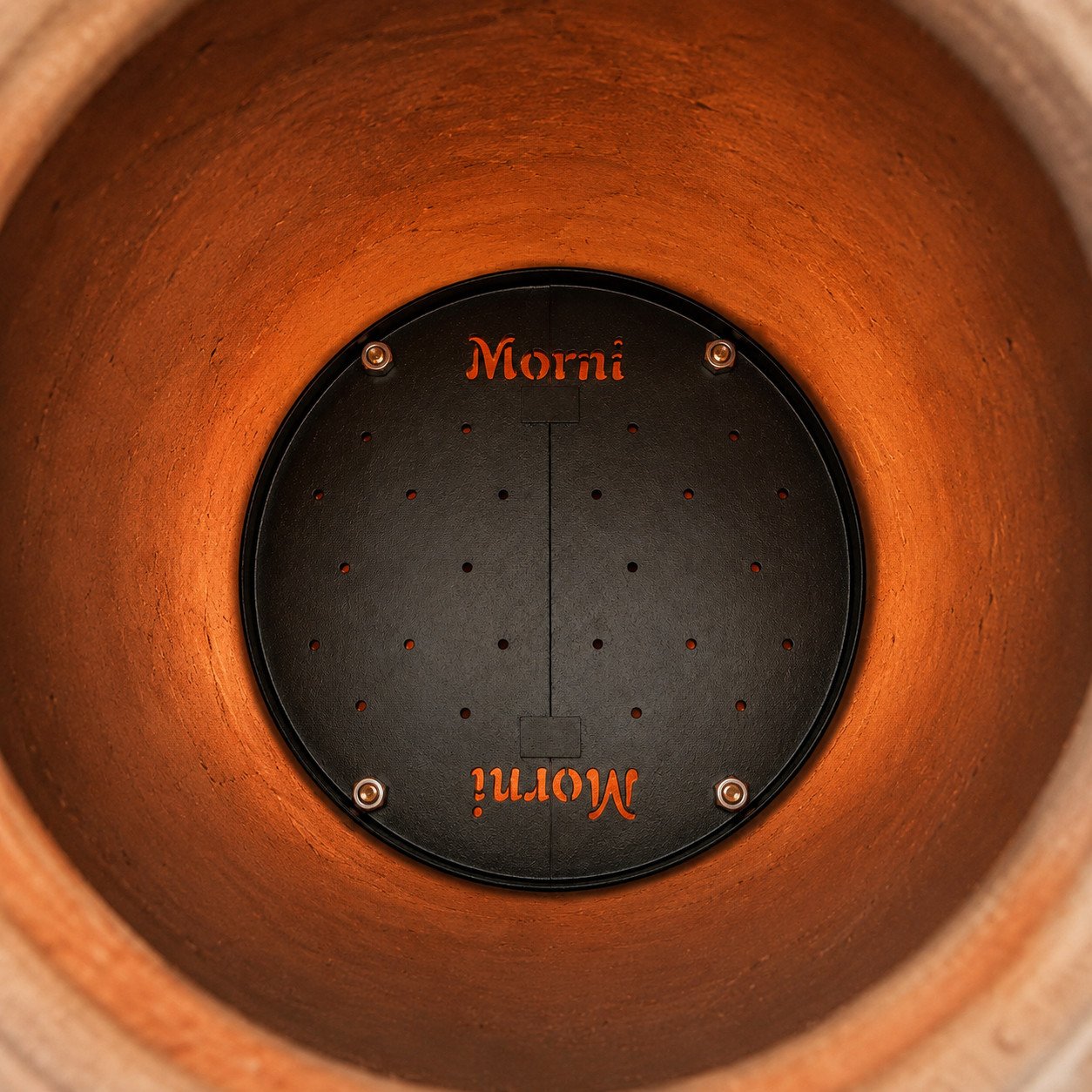
A tandoor oven baffle plate helps even out heat distribution regardless of chamber shape.
Why Insulation Matters in Tandoor Ovens
| Dual-Insulated Square Tandoors — Heat Retention | The extra insulation layer holds heat inside the chamber, improving efficiency and reducing the amount of fuel needed per service. |
|---|---|
| Dual-Insulated Square Tandoors — Safety | A cooler exterior surface is safer to work around in a busy kitchen where staff move quickly between stations. |
| Single-Insulated Round Tandoors — Quick Heat-Up | Less insulation means faster heat-up time, an advantage for spontaneous cooking or a quick backyard session. |
| Single-Insulated Round Tandoors — Portability | Lighter overall weight makes round tandoors easier to move, a real plus for caterers and backyard chefs alike. |
How Tandoor Size Affects Cooking Capacity
Both square and round tandoors come in a range of sizes. Tandoor size mostly changes how much you can cook at once, not how well the oven cooks, so you can choose a smaller or larger model based on how many people you need to serve without sacrificing cooking performance.
Common Mistakes in a Square vs Round Clay Tandoor Decision
A few avoidable mistakes come up repeatedly when buyers compare tandoor design for the first time. Catching them early saves money and prevents a mismatched purchase.
Tandoor Oven Construction and Materials: What You Need to Know
The material and construction of a tandoor affect not only its appearance but also its durability and performance over years of use. Square tandoors are typically built with a stainless steel exterior for durability and a sleek, modern look, with ceramic insulation between the clay oven and the steel body helping the unit heat up quickly and hold a steady temperature. Round tandoors, like the Clay Tandoor Oven CU04, stay closer to the classic clay structure, offering the most traditional cooking experience with the option of a heavy stainless steel top for better heat distribution and stability on larger models. Commercial buyers who need CSA or NSF certified equipment for a licensed kitchen should confirm certification on either shape before ordering, since certification isn't automatically tied to one shape over the other.
Restaurants running a square tandoor through daily service should factor real kitchen heat exposure into staff training — OSHA's heat exposure guidance is a useful baseline for any kitchen running high-heat equipment for hours at a time. Caterers or home cooks running a round tandoor outdoors should also review general outdoor cooking safety guidance from the CPSC before their first season of use.
Price and Aesthetics: The Remaining Tiebreakers
When it comes to price, there's often only a slight variation between square and round tandoors. The difference usually comes down to the level of insulation, the materials used, and design features like heavy tops or extra storage space. For buyers keeping the tandoor in one fixed spot, the choice often comes down to personal preference. For anyone moving the tandoor frequently, a round model tends to be more practical thanks to its lighter weight.
Appearance matters too, even if it doesn't change cooking performance. A round tandoor offers a classic look straight out of a traditional kitchen, with a curved shape that adds visual authenticity to any space. A square tandoor looks sleek and modern with its stainless steel exterior, matching well with other commercial kitchen equipment for a clean, professional appearance. Both are built by skilled makers and perform well for their intended purpose — the right one really does come down to where and how you'll use it.
Square vs Round Clay Tandoor: Frequently Asked Questions
What's the biggest factor in a square vs round clay tandoor decision?
What are the main square tandoor benefits for a restaurant kitchen?
Is a round tandoor better for catering than a square one?
What is a drum tandoor or barrel tandoor?
What does a tandoor oven baffle plate actually do?
Does tandoor shape affect flavor?
Is a square or round tandoor more expensive?
Can I get the durability of a square tandoor in a more traditional clay build?
More From Tandoor Morni
Still deciding between a square and round clay tandoor? Browse related guides and recipes below to plan the rest of your setup.
Order the Right Shape for Your Kitchen Today
Whether you need the restaurant-ready durability of the Square Catering Charcoal Tandoor CS04, the portability of the Round Catering Clay Tandoor Oven CS01, or the traditional build of the Clay Tandoor Oven CU04, our team can help you settle the square vs round clay tandoor decision based on your actual setting and cooking volume.
Have questions about which shape fits your space? Call us at +1 (727) 251-6924 or email info@tandoormorni.com and our team will help you find the right fit and financing structure.
Shop Accessories for Any Tandoor Shape
Keep these three accessories on hand regardless of which shape you choose.