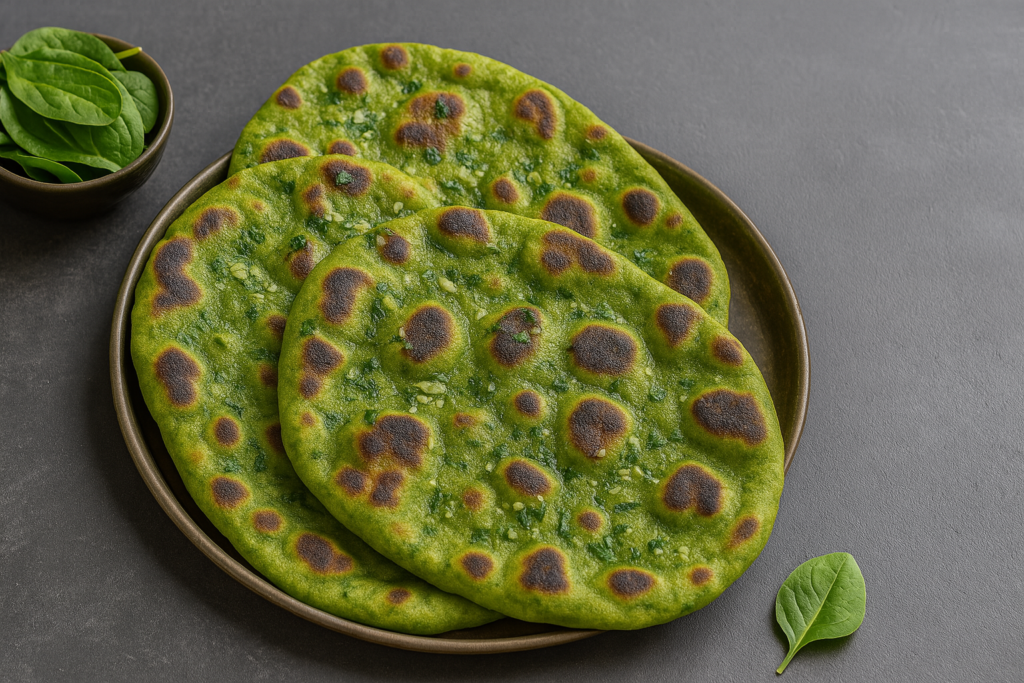
Why Blanching the Spinach Matters
Raw spinach pureed directly produces a duller, less vivid green than spinach that’s been briefly blanched first. The blanching process — a quick 30 to 45 second dip in boiling water — softens the spinach and helps fix its chlorophyll-driven colour, while the immediate ice water plunge afterward stops the cooking process abruptly, locking in that brighter green before the puree ever reaches the dough. Skipping this step produces a duller, more olive-toned naan rather than the vivid colour this recipe targets.
After blanching and shocking in ice water, squeeze the spinach firmly to remove excess moisture before pureeing — this step matters considerably given how this recipe’s dough hydration already needs adjusting downward to account for the puree’s water content.
Adjusting Dough Hydration for Spinach Puree
Pureed spinach contributes meaningful moisture to this dough beyond what the standard naan recipe’s water quantity accounts for. Adding the full water measurement from a plain naan recipe on top of the spinach puree produces an overly wet, sticky dough that’s considerably harder to shape and roll. This recipe reduces the separately added water significantly compared to plain naan, and even then, add it gradually while kneading rather than all at once, watching the dough’s texture and adjusting based on what you’re seeing and feeling rather than following the measurement rigidly.
Method — Step by Step
Step 1 — Blanch and Puree the Spinach
Blanch fresh spinach in boiling water for 30 to 45 seconds. Immediately transfer to ice water to stop cooking. Drain thoroughly, squeezing out as much excess moisture as possible, then puree until smooth.
Step 2 — Activate the Yeast
Combine warm water, sugar, and yeast. Let stand 8 to 10 minutes until foamy on top.
Step 3 — Make the Dough
Combine flour and salt. Add the activated yeast mixture, spinach puree, yogurt, and oil. Knead 8 to 10 minutes until smooth and elastic, adjusting added water gradually given the puree’s moisture contribution. Cover and rest in a warm place 60 to 90 minutes until doubled.
Step 4 — Shape and Rest
Divide into 8 equal portions, roll into balls, cover, and rest 15 minutes. Roll each into an oval roughly 6 millimetres thick.
Step 5 — Bake
Preheat your Tandoor Morni clay oven to 600 to 650 degrees Fahrenheit. Lightly wet one side of the rolled dough, press onto the Naan Gaddi, then press against the preheated wall until it adheres. Bake approximately 90 seconds until puffed with lightly browned patches against the green base.
Step 6 — Finish and Serve
Brush with melted ghee immediately after removing from the wall. Serve hot.
What to Expect Flavour-Wise
Spinach naan’s flavour is genuinely subtle rather than assertive — a mild, slightly earthy undertone rather than a pronounced vegetable taste, since the spinach quantity used here is relatively modest compared to the overall dough volume. This makes it approachable even for diners who aren’t particularly enthusiastic about spinach as a standalone vegetable, while still contributing real colour and a small nutritional boost over plain naan.
A Modest Nutritional Upgrade
Spinach contributes iron, vitamin K, and additional fibre compared to plain naan, though it’s worth setting realistic expectations: the relatively small quantity per batch means this is an incremental nutritional improvement rather than a transformative one. It’s best understood as a reasonable way to fold a touch of vegetable content into bread that’s already part of the meal, rather than a replacement for actually serving vegetables as their own dish.
Choosing Spinach for This Recipe
Fresh Bunched Spinach
Bunched or loose fresh spinach, sold by weight, generally has the most pronounced flavour and colour, making it the best choice if available. Look for leaves that are deep green and crisp, without yellowing, wilting, or sliminess, all signs of spinach past its prime that will contribute a duller result.
Baby Spinach
Pre-washed baby spinach, sold in bags or clamshells, offers convenience and works perfectly well for this recipe, with a slightly milder flavour than mature bunched spinach. Its smaller leaves also blanch slightly faster, so reduce blanching time marginally — closer to 20 to 30 seconds rather than the full 30 to 45 seconds specified for mature spinach.
Avoiding Excess Stems
Trim away thick, fibrous stems before blanching, particularly from mature bunched spinach, since these don’t puree as smoothly as the leaves and can leave a stringier texture in the finished dough. Baby spinach typically has thin enough stems that this isn’t a significant concern.
Variations on Spinach Naan
Spinach and Garlic Naan
Adding minced garlic to the dough alongside the spinach puree, or finishing with garlic butter the way our standard garlic naan does, combines two popular flavour directions into a single bread, producing a more savoury, robust result than spinach alone.
Spinach and Feta or Paneer
A small amount of crumbled feta or paneer worked into the dough, similar to the cheese variations covered for stovetop naan, pairs naturally with spinach’s earthy character, echoing the classic spinach-and-cheese pairing found across many culinary traditions.
Spiced Spinach Naan
A pinch of ground cumin or a small amount of grated ginger added alongside the spinach puree introduces warmth without overwhelming the dish’s relatively subtle base flavour, a reasonable middle ground between this recipe’s mild profile and the more assertively spiced naan variants elsewhere on this site.
Presentation and Serving Context
Spinach naan’s distinctive green colour makes it a naturally appealing addition to a mixed bread basket alongside plain or garlic naan, giving any tandoori spread genuine visual variety beyond what flavour alone provides. For a themed presentation, pairing it specifically with other green-leaning dishes — hariyali chicken tikka or a herb-forward chutney — creates a cohesive colour story across the table that’s worth considering for a more deliberately curated meal presentation.
It also works particularly well as an accompaniment to lighter, vegetable-forward meals, where its colour and subtle flavour complement rather than compete with the rest of the plate, unlike richer breads like garlic naan that can sometimes feel slightly heavy alongside an already light meal.
Storing Leftover Spinach Naan
Cooled spinach naan keeps in an airtight container for up to 3 days refrigerated, or up to a month frozen with parchment between pieces. Reheat in a dry skillet for 20 to 30 seconds per side, or briefly in a microwave wrapped in a damp paper towel. The green colour holds reasonably well through refrigerated storage, though freezing and thawing can occasionally dull it slightly more than refrigeration alone — a cosmetic change only, with no meaningful impact on flavour or texture once reheated.
Frequently Asked Questions — Spinach Naan
Why blanch the spinach before pureeing it?
Blanching softens spinach and helps set its vivid green colour, which would otherwise dull faster once baked. The ice water plunge afterward stops cooking immediately, locking in brightness before pureeing.
Why does this dough need less added water than other naan recipes?
Pureed spinach contributes meaningful moisture itself. The standard water quantity would produce an overly wet dough, so this recipe reduces added water and adjusts gradually while kneading.
Does spinach naan taste strongly of spinach?
Genuinely subtle — a mild, slightly earthy note rather than an assertive vegetable taste, since the spinach is distributed throughout a much larger dough volume.
Is spinach naan more nutritious than plain naan?
Modestly — spinach adds iron, vitamin K, and fibre, though the relatively small quantity per batch makes this an incremental rather than transformative nutritional boost.
Will the green colour fade significantly during baking?
Some mellowing is natural from the heat, but properly blanched and ice-shocked spinach holds colour considerably better than spinach that wasn’t blanched or that sat too long before use.
Can I use frozen spinach instead of fresh?
Yes — frozen spinach is typically already blanched, so thaw and squeeze out excess moisture thoroughly, skipping the fresh blanching step. Pay extra attention to dough hydration since frozen spinach often releases more water.