
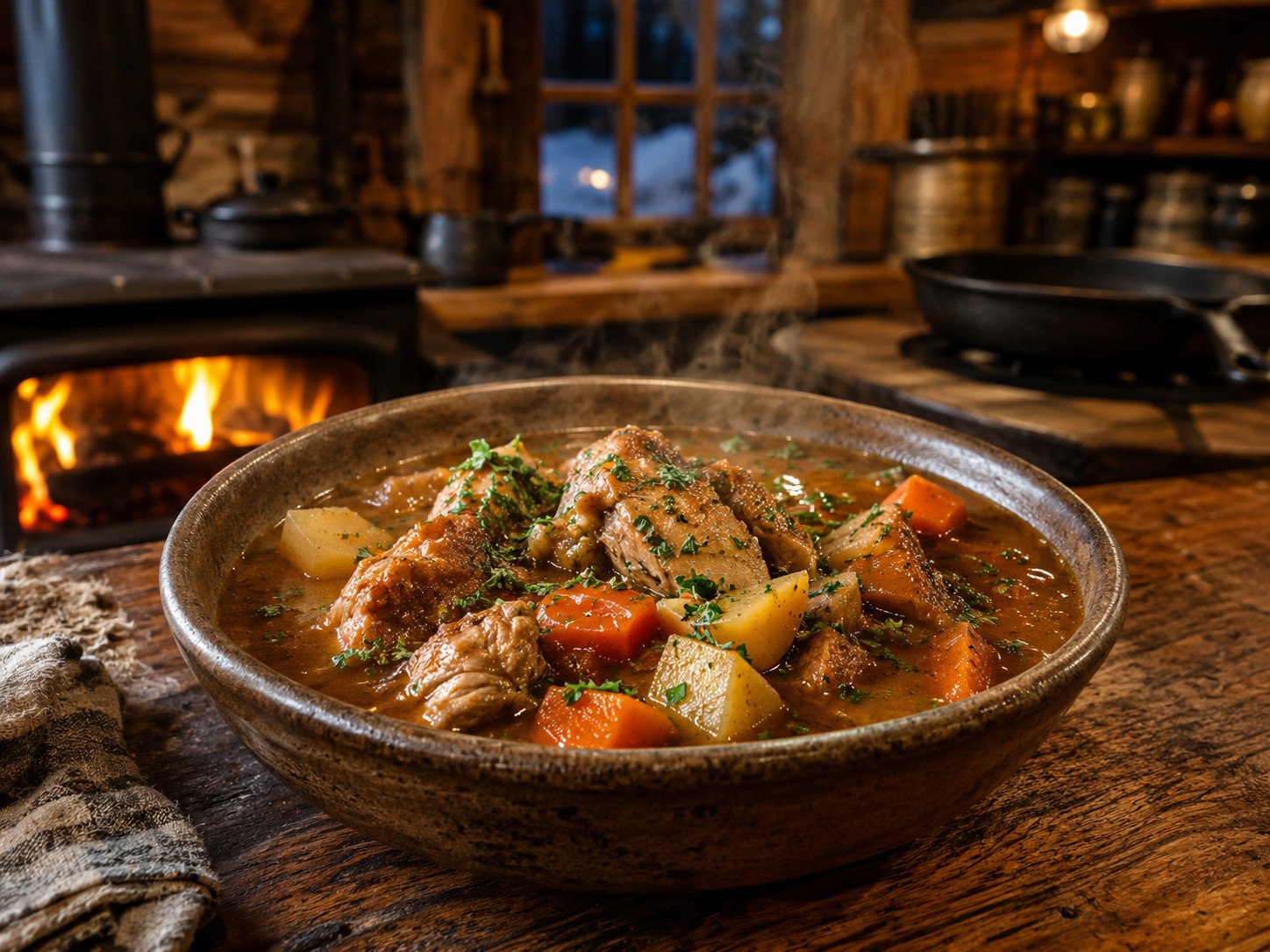
This chicken stew recipe builds flavour the same way most great stews do — searing the chicken first, not just simmering it raw with the vegetables, and letting a proper stock reduce rather than relying on a packet of seasoning. No tandoor involved anywhere in this one; this is a stovetop pot recipe from start to finish, and one of the more forgiving hearty chicken stew recipes to make on a weeknight once you've got the basic sequence down.
This chicken stew recipe guide covers why searing the chicken first genuinely changes the final flavour, how to thicken the stew properly without it turning gluey, and a hearty slow cooker chicken stew adaptation if you'd rather walk away for a few hours than watch a pot. If your chicken stew has come out thin, bland, or with rubbery chicken before, this chicken stew recipe guide covers exactly why.
Table of Contents
- Recipe Card
- Why This Recipe Works
- How to Make Chicken Stew
- What You'll Need
- Choosing Your Chicken
- Step by Step
- The Science of It
- Slow Cooker Variation
- Common Variations
- Meal Prep & Doubling
- What to Serve It With
- Technique Notes
- Troubleshooting
- Storage
- Where It Fits
- Nutrition Note
- FAQ
- Discover Our Tandoor Ovens
Chicken Stew — Recipe Card
This chicken stew recipe sears the chicken thighs first, simmers them with root vegetables in a stock that's been given time to reduce, then thickens everything at the end. Everything you need is below — for the full technique breakdown, a slow cooker version, and troubleshooting, keep scrolling past the card.
- 2 lbs boneless, skinless chicken thighs, cut into 1.5-inch pieces
- 2 tbsp oil, divided
- 1 onion, diced
- 3 carrots, sliced into rounds
- 2 stalks celery, diced
- 3 cloves garlic, minced
- 2 tbsp tomato paste
- 4 cups chicken stock
- 1 lb potatoes, cut into 1-inch chunks
- 2 sprigs fresh thyme, or 1 tsp dried
- 1 bay leaf
- 3 tbsp all-purpose flour
- 3 tbsp butter
- 1 cup frozen peas
- Salt and pepper, to taste
- Season the chicken. Sear in batches in 1 tablespoon oil until browned but not cooked through. Remove and set aside.
- In the same pot, sauté the onion, carrots, and celery in the remaining oil until softened, about 5 minutes.
- Add the garlic and tomato paste, cook 1 minute until fragrant.
- Pour in the stock, scraping up any browned bits from the bottom of the pot. Add the potatoes, thyme, and bay leaf.
- Return the chicken to the pot. Bring to a gentle simmer and cook 25–30 minutes, until the chicken and potatoes are tender.
- Make a roux separately with the butter and flour, whisk in a ladle of the hot stew liquid, then stir it back into the pot. Simmer a few minutes until thickened.
- Stir in the peas, season with salt and pepper, and serve hot.
Why This Chicken Stew Recipe Works
Three things separate this chicken stew recipe from a version that just simmers everything together until it's done: searing the chicken for real browning before anything else goes in the pot, letting the aromatics and tomato paste build a flavour base rather than treating them as an afterthought, and thickening with a properly tempered roux at the end instead of raw flour stirred into the pot. None of these steps takes much extra time, but skipping any one of them is the most common reason a homemade chicken stew recipe tastes thinner or flatter than it should.
How to Make Chicken Stew
How to cook chicken stew, in short: sear the chicken first, build flavour with sautéed aromatics and a spoonful of tomato paste, simmer everything together with stock and root vegetables until tender, then thicken with a roux at the end rather than dumping flour in raw. That's the whole recipe for a chicken stew below, and it's genuinely one of the more forgiving one-pot dinners once the sequence clicks.
Looking for good chicken stew recipes that don't need a long ingredient list? This one keeps it to pantry staples — chicken, onion, carrots, celery, potatoes, stock — with the technique doing the real work. Among great chicken stew recipes, the two things that separate a flat-tasting version from a genuinely rich one are searing the chicken and letting the stock actually reduce, not rushing either step.
What You'll Need for This Chicken Stew Recipe
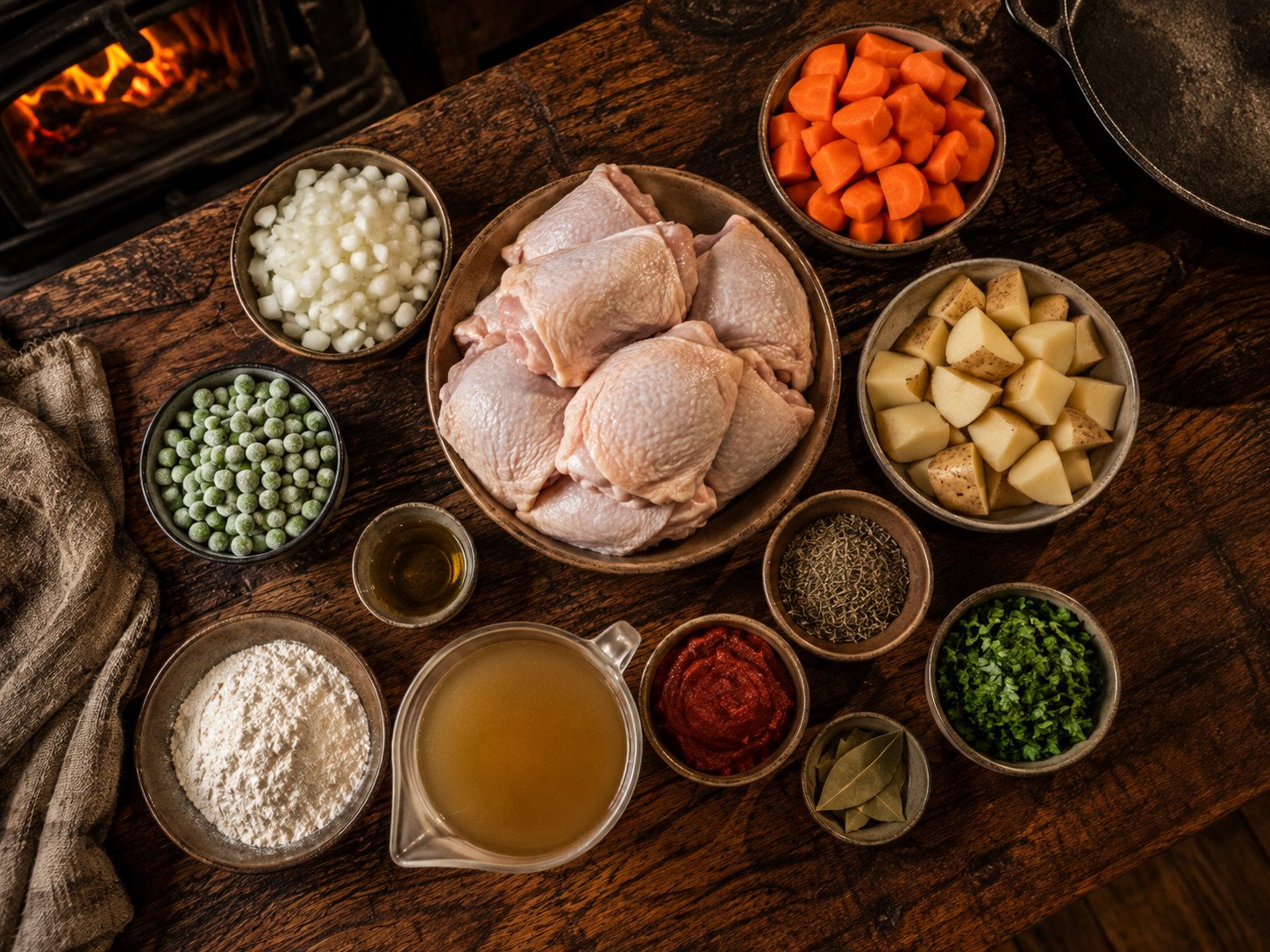
A short, pantry-friendly list — most of what makes this stew good is technique, not a long ingredient count.
For the Stew (This Chicken Stew Recipe's Base)
- 2 lbs boneless, skinless chicken thighs, cut into 1.5-inch pieces
- 2 tablespoons oil, divided
- 1 onion, diced
- 3 carrots, sliced into rounds
- 2 stalks celery, diced
- 3 cloves garlic, minced
- 2 tablespoons tomato paste
- 4 cups chicken stock
- 1 lb potatoes, cut into 1-inch chunks
- 2 sprigs fresh thyme, or 1 teaspoon dried
- 1 bay leaf
For Thickening and Finishing
- 3 tablespoons all-purpose flour
- 3 tablespoons butter
- 1 cup frozen peas
- Salt and pepper, to taste
A note on the chicken stew ingredients recipe above: thighs are used specifically because they hold up better through a longer simmer than breast, which tends to dry out and turn stringy over the same cook time.
Choosing Your Chicken
Cut choice changes both texture and how forgiving this chicken stew recipe is if the timing runs a little long.
Boneless, Skinless Thighs (Recommended)
Hold moisture and stay tender through a 25 to 30 minute simmer far better than breast. This is the default this chicken stew recipe assumes.
Bone-In Thighs or Drumsticks
Add more flavour to the broth as they cook, but need to be removed, shredded off the bone, and returned to the pot — an extra step, though a flavourful one.
Chicken Breast
Workable if it's what you have, but watch the clock — breast turns stringy and dry past the point thighs are just getting tender. Consider pulling it out a few minutes earlier and returning it near the end.
Step by Step: How to Cook Chicken Stew

Sear the Chicken
Season the chicken and sear it in batches in a hot pot until browned on the outside but not cooked through. Remove and set aside.

Sauté the Vegetables
In the same pot, sauté the onion, carrots, and celery until softened, about 5 minutes, scraping up any browned bits from searing the chicken.

Bloom the Garlic and Tomato Paste
Add the garlic and tomato paste, cooking about a minute until fragrant and slightly darkened.

Add Stock and Simmer
Pour in the stock, add the potatoes, thyme, and bay leaf, and return the chicken to the pot. Bring to a gentle simmer and cook 25 to 30 minutes.

Make the Roux
Whisk the butter and flour together in a separate small pan, then whisk in a ladle of hot stew liquid until smooth.

Thicken the Stew
Stir the roux mixture back into the pot and simmer a few minutes until the stew visibly thickens.
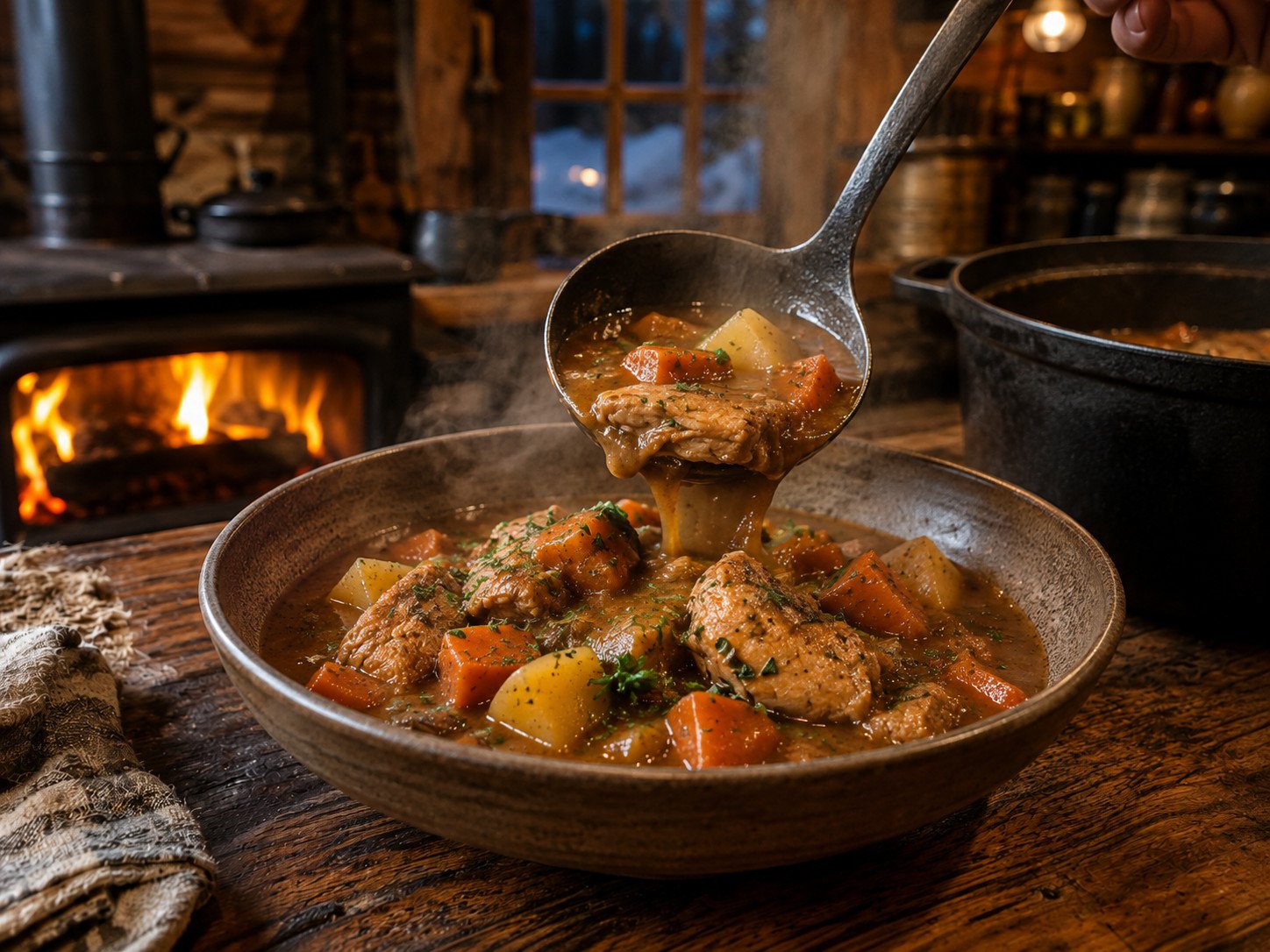
Finish and Serve
Stir in the peas, season with salt and pepper to taste, and serve hot.
Why Searing and Late Thickening Both Matter
Two steps in this recipe are easy to skip in a hurry, and both quietly do more work than they look like they do.
Why Searing Changes the Flavour
Browning the chicken's surface triggers the Maillard reaction, a set of chemical changes between proteins and sugars that only happens at high, dry heat — not in a pot of simmering liquid. Those browned bits left in the pot (and the fond you scrape up when the vegetables go in) carry directly into the stew's final flavour. Skipping the sear means skipping that entire layer of flavour, not just the chicken's exterior colour.
Why the Roux Goes In at the End, Not the Start
Adding raw flour directly to a simmering pot tends to clump instead of thickening evenly, since the starch granules cook unevenly in contact with hot liquid. Making a separate roux first, then tempering it with a ladle of hot stew liquid before stirring it back in, gives a smooth, even thickness without lumps.
Why Potatoes and Peas Go In at Different Times
Potatoes need the full simmer to cook through, while peas are already effectively cooked from freezing and only need to warm through — adding them too early just turns them dull and mushy for no benefit.
Slow Cooker Variation
For a hearty slow cooker chicken stew you can start in the morning and forget about, this chicken stew recipe converts well — we haven't tested the slow cooker timing as extensively as the stovetop version above, so check for doneness rather than trusting the clock alone the first time you make it.
Sear the chicken and sauté the aromatics exactly as written in Steps 1 through 3 — don't skip this part, since a slow cooker's gentle heat never gets hot enough to brown anything, and browning is still where most of this stew's flavour comes from. Transfer everything to the slow cooker along with the stock, potatoes, thyme, and bay leaf. Cook on low for 6 to 7 hours or high for 3 to 4 hours, until the chicken and potatoes are tender. Thicken with the same roux method in the last 20 minutes on the high setting, or transfer the thickening step to a pot on the stovetop if your slow cooker doesn't have a high-heat finishing option. Stir in the peas just before serving.
Common Variations on This Chicken Stew Recipe
Once you've made this chicken stew recipe once and have the core sequence down, it's an easy base to adjust without throwing off the technique.
Adding Wine
Deglazing the pot with a splash of dry white wine after the tomato paste step, letting it reduce by half before adding the stock, gives this chicken stew recipe a slightly deeper, more restaurant-style flavour than the base chicken stew recipe alone. It's not required, but it's a small change with a noticeable payoff.
Swapping or Adding Vegetables
Parsnips, turnips, or mushrooms all work well added to this chicken stew recipe alongside the carrots and celery, keeping it a genuinely hearty chicken and vegetable stew recipe rather than just meat and gravy. Faster-cooking additions like green beans or corn are better added in the last 10 minutes, the same way the peas go in near the end.
A Dairy-Free Version
Swap the butter for a neutral oil in the roux, and this chicken stew recipe works fine without any other changes to the rest of the chicken stew recipe — the thickening mechanics of a flour-and-fat roux don't depend on the fat being dairy.
Making It Spicier
A pinch of red pepper flakes or a diced jalapeño added with the onion gives this otherwise mild, comforting chicken stew recipe some background heat without changing the core technique at all.
Meal Prep and Doubling This Chicken Stew Recipe
Like most stews, this chicken stew recipe scales up cleanly for meal prep — double or triple the ingredients and cook in a larger pot, keeping the same searing-in-batches approach regardless of total volume, since crowding the pot is still the main risk at any scale.
For freezer meal prep with this chicken stew recipe specifically, slightly undercook the potatoes compared to the recipe above (aim for just fork-tender rather than fully soft), since they'll continue softening somewhat during freezing, thawing, and reheating. Portion the cooled stew into individual containers before freezing so you can thaw only what you need rather than defrosting the whole batch at once.
What to Serve This Chicken Stew Recipe With
This chicken stew recipe is a complete meal on its own, but crusty bread or warm biscuits for scooping up the broth round it out nicely. A simple green salad on the side balances the richness of this hearty chicken vegetable stew.
For a spiced, tandoor-adjacent alternative to this chicken stew recipe, built on a similar chicken-and-vegetable concept, our tandoori chicken with basmati rice recipe elsewhere on this site uses the genuine tandoor and a completely different flavour direction.
Additional Technique Notes for This Chicken Stew Recipe
Sear in Batches
Crowding the pot steams the chicken instead of browning it in this chicken stew recipe. Work in two or three batches if needed.
Scrape Up the Fond
The browned bits stuck to the pot after searing carry real flavour — scraping them up when the vegetables and stock go in makes sure none of it is wasted.
Temper the Roux Before Adding It Back
Whisking a ladle of hot liquid into the roux first is the detail that keeps this chicken stew recipe smooth — plain flour or a cold roux dropped straight into the pot tends to create lumps.
Don't Rush the Simmer
This chicken stew recipe's 25 to 30 minute simmer lets the potatoes cook through and gives the broth time to pick up flavour from everything in the pot.
Add Peas Last
They only need to warm through — adding them earlier dulls their colour and texture for no benefit.
Common Chicken Stew Recipe Problems, and Fixes
The Stew Tasted Flat
In this chicken stew recipe specifically, a flat-tasting result is almost always a skipped or rushed sear. Make sure the chicken actually browns, and scrape up the fond when the vegetables go in.
The Stew Was Too Thin
For this chicken stew recipe, that usually means the roux didn't fully thicken, or wasn't enough for the volume of liquid. Simmer longer after stirring it in, or make a slightly larger roux next time.
The Roux Went Lumpy
In any chicken stew recipe, this happens when the roux is added directly to the pot without tempering first. Always whisk in a ladle of hot stew liquid to the roux before stirring it back in.
The Chicken Was Dry or Stringy
Likely chicken breast overcooked past the point thighs would tolerate in this chicken stew recipe. Use thighs, or pull breast out earlier and return it near the end.
Storing Leftover Chicken Stew
This chicken stew recipe keeps in an airtight container for up to 4 days refrigerated. Reheat gently on the stovetop, adding a splash of stock if it's thickened too much in storage.
This chicken stew recipe freezes well for up to 3 months — the potatoes can turn slightly grainy after freezing and thawing, but the flavour holds up well. Thaw fully in the refrigerator before reheating.
Where This Chicken Stew Recipe Fits
A chicken stew recipe is a broad, largely Western European and American comfort-food category, built on the same core idea across regional versions: browned meat, aromatic vegetables, and a slow simmer in stock, thickened toward the end. This particular chicken stew recipe follows the American home-kitchen style most closely, and it's worth comparing against a few close relatives before deciding this chicken stew recipe is the one you want tonight.
| Chicken Stew American / General | Seared chicken thighs, root vegetables, roux-thickened broth — the style this recipe follows. |
| Chicken Pot Pie Filling American | Nearly identical base stew, baked under a pastry crust instead of served as-is in a bowl. |
| Coq au Vin France | Built on red wine and mushrooms rather than a plain stock base, with a deeper, winey flavour profile. |
| Brunswick Stew American South | Traditionally includes corn, lima beans, and a tomato-forward base, closer to a thick gumbo-adjacent stew. |
A General Note on Nutrition for This Chicken Stew Recipe
This chicken stew recipe is a well-balanced, protein-forward meal, with the potatoes and roux contributing most of the carbohydrate content and the chicken carrying the protein. Check specific figures via USDA FoodData Central for your exact ingredients.
Estimated values calculated from the recipe's ingredients using standard USDA reference data, not a laboratory analysis. Actual values will vary based on exact brands, measuring technique, and preparation choices. For a precise figure, calculate directly from the ingredients you use via USDA FoodData Central.
This stew carries a solid balance of protein, complex carbohydrates, and vegetables in one bowl, making it a reasonably complete meal on its own. As with any recipe, check ingredients against your own dietary needs via USDA FoodData Central rather than relying on general notes like this one.
Frequently Asked Questions — Chicken Stew Recipe
Does this chicken stew recipe use a tandoor?
How to make chicken stew recipe taste less flat?
Can I make a hearty slow cooker chicken stew from this recipe?
Can I use chicken breast instead of thighs?
Why did my stew turn out thin instead of thick and hearty?
Why does the roux go in separately instead of straight into the pot?
Can I add other vegetables to this hearty chicken and vegetable stew recipe?
Can I make this stew ahead of time?
How do I know the chicken is fully cooked?
Where can I find a spiced, tandoor-cooked chicken and vegetable dish instead?
Discover Our Tandoor Ovens
No tandoor required for this recipe — but if you're curious, here's a sample from across our range.
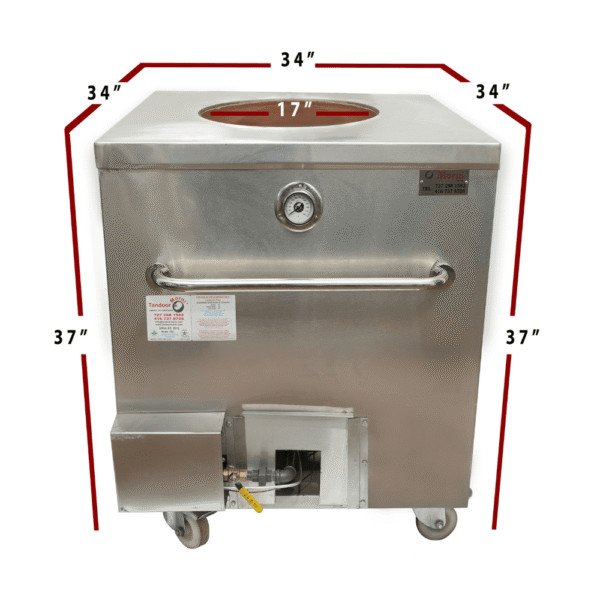
34x34x37 inches. From our Commercial Tandoor Ovens line.

24x24x37 inches. From our Catering Tandoor Ovens line, charcoal and wood fired.
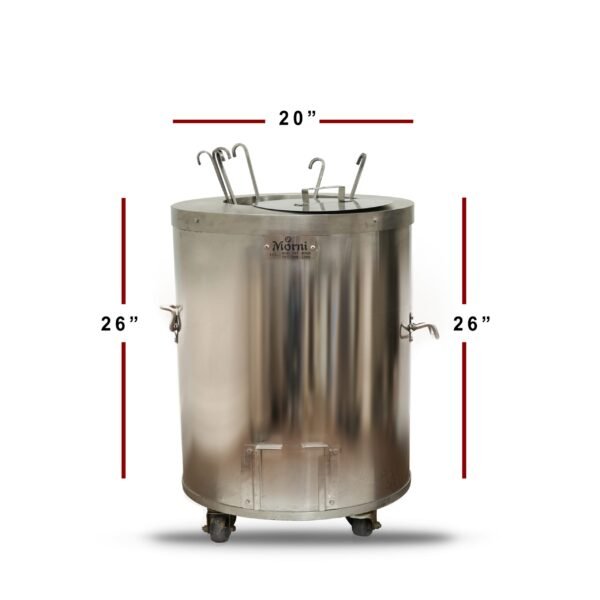
20x26 inches. From our Home Tandoor Ovens line, charcoal and wood fired.