

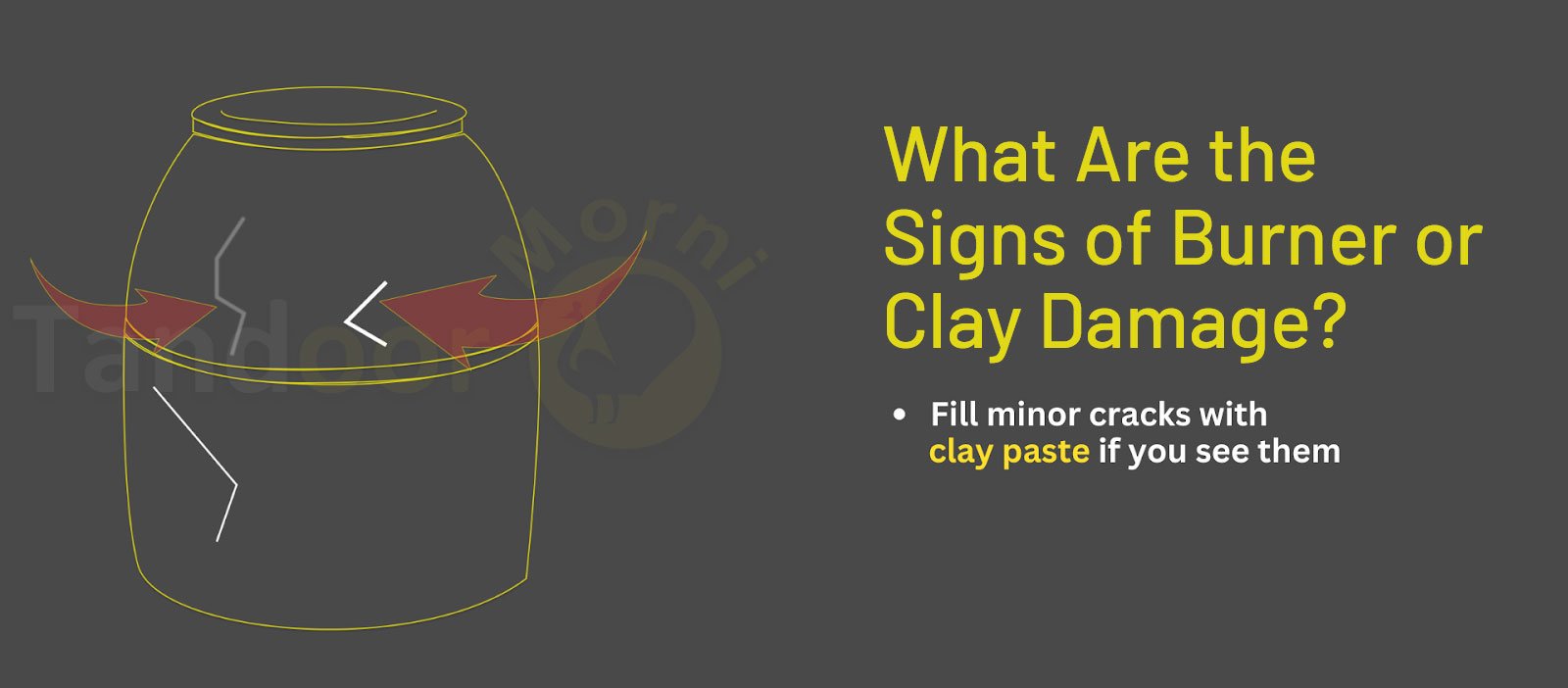
What Are the Signs of Burner or Clay Damage?

Tandoors are very important in business kitchens, especially for cooking Indian and Middle Eastern food. The clay lining and gas or charcoal fire in these ovens make for strong, constant heat that is perfect for high-heat cooking. But if you do not take care of it, both the burner and the clay structure can break down over time.
Clay Damage

To keep the tandoor working safely and well, it is important to spot any early signs of damage to the stove or clay. We will talk about the main warning signs to look out for and why it is important to act quickly in this piece.

  1. Cracks on the inside of the clay surface

Tandoors are made with clay that can handle high heat, but it can still get damaged over time. Cracks appearing in the clay wall are one of the first and most obvious signs.

Cracks that are only a hair wide are common and usually not a problem, but cracks that are deeper or wider can be. If you do not fix these bigger cracks, they can make it harder to keep the heat in, make cooking less efficient, and even damage the structure. Also, they might let smoke or gas escape, which could be dangerous.

  • Some things that could cause these cracks are
  • Too much heat or sudden changes in temperature
  • Not properly preparing before the first use
  • Exposure to moisture when not in use

Regular checks and the right way to use something can help find damage and stop it from getting worse. To keep the clay from breaking too quickly, Tandoor Morni says to properly season it before regular use.

  1. Heating that is not even or hot spots

For the cooking area to be evenly heated, the tandoor must be working properly. But if the hob is partly blocked, broken, or not lined up right, you might notice “hot spots” or uneven warmth.

This leads to uneven cooking, where some parts of the food may cook too fast and others stay raw. These kinds of problems can affect the quality of the food, especially in professional kitchens where speed and accuracy are important.

A lot of the time, hot spots mean:

  • Partial blockage of gas flow
  • Badly aligned hob
  • Clay breaking down leads to uneven heat transfer.

Checking the stove often and keeping the clay surface clean and whole will help keep this from happening. To fix these issues, Tandoor Morni sells new stoves that work with a number of different tandoor types.

  1. Unusual Flame Color or Odors

A change in the colour of the light is another sign that the hob is broken. A steady blue light is generally the sign of a healthy gas hob. If the light goes orange or yellow or flickers too much, it could mean that the fuel is not burning all the way.

This might happen because:

  • Blocked burner holes
  • Damaged gas regulators
  • Poor-quality fuel

Along with flames that are not the same colour, a strong gas or burning smell is also a bad sign. Possible causes of these signs are leaks, gas buildup, or an incorrect mix of air and gas, all of which need quick attention to ensure safety.

If you see any of these signs, you should stop using the tandoor and get help from a professional. For the most safety and economy, Tandoor Morni says to use approved gas controllers and parts.

  1. Drop in Temperature Efficiency

Problems inside either the clay or the burner are often to blame for a drop in performance. Anytime your tandoor takes longer to heat up or has trouble staying hot, it could mean that the hob is not working as well as it should.

In the same way, heat loss is worse if the clay has lost its insulation properties because of cracking or cracks. This makes the hob work harder, which uses more gas and makes the system less efficient overall.

By checking the performance on a regular basis, you can find these problems early and stop expensive energy loss.

  1. Flaking or Loose Clay Particles

Small pieces or flakes of clay breaking off from the inside of the tandoor are another sign that the clay is not in good shape. These bits could sink to the bottom or mix with the food, which would be bad for cleanliness and safety.

This is often what causes clay to flake:

  • Prolonged moisture exposure
  • Inadequate drying before use
  • Sudden heating of cold clay surfaces

Keeping things in dry places and following the heating instructions can lower this risk. Tandoor Morni also sells repair kits for the clay covering of your tandoor that can help it last longer.

  1. Strange noises while it is running

Some noise is normal when something expands and heats up, but loud popping or cracking sounds during operation can be scary. Most of the time, these noises mean that damage is happening inside the clay, usually because of trapped water turning into steam.

This might be because:

  • Improper drying after cleaning
  • Exposure to rain or dampness
  • Heating a tandoor too quickly from a cold state

Staying dry and slowly heating the tandoor before use will keep this from happening. Ignoring these sounds could cause serious damage inside or even cause the structure to fall apart.

  1. A clogged hob or the growth of rust

Burners that are wet, greasy, or full of food bits can rust or develop blockages over time. A rusty hob cuts off the gas flow and makes the light less bright. If there are clogs in the burner holes, the heat may not even out, or the burner may not light at all.

It is important to clean the tandoor regularly and cover it when not in use to avoid these problems. For long-term use in industrial kitchens, Tandoor Morni’s stainless steel hob types will not rust.

  1. Damage to the outside clay

Even though the inside gets most of the attention, the outside clay structure can also be damaged by drops, bad weather, or bad handling. Flaking off the sides, cracks in the surface, or a base that is getting weaker can make the construction less stable and finally fall apart.

Outdoor tandoors are especially at risk. Tandoor Morni suggests using protection covers and stands to keep your unit safe from damage from the outside.

Conclusion

If you can spot the first signs of damage to a burner or clay, you can escape expensive fixes and downtime. If you see any of these signs, like flaking and cracks, you should never ignore them. If you check on your tandoor regularly, use it correctly, and get help when you need it from a reputable company like Tandoor Morni, it will last for many years.

Need Help? Order and Technical Support

Have questions or ready to place an order? Reach out to us via phone at +1(727) 251 6924 or email us at info@tandoormorni.com. Need detailed instructions? Explore the Operation Manual for our CH & CS models to get started with your Tandoor oven today.

About Tandoor Morni

Tandoor Morni, in business since 1992, is a trusted name in premium Tandoori Clay Ovens, known for crafting high-quality traditional and commercial tandoors. With a commitment to excellence, Tandoor Morni offers a wide range of tandoors, including commercial, residential, catering, and copper models. Our tandoors are built with durable materials and designed for efficient heat distribution, ensuring authentic flavors and fast cooking. Each oven features customizable options like gas, wood fire, or charcoal compatibility, making them suitable for various cooking needs.

Common Queries – FAQ’S

loader-image

Yes, certain tandoor models are designed for residential use, including compact, home-friendly versions. However, using a tandoor indoors requires proper ventilation and adherence to safety precautions to manage high heat and potential smoke. Always consult the manufacturer’s guidelines to ensure safe indoor use. For best results, they are often used in well-ventilated spaces or outdoors.

Yes, tandoor-cooked foods are often considered healthy because they typically require little to no oil. The high cooking temperatures allow the food to cook quickly, preserving nutrients while reducing the need for additional fats. Additionally, the vertical cooking method allows excess fats to drip away, resulting in leaner dishes.

Tandoors can be heated using charcoal, wood, natural gas or propane. Charcoal and wood provide an authentic smoky flavor, while natural gas or propane is more convenient and easier to control. The choice of fuel often depends on the specific cooking requirements and local regulations, especially in commercial settings.

Unlike conventional ovens, which use electric or gas heat, a tandoor is made from clay and uses charcoal, wood, or gas to heat the walls. The cylindrical shape and porous clay walls create an environment where heat circulates evenly, cooking food quickly while adding a smoky flavor. Conventional ovens, in contrast, lack the intense heat and unique cooking technique of a tandoor.

Gas Tandoor needs regular maintenance, though less than Charcoal Tandoor models. Here’s a breakdown:

  1. Daily Maintenance: Wipe down the inner chamber and clean the burner.
  2. Weekly Maintenance: Check the burner and gas line for any blockages or leaks.
  3. Monthly Maintenance: Deep clean the gas pipes, burners, and inner chamber.
  4. Quarterly Maintenance: Have a professional inspect the gas connections and burners.
  5. Annual Maintenance: Perform a full inspection and reapply clay lining if needed.

Avoid exposing the tandoor to excessive water, and gradually increase heat to prevent cracks.

You can pay for your tandoor order through our website by placing an online order using the available payment options. If you prefer to place an order over the phone, we accept payment via Zelle for a quick and secure transaction.

  • For Home Use: Consider the number of family members or guests you typically serve. A mini tandoor is ideal for smaller gatherings.( Suggested Product: R26 )
  • For Restaurants: Measure the entrance to ensure the oven fits through the door. Select a size based on available space and cooking needs.  (Suggested Product: CH02)
  • For Naan Bread: Opt for an oven with a smaller mouth opening, resulting in a more egg-shaped clay pot, perfect for naan preparation. For larger meat portions, choose a bigger oven to maintain heat longer. (Suggested Product: CH04)
  • For CateringA Clay Tandoor Oven is suitable for catering due to its lightweight and easy transport features. (Suggested Product: CS01)
  • For Banquet Halls: A larger oven with a spacious clay pot is ideal for preparing multiple dishes quickly during big events. (Suggested Product: CH06)
  • For Open Kitchens or Outdoor Patios: Choose a model with a decorative finish, such as a copper tandoor, to enhance the kitchen’s appearance with a touch of elegance. (Visit Our Copper Tandoor).

  • When installing a tandoor in your restaurant kitchen, consider the following:
    1. Space and Placement: Ensure there is enough clearance around the tandoor for ventilation and safety, with fireproof or heat-resistant flooring.
    2. Ventilation and Exhaust: Proper ventilation is essential to handle heat and smoke, especially with charcoal tandoors.
    3. Safety Measures: Use heat-resistant barriers if the tandoor is near other equipment, and keep fire safety equipment like extinguishers handy.
    4. Fuel Supply: Decide between charcoal, which offers traditional flavors, and gas, which is easier to manage.

    By keeping these points in mind, you can ensure a safe and efficient tandoor setup. If you're looking for a Restaurant Clay Oven for Sale, make sure to choose a model that fits your kitchen's requirements and meets all necessary safety standards.

    1. Menu Considerations: Larger tandoors or multiple units may be needed if you have a diverse menu or high demand during peak hours.
    2. Maintenance and Cleaning: Clean the tandoor daily and monitor for any wear or damage to the clay or gas parts.
    3. Compliance with Regulations: Ensure your installation meets local safety standards and health codes.
    4. Staff Training: Train staff in safe tandoor operation and fire safety protocols.

Back to Top

Search For Products

Product has been added to your cart
Support